

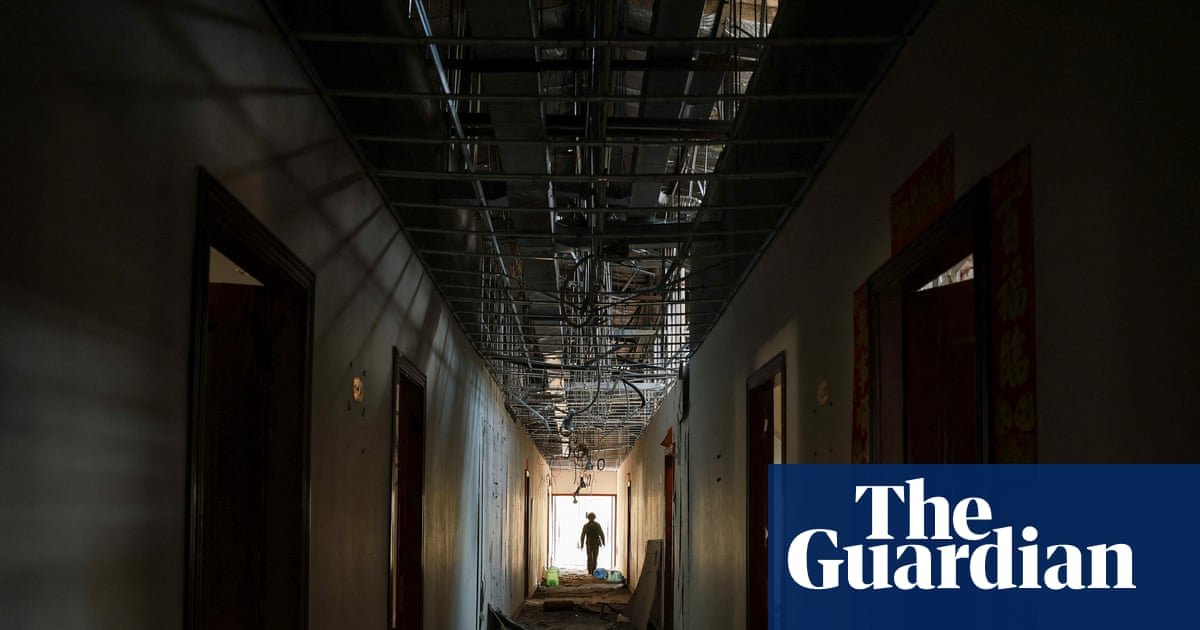
The cyber-fraud industry has flourished in Thailand, Cambodia and Myanmar, with thousands of people trafficked into the industry. But even those who have managed to find a way out often cannot return home
Artillery fire thundered. Windows shattered. Roofs caved in. And thousands of foreign workers – many who had been tricked and trafficked into the vast cyber-fraud industry that has flourished in south-east Asia – fled
For a brief moment, the regional crackdown appeared to mark a turning point in one of the world’s fastest-growing criminal industries, which has defrauded millions of people globally and generated billions of dollars for organised crime networks. Police and troops across Thailand, Cambodia and Myanmar conducted mass raids to empty and demolish some of the region’s massive scam centres. But for many of those who escaped, freedom was only the beginning of another ordeal.
Months later, the consequences are still unfolding in Cambodia, where thousands of survivors from Africa, Latin America and Asia remain stranded without passports, money or any clear route home
They have drifted to the capital, Phnom Penh, where they are sleeping rough and surviving hand to mouth. Thousands who have sought help have been placed in immigration detention centres. With those centres now overflowing, one former scam compound, Mango 2, has even been transformed into a detention centre, housing some of the very people it was meant to rescue
Visa overstay fines that survivors began to accrue during captivity have mounted into the thousands of dollars, leaving those unable to pay trapped. Support from the decimated aid industry is rapidly running out. With limited options, some survivors have even begun accepting offers to return to the scam compounds they risked everything to escape, say experts
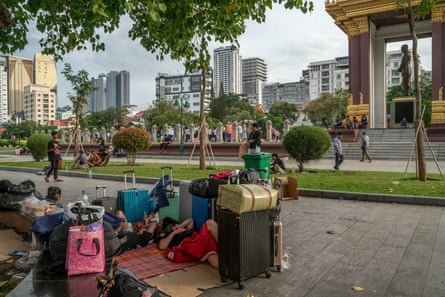
“It is an absolute mess,” said Judah Tana, who has helped thousands of trafficking victims escape scam compounds through his anti-human trafficking NGO, Global Advance Projects. “No one can figure out how to get home.”
Emmanuel*, 27, from Liberia, is one of them. He travelled to Cambodia after being offered what he believed was a legitimate graphic design job. Instead, he says, he was driven to a compound in the jungle, his passport and phone were confiscated and he was ordered to defraud Americans and Europeans through online scams
When he refused, he was threatened with the “dark room”, a punishment cell where workers were beaten and tortured. Armed guards surrounded the compound to prevent escape
“There was no way out. I was cut off from the outside world,” he says. “I watched people being beaten so badly for not working.”
Emmanuel says he struggled to meet the targets imposed by his supervisors and soon became the one being punished. He says he was starved for days, beaten and shocked with electric batons. The compound bordered a fast-flowing river, where he saw people drown trying to escape
“It was impossible to run away,” he says. “Eventually I just gave up.”
Then, almost a year into his ordeal, the raids began
Emmanuel says the compound’s managers fled as police closed in, allowing about 400 workers to escape. But freedom brought a new set of problems. He had no shelter, no possessions and no money, and his visa had long expired. “I was scared the police would put me in prison,” he says
His family raised enough money to buy him a ticket home, but when he arrived at the airport, he says officials refused to let him leave
“They’re saying nobody can leave who was at these compounds, and that also we have to pay an overstay fee – mine is almost $4,000 [£3,000],” he says. “I am trapped again.”
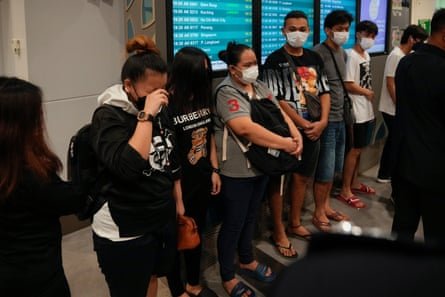
Aid groups now warn a humanitarian crisis is gathering pace. The problem, they say, is that those who escaped the compounds are being treated as perpetrators rather than victims
“They’re not doing any screening at all,” says Mechelle Moore, CEO of anti-trafficking NGO Global Alms Incorporated. “They’re treating everyone coming out of a scamming operation as a criminal.”
Amnesty International said in June that none of the 73 survivors it had interviewed had been recognised as a victim of human trafficking, even though in the NGO’s own assessment, they all met the definition
Without this recognition, those in need cannot access emergency accommodation, legal assistance or repatriation programmes. The lack of safe shelter has exposed survivors to new risks. “We have had several cases of women reporting sexual abuse when they are sleeping outside,” says Ling Li of the nonprofit EOS Collective
The dismantling of the scam compounds was also short-lived, experts say. Criminal networks have already rebuilt, relocated and begun recruiting again. “The compounds that were emptied in Myanmar have already filled up again,” says Moore. “The bosses came back. Everything is active again.”
Her organisation has documented at least nine new scam compounds built in the past six months in Myanmar and continues to receive calls from people who have recently been trafficked into the industry. “The problem isn’t going away,” she says
In Cambodia, scam centres are turning to the desperate group of former workers unable to leave the country, researchers say. Moore described a “mass recruitment drive” among survivors sleeping rough
“The bosses have realised there are all these people still there, sleeping on the streets,” she says. “They don’t have to pay recruitment fees or flights any more. They are scooping them up and sending them straight into another compound.”
Tana says the crisis has exposed a gap between foreign governments demanding the rescue of their citizens and their willingness to repatriate them
“We had countries screaming, ‘Rescue my people, rescue my people,’” he says. “Then they do it, they call the countries and say, ‘Come and pick them up,’ and the countries say, ‘No.’”
Matthew*, a 34-year-old Ethiopian IT graduate, is among those who say they received no support from their government
He thought he had been hired for a hardware and software maintenance job in Cambodia. The advert promised at least $850 a month, plus accommodation, food and a visa. “For me, it was huge money,” he says
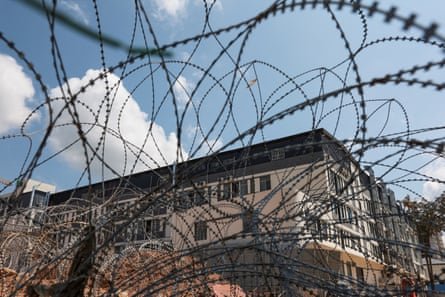
A week later, he flew to Phnom Penh before being driven to a vast compound near the Vietnamese border. Inside were apartment blocks, restaurants and shops. Uniformed guards stood at the entrances. “I didn’t realise it was a compound,” he says. “It looked like a city.”
It was only on his first day that he realised he had been deceived. His passport and phone were taken away, and another worker told him he would not be fixing software after all. Instead, he would be running online investment scams
“I said I wanted to go home,” Matthew says. “I was told that if I tried to escape, I would either be tortured or die.”
Matthew was ordered to pose as a wealthy woman online, persuading people in the Philippines to invest in fraudulent cryptocurrency schemes. Missing targets or des were beaten, fined and publicly humiliated; workers had their heads shaved, men were forced to wear dresses. In more serious cases, staff were given electric shocks
After several months he was transferred to another compound. “I was sold,” he says
When Cambodian authorities raided scam compounds at the beginning of the year, Matthew says his bosses hurriedly removed African workers from the compound, hiding them in a nearby house. “The police raid was a miracle,” he says
The group remained confined in the house for two weeks and then eventually their passports were returned and they were freed. Later Matthew learned the bosses had fled to Malaysia
For the first time in months, he was free. But he was also stranded. Like Emmanuel, he had no money, no valid visa and nowhere to go. “There is a thin line between forced labour and a criminal,” he says
Ethiopia has no embassy in Cambodia, leaving Matthew to seek assistance through its embassy in South Korea. He says repeated requests for help went unanswered. Without work, food or shelter, he survived on donations from strangers
“Most Africans have faced the same problem,” he says. “Our governments say they are not responsible for us. Our embassies do not reply, and so we are stranded in Cambodia.”
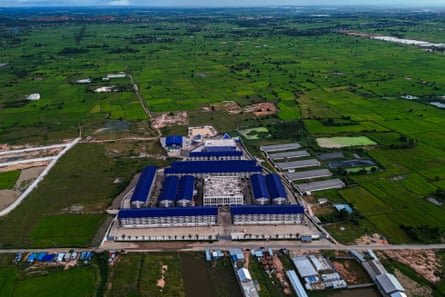
Kenya, Uganda and Ghana – whose citizens were among those rescued from scam compounds – also lack resident embassies in Cambodia, leaving survivors reliant on embassies elsewhere in the region for consular assistance
The Cambodian interior ministry has previously rejected criticisms of how it has handled the crisis, saying authorities have “rescued” hundreds of thousands of scam workers, including trafficking victims, and repatriated them “with the utmost care, in accordance with the law”. It did not respond to the Guardian’s requests for information
For those who escaped south-east Asia’s scam compounds, rescue has not meant safety. Instead, many have simply exchanged one form of captivity for another
*Names have been changed
Explore more on these topicsShare
Reuse this content
Related:
Digital Automation Training Benin: 5 Winning Skills Employers Demand in 2026
<a href="https://yoursite.com/automation-africa/" title="WhatsApp Marketing Automation Africa: 6 Dangerous Mistakes Brands Make in Nigeria”>
WhatsApp Marketing Automation Africa: 6 Dangerous Mistakes Brands Make in Nigeria
Want to learn this practically?
Join Justfine Infotech and build real digital skills in AI, automation, web development, digital marketing, office productivity, e-commerce, freelancing and cybersecurity.
Available Programmes:
6 Weeks Certificate • 3 Months Professional Certificate • 6 Months Diploma • Full Professional Diploma
WhatsApp:
+229 01 57 57 99 15
+229 01 66 68 11 60
Source: www.theguardian.com


 English (UK)
  Français