

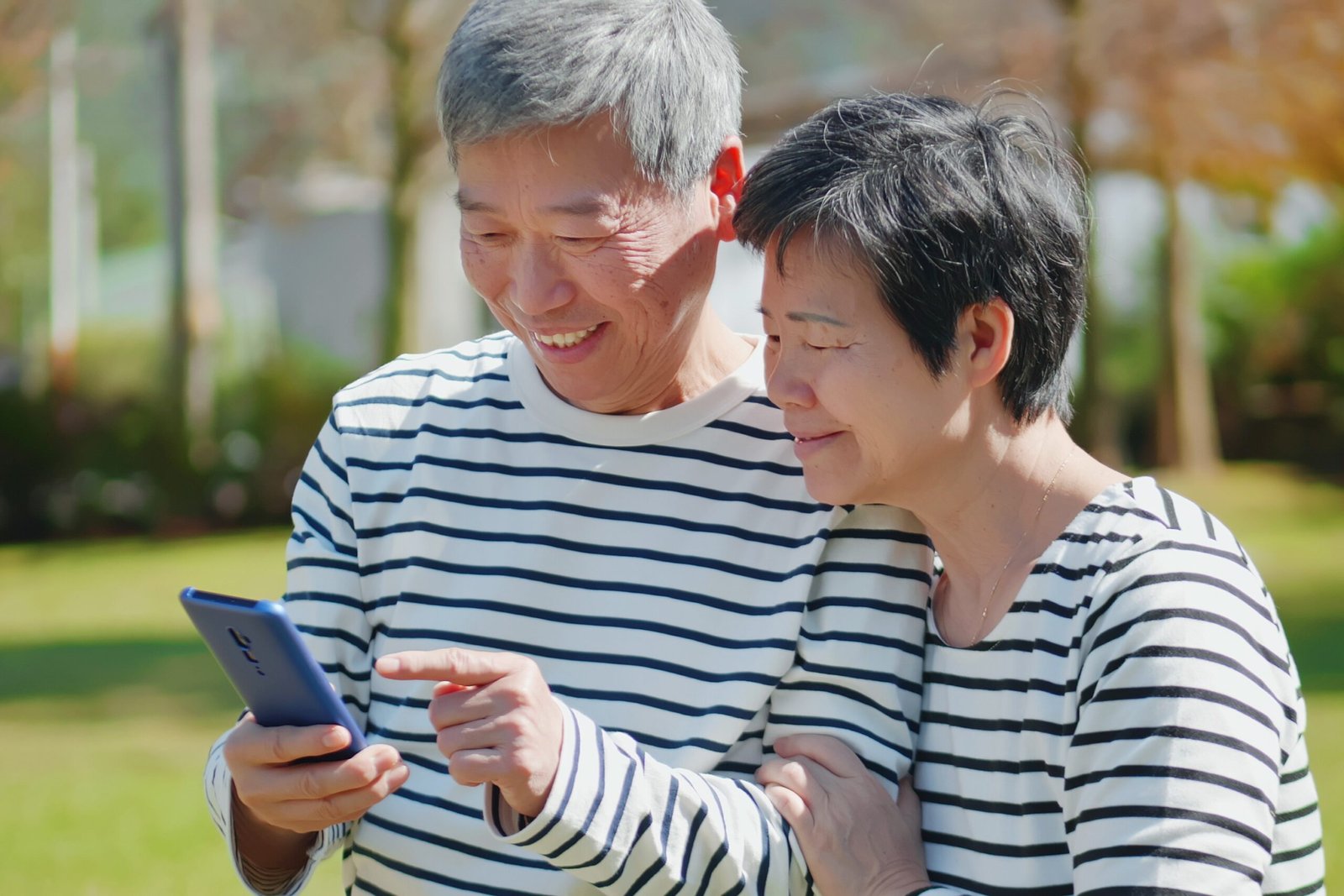
Ratnam Periowsamyis 90 and continues to lead an active lifestyle, showing that growing older need not mean becoming disconnected in an increasingly digital world
Every morning begins with a walk around her neighbourhood in Singapore. After a cup of coffee at home, she joins a 30-minute virtual exercise class on her mobile phone. A couple of times a week, she also meets friends and organizes activities at her local community centre
Madam Ratnam still remembers the moment she decided she did not want to be left behind
Watching her children and grandchildren immersed in their computers and mobile phones, the retired teacher realised that the world around her was changing faster than she could adapt
“(A few years ago) I met someone who was doing some volunteering, and she told me there was a group teaching technology.”
Photo credit: ESCAP Photo
Through the Tsao Foundation’s Digital Learning Circles, where older persons learn practical digital skills together in a supportive peer environment, she learnt how to use a smartphone, access government and everyday apps, make videocalls and later, even how to shoot and edit photos.
“Zoom is the best! With no travelling, I can meet and talk to my sisters. Learning more technology, we find it easier to handle and are much happier.”
“Before that (training), my children would be busy with their own things, and I would be so lost. But now that I know all these apps, I think they have more respect for me—that this old lady can still do things her own way.”
Her experience illustrates how digital confidence can open doors to greater independence, social connection and lifelong learning, and is one example of how communities across Asia and the Pacific are helping older persons navigate an increasingly digital world
Digital Learning Circle at the Community for Successful Ageing centre (Photo credit: Tao Foundations)
Across the region, the ‘grey digital divide’remains a growing challenge.
People aged 75 years or above report significantly lower internet use than younger generations, even in highly connected economies, such as Japan and the Republic of Korea. In many developing countries, Internet access among older persons is often negligible.
With such connectivity considered a prerequisite for full participation in modern society, bridging the divide is a matter of social justice and human rights, and not a luxury.
The phenomenon coincides with another regional megatrend: an ageing population.
The number of people aged 65 years and above is projected to almost double from 530 million in 2026 to nearly one billion by 2050.
Learning together
One lesson is becoming increasingly clear: digital skills are often learnt most effectively through trusted relationships
ESCAP research, based on a survey of older persons conducted through older people’s associations in Cambodia, India, Kyrgyzstan, Lao PDR and Viet Nam, found that only 7.4 per cent of respondents had ever taken part in formal digital literacy training, while two-thirds of those who had acquired digital skills learnt them from family members.
These exchanges can strengthen relationships between generations, reduce age-based stereotypes and help older persons remain active members of their communities
Photo credit: HelpAge International
In Viet Nam, this approach has been embraced through Intergenerational Self-Help Clubs, where people of different generations come together to build practical skills, including digital literacy. Recognizing their wider social benefits, the Government has committed to establishing 12,000 new clubs by 2035, with the support of HelpAge International and the Viet Nam Association for the Elderly
Digital confidence often begins not with technology itself, but with supportive communities that create safe spaces to learn. When older persons are empowered and included, entire communities thrive.
Technology for everyone, by design
Digital upskilling is only half of the answer. Services also need to be designed with older users in mind
According to Zhang Xiaobin, Director of the Department of Ageing Affairs, common Internet applications in China are being modified to be more senior-friendly.
Ride-hailing applications, for example, now include a “one-click ride” feature that simplifies booking transport. Older persons can also authorize family members to complete certain pension-related services on their behalf, making it easier to access essential benefits
Healthcare services have introduced larger fonts, clearer QR codes and simplified interfaces, while volunteer programmes help users become familiar with these new tools
These efforts recognize that creating an inclusive online society is not only about helping people adapt. It also means designing technology that is intuitive and works for everyone from the outset
Skills for a longer working life
Digital skills are increasingly essential in the workplace. Without opportunities to develop them, many older workers risk being excluded from employment they may want or need, especially as people are living and working for longer.
Governments across the region are exploring ways to helpolder persons prepare for an increasingly digital economy.
In Thailand, the Department of Older Persons works with ESCAP to provide easy-to-use digital literacy courses, cyber-safety training and online business workshops for older entrepreneurs.
Complementing this effort, the ESCAP Digital Literacy Toolkit provides a free, self-paced set of short video episodes across five skill areas, together with a Learner Guide and a Trainer Guide, available in multiple languages with International Sign Language integration, to support older persons in living and working with technology
“Most people here use very few apps. It’s good to know that there is a module on safety and security. Social media we can handle easily,” shared one older learner from Lucknow, India, capturing both the relevance of digital skills and the hesitation many elders continue to face.
As countries share and scale these approaches, they are showing that growing older does not mean missing out on the opportunities of an increasingly digital world
Learn More:https://www.unescap.org/kp/2026/closing-grey-digital-divide-boosting-digital-literacy-older-persons-asia-and-pacific
Related:
Digital Automation Training Benin: 5 Winning Skills Employers Demand in 2026
WhatsApp Marketing Automation Africa: 6 Dangerous Mistakes Brands Make in Nigeria
Want to learn this practically?
Join Justfine Infotech and build real digital skills in AI, automation, web development, digital marketing, office productivity, e-commerce, freelancing and cybersecurity.
Available Programmes:
6 Weeks Certificate • 3 Months Professional Certificate • 6 Months Diploma • Full Professional Diploma
WhatsApp:
+229 01 57 57 99 15
+229 01 66 68 11 60
Source: www.unescap.org


 English (UK)
  Français