

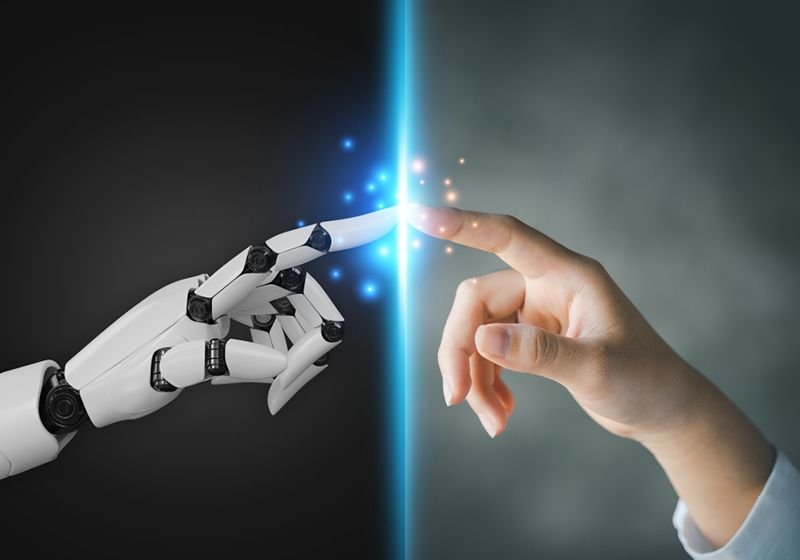
Artificial intelligence is moving into the biotech sector with the kind of speed that makes every lab meeting feel slightly behind. Models can now help researchers read papers, design proteins, rank molecules, analyze images, and propose experiments. Automation systems can generate data around the clock. For a field like biology where experiments can often be slow, expensive, and fragile, this is exciting.1
But a quieter problem is hiding underneath the enthusiasm. Engineers can spin up models quickly, and bench scientists can generate complex biological data, but there is still a clear space between those groups. That space is where many AI projects in biology either become useful or quietly drift into irrelevance
An engineer may look at a high-throughput screen and see input features, labels, missing values, training sets, and prediction tasks. A bench scientist may look at the same screen and see a slightly stressed cell line, an edge effect on the plate, a reagent lot that behaved differently, a control that technically passed but felt suspicious, or a readout that should not be compared across two assay formats without caution.
Both perspectives are needed. In many AI projects, engineers might flatten the biological context so that the data can move cleanly into a pipeline. While in some labs, biologists may treat computational needs as something to figure out after the experiment is complete, by when much of the useful metadata may be gone
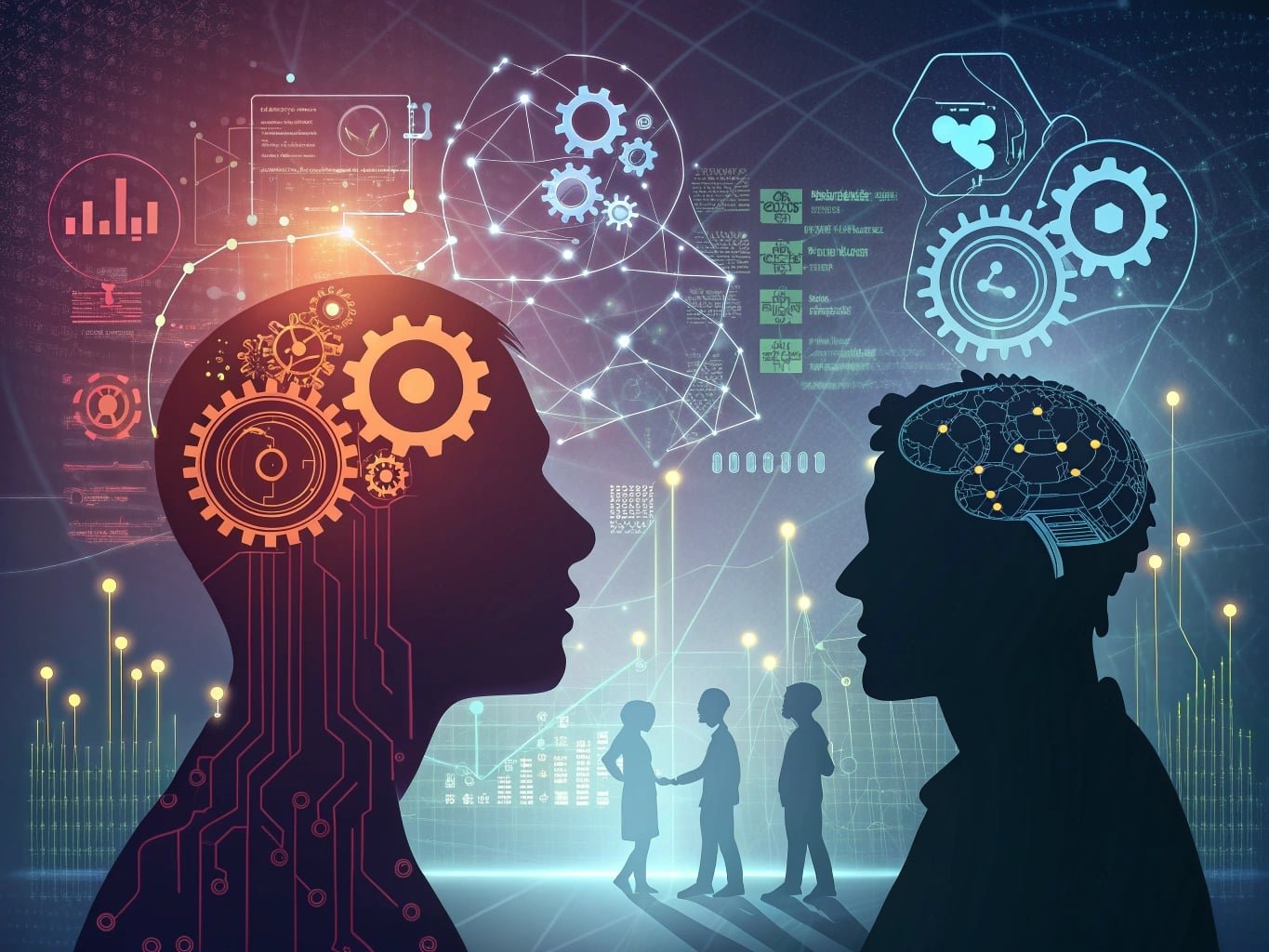
This is why integrating AI into the life sciences needs scientist-engineer translators. These are people who understand enough biology to know which variables matter, enough data science to know how those variables will be used, and enough laboratory reality to know where protocols bend under pressure
My own work sits at this intersection of biology, assay development, automation, and model development. That experience has made me see AI in biology less as a replacement for experimental judgment and more as a feedback loop: data inform models, models inform experiments, and scientists keep both grounded in biological reality. In practice, that means helping define reasonable thresholds, explaining experimental subtleties that may not be obvious from a dataset, and giving engineers the scientific context that they need to build tools that scientists can actually trust.
Not All Data Deserve the Same Weight
An AI translator working in the biotech sphere will know that more data does not automatically make a model better. More data can help, but only if the data are comparable, interpretable, and connected to the question being asked. For example, they know that quality control (QC) is an integral part of the experiment. Which wells should be excluded? How strict should the threshold be? When should a borderline control invalidate a plate, and when should it be allowed because the biological trend is still meaningful?
Scientists make these decisions constantly. They may apply a strict threshold in one assay and a more lenient one in another because they understand the readout, system variability, or purpose of the screen. That reasoning rarely fits neatly into a spreadsheet column, but it is exactly the context engineers need when creating AI models
Predictions Need Scientific Constraints
An AI model can generate a predicted molecule or sequence that may look impressive initially but may be difficult to synthesize, unstable, toxic, incompatible with a delivery system, or otherwise scientifically useless. Additionally, a model may suggest a next experiment that is theoretically interesting but impractical for the assay format, cell type, timeline, or automation platform
This is where scientific intuition matters. Someone has to ask whether a prediction lives within the realm of practicality. A constrained model sends teams toward hypotheses they can actually evaluate
The AI Translator Can Help Integrate AI Tools More Effectively
For AI tools to be useful in life sciences, both scientists and engineers must define the use case tightly. What decision is the tool supposed to support? What data will it use? What should it refuse to answer? What uncertainty should it report? What would make a scientist trust it enough to change an experiment? Without that focus, AI tools become impressive but vague
The AI translator can help narrow down that problem by turning the idea of “using AI for biology” into something more concrete. They can critically evaluate the output of AI tools by selecting the next candidates, flagging assay artifacts, comparing campaigns, identifying missing metadata, drafting a protocol modification, or explaining why a prediction should not be trusted
Scientists Also Need to Learn the Model’s Language
While scientists do not need to become full-time engineers to work well with AI, they do need to understand how AI models will use their data
A scientist who knows how a model learns will design experiments differently. They will think about which negative data are worth preserving, which controls should stay consistent across campaigns, how metadata should be structured from the beginning, and what additional data might improve predictions
Scientists need to explain why they trust one result more than another, why two datasets should not be merged casually, or why a threshold that looks arbitrary is actually grounded in assay behavior
While AI tools can assist with analysis, writing code, checking syntax, and exploring patterns, an AI translator can help scientists gain a better understanding of what they are asking these tools to do
Automation Will Not Fix Context by Itself
Automation adds another layer to this problem. Lab robots can improve precision, throughput, and reproducibility, but they also introduce their own language barriers. Many platforms depend on proprietary scripting, rigid method structures, vendor-specific software, and integration steps that do not match how scientists think about protocols.4
AI tools can help make automation more flexible. But for automation to work well, the system should know not only what step comes next, but why that step matters and which changes would compromise the experiment. Here an AI translator can integrate a scientist’s description of a dilution series, plate transfer, or assay modification in plain language into the AI model and have the system translate it into a protocol.
The Middle Layer Is the Work
AI will continue to improve. Models will become faster, more capable, and easier to access. Automation will become more common. The question is whether biotech teams will build the human infrastructure needed to use these tools well
The future will not belong only to the best model builders or only to the best experimentalists. It will also depend on people who can stand between them and translate
The AI translator role may not have a clear title yet. It may be called data scientist, automation scientist, product scientist, computational biologist, application scientist, or something else entirely. But the work is becoming unavoidable
Biology becomes AI-ready when scientists make the context visible, engineers build systems that can use that context, and both groups stay in conversation long enough for the model to learn from the experiment, not merely from the spreadsheet
- Notin P, et al. Machine learning for functional protein design. Nat Biotechnol. 2024;42:216-228.
- Durant G, et al. The future of machine learning for small-molecule drug discovery will be driven by data. Nat Comput Sci. 2024;4:735-743.
- Taddese AA, et al. Data stewardship and curation practices in AI-based genomics and automated microscopy image analysis for high-throughput screening studies: Promoting robust and ethical AI applications. Hum Genomics. 2025;19:16.
- Rapp JT, et al. Self-driving laboratories to autonomously navigate the protein fitness landscape. Nat Chem Eng. 2024;1:97-107.
Related:
<a href="https://yoursite.com/automation-training-benin/" title="Digital Automation Training Benin: 5 Winning Skills Employers Demand in 2026″>
Digital Automation Training Benin: 5 Winning Skills Employers Demand in 2026
WhatsApp Marketing Automation Africa: 6 Dangerous Mistakes Brands Make in Nigeria
Want to learn this practically?
Join Justfine Infotech and build real digital skills in AI, automation, web development, digital marketing, office productivity, e-commerce, freelancing and cybersecurity.
Available Programmes:
6 Weeks Certificate • 3 Months Professional Certificate • 6 Months Diploma • Full Professional Diploma
WhatsApp:
+229 01 57 57 99 15
+229 01 66 68 11 60
Source: www.the-scientist.com
 English (UK)
  Français