

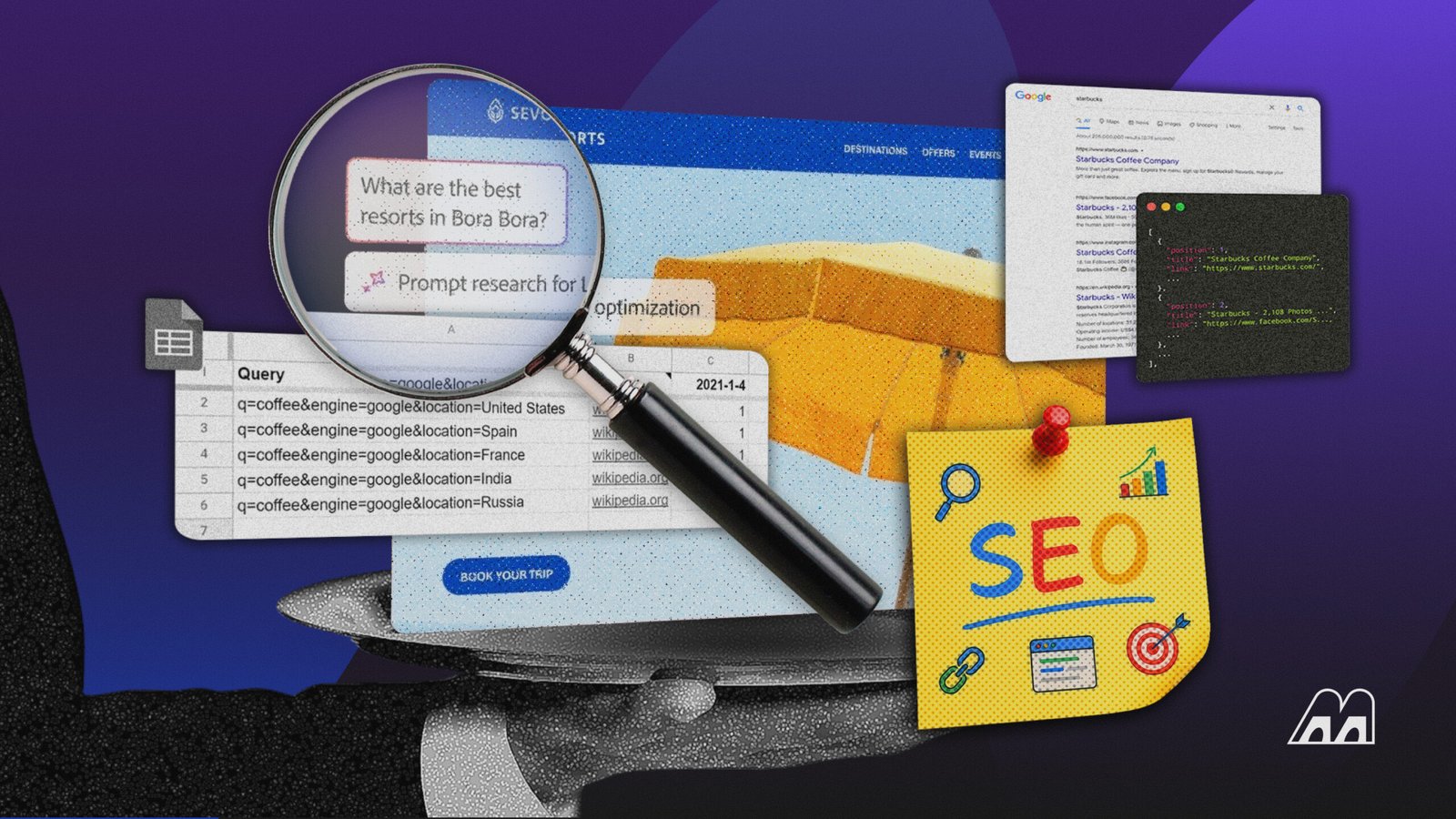
AI-powered search is reshaping how people find information. According to a study by Search Engine Land,<a href="https://searchengineland.com/consumers-start-searches-ai-not-google-study-467159″ rel=”nofollow noopener” target=”_blank”>more than one in three consumersnow begin their search journey with AI instead of Google, forcing SEO tools to evolve beyond traditional rankings and keyword tracking. We spent time testing theleading AI SEO platformsand ranked them based on the best use case to help you pick the right fit for your needs and budget.
Fliki Promo Code
Get 25% OFF
Turn text into video with AI voices. Plans start at $6/month
Code Valid: August 2026
Claim Reward
Best AI SEO Tool by Use Case
| Use Case | Recommended Tool | Why We Picked It |
| Best overall | Semrush ONE | Combines traditional SEO and AI visibility tracking in one platform. |
| Best for content optimization | Surfer SEO | Offers real-time content scoring against top-ranking pages backed by SERP data. |
| Best value | Frase | Strong combination of AI writing, content briefs, SEO scoring, and GEO features at a competitive price. |
| Best keyword research | Ahrefs | Industry-leading keyword and backlink database with AI-powered keyword forecasting. |
| Best AI visibility tracking | Peec AI | Built specifically to monitor how brands appear across ChatGPT, Google AI Mode, Gemini, and Perplexity. |
| Best budget option | Ubersuggest | Affordable keyword research, audits, and content ideas with a rare lifetime pricing option. |
| Best enterprise content optimization | Clearscope | Excellent optimization workflows and seamless integrations for larger editorial teams. |
| Best AI writing + SEO | Writesonic | Combines AI writing, SEO workflows, and AI search visibility into one platform. |
| Best GEO tracking tool | Otterly | Makes AI search monitoring simple with an intuitive dashboard and prompt tracking. |
| Best SEO workflow platform | Scalenut | Makes planning, writing, and optimizing content accessible for smaller businesses. |
| Best enterprise GEO platform | Profound | Deep AI search analytics designed for brands monitoring large-scale AI visibility. |
Two Disciplines Most “Best AI SEO Tools” Lists Get Wrong
Most “best AI SEO tools” lists treat every platform as if it’ssolving the same problem. Our testing showed that’s no longer true. SEO in 2026 has split into two distinct disciplines, and understanding the difference makes choosing the right AI SEO platform much easier
Traditional SEO, Powered by AI
AI helps speed up keyword research,generate content, optimize articles, identify technical issues, analyze backlinks, cluster keywords, and automate repetitive SEO tasks that once took hours.
Platforms likeAhrefs, Semrush, Surfer SEO, Clearscope,andFrasehave spent years refining these capabilities. Many of them now use AI to surface insights that would otherwise take significant manual analysis. These AI SEO tools also help marketers understand search intent, improve meta descriptions, generate keyword suggestions, review SEO data, and uncover valuable keyword data for better decision-making.
If your goal is ranking higher in Google’s organic results, this remains the foundation of yourSEO strategy
Generative Engine Optimization (GEO)
Millions of people now search throughChatGPT,Google AI Mode,Gemini,Perplexity, and other AI search engines. Ranking first in Googledoesn’t automatically meanyour brand will appear in those AI-generated answers
That’s where GEO comes in
GEO focuses on understanding howAI modelsdiscover, cite, summarize,andrecommendbrands. Modern GEO platforms can show how often your company appears in AI responses, which competitors are mentioned instead, which bility changes over time
We see this becoming one of the biggest shifts in SEO over the next few years. Organic rankings still matter, but they’re no longer theonly measure of visibility. That’s why we organized this guide by job instead of mixing every tool into one generic list.
Best Overall
1. Semrush ONE
- Best for:Marketing teams, SEO professionals, and brands that want one platform for SEO and AI search visibility
- Key strength:Combines traditional SEO data with AI visibility tracking in a single platform
- Pricing:Starts at $199/month. Core Semrush plans begin at approximately $129/month
After testing every platform in this guide,Semrush ONEearned our top spot because it’s the only tool thatbrings SEO and GEO together. You can manage rank tracking, technical SEO, backlink analysis, competitor research, site audits, and AI search visibility without jumping between multiple platforms
That unified workflow made a real difference during our testing. Alongside traditional rankings, we tracked how often brands appeared inGoogle AI Overviews, Google AI Mode, ChatGPT, Gemini, and Perplexity, then compared those results with competitors. We also found the AI citation data particularly valuable. Seeing which websites large language models relied on helped explain why certain brands were recommended more often and highlighted opportunities to strengthen our own content.
Semrush hasn’t neglected its SEO roots, either. Itskeyword databaseremains one of the most comprehensive available, whileSite Auditquickly surfaces technical issues before they become bigger problems. Backlink monitoring is dependable, and the competitive research tools saved us hours of manual analysis.
The biggest drawback we can point out is thecost. Smaller businesses may struggle to justify paying for features they won’t use every day. There’s also asteep learning curve. Semrush packs an enormous amount of information into one dashboard, and new users will need time to become comfortable navigating everything.
Best for Content Optimization
AI can draft an article in minutes, butGoogle still rewards pages that answer search intent betterthan competing content. That means structure, topical coverage, readability, internal linking suggestions, and semantic relevance all matter long after the first draft is finished. The three platforms below approached that challenge differently during our testing.
2. Surfer SEO
- Best for:Content marketers, SEO teams, and publishers optimizing articles for Google
- Key strength:Industry-leading content optimization powered by real-time SERP analysis
- Pricing:Starts at $79/month
Surfer SEOhas spent years building a reputation as the benchmark for content optimization, and after testing the latest version, we understand why.
The recommendations rarely felt random. Everycontent scoreis built around top-ranking pages, analyzing factors like headings, topical coverage, keyword usage, word count, internal linking opportunities, and semantic relevance. Instead of guessing why a page isn’t performing, we had aclear roadmapshowing which improvements were most likely to move the needle
We especially liked using it during the editing stage. After uploading an article, Surfer immediately highlighted missing subtopics, suggested stronger heading structures, flagged overused terms, and recommended additional entities based on thehighest-ranking competitors. The feedback was detailed without becoming overwhelming, making it easy to prioritize meaningful changes over chasing a perfect optimization score.
It’s still worth noting that aperfect content score still doesn’t guarantee rankings. We deliberately tested articles that were technically well optimized but offered little original insight. Surfer couldn’t fix weak expertise or generic writing, and that’s exactly how it should be. It helps optimize quality content but doesn’t create experience for you
3. Clearscope
- Best for:Established content teams and enterprise publishers seeking to dominate AI-powered SEO tools
- Key strength:Premium content optimization with seamless editorial integrations
- Pricing:Starts at $129/month with custom enterprise pricing available.
Clearscope’srecommendations are similar in principle to Surfer SEO, but the overall experience feelsmore polished and editorial-focused. That’s one reason larger organizations continue to rely on it despite the higher price
During our testing, we appreciated how naturally Clearscope fit into an existing writing workflow. Our editors could optimize articles inside familiar environments like Google Docs or WordPress without constantly switching between multiple applications
Its reports also felt exceptionally clean. Rather than overwhelming us with dozens of metrics, Clearscope focused attention on the topics, terms, and content gaps that genuinely mattered. That simplicity makes it easier for writers who aren’t SEO specialists to improve articles without feeling buried in technical recommendations
One thing worth mentioning is that Clearscope assumes you already have a content strategy. Since it wasn’t built to replace keyword research platforms like Ahrefs or Semrush, its job begins once you’ve chosen a target keyword and want to create the strongest page possible around it
4. Frase
- Best for:Small businesses, freelancers, and lean marketing teams
- Key strength:AI-generated content briefs with built-in SEO and GEO optimization
- Pricing:Starts at $39/month
Frasequickly became one of the easiest tools to recommend for anyone working with alimited budget. After testing it across several content workflows, we found it delivers far more than its price suggests
What stood out most was how much of the SEO process it brings together. Fraseanalyzes the live SERP, builds a detailed content brief, generates a draft, scores your content for SEO, and starts to incorporate AI search optimization into that same workflow. It effectively covers keyword research and AI content generation, which allowed us to complete more SEO tasks without constantly switching platforms.
The content briefs were particularly impressive. For every topic we tested, Frase pulled together common headings, People Also Ask questions, competitor insights, andtopical gapsinto a clear outline that gave us a strong starting point. Building long form content from those briefs felt noticeably faster than researching everything manually
We also appreciate the direction the platform is taking. While many optimization tools still treat SEO and AI search as separate disciplines, Frase is beginning to bridge that gap by helping creators optimize for both in one place
The AI writing features still benefit from human editing. We rewrote sections based on SEO best practices, added firsthand insights, and fact-checked every important claim before publishing. That’s simply part of creating content that demonstrates real experience and expertise
Fliki Promo Code
Get 25% OFF
Turn text into video with AI voices. Plans start at $6/month
Code Valid: August 2026
Claim Reward
Best for Keyword Research and Backlink Data
5. Ahrefs
- Best for:SEO professionals, agencies, and businesses that rely on accurate backlink and keyword data
- Key strength:Industry-leading backlink database with AI-powered keyword forecasting
- Pricing:Starts at $129/month
If we had to build an SEO strategy from scratch,Ahrefswould be one of the first SEO tools we’d open. And there’s a simple reason for that.
Strong SEO decisions depend on reliable data, and few platforms collect as much of it as Ahrefs. Its web crawler, AhrefsBot, remains the most active outside Google’s own, with a database covering more than8 billion web pagesand fresh backlinkupdates every 15 to 30 minutes
That scale showed during our testing. When researching competitors, Ahrefs consistently surfaced backlink opportunities, competitor analysis, keyword gaps, and content ideas that were difficult to uncover elsewhere. We could quickly identify which pages attracted the most links and where competitors were gaining authority
One addition we found particularly useful is the newAI keyword forecastingfeature. Most SEO software tell you where a keyword ranks today. Ahrefs goes a step further by estimating where that keyword is likely to trend based on historical performance, search volume, and current momentum. It’s not a crystal ball, but it adds valuable context when deciding where to invest your content efforts
Content Exploreralso deserves a mention. Beyond finding popular articles, we used it to spot emerging topics before they became highly competitive. From our experience, this made it easier to build content calendars around growing search demand instead of yesterday’s trends
Best Budget-Friendly Options
Not every business needs an enterprise SEO platform. For freelancers, bloggers, startups, and small marketing teams, paying hundreds of dollars every month for SEO software isn’t always practical. We found the following tools to deliver the best value for budget-conscious users
6. Scalenut
- Best for:Small businesses and content-focused marketers
- Key strength:Combines AI writing, keyword planning, and SEO optimization in one affordable platform
- Pricing:Starts at $59/month
Scalenutearned its place on this list because it keeps the entire content creation process under one roof. After testing it on multiple articles, we found ourselves moving from keyword research to publishing withfar fewer interruptionsthan we’d normally expect
Cruise Modewas the feature we kept coming back to. Rather than producing a full article from a singleAI prompt, it guides you through each stage of the workflow. We selected a target keyword, reviewed competitor insights, built an outline, generated a draft, and optimized the content step by step. That structure consistently producedstronger first draftsbecause we had opportunities to refine the direction before the writing began.
The optimization tools were equally useful. Scalenut analyzed thelive SERPand highlighted missing topics, relevant semantic terms, keyword suggestions, heading opportunities, and areas where competing pages offered more comprehensive coverage. Those recommendations felt actionable, giving us clear next steps instead of an arbitrary content score
Still, there are limits. Scalenutisn’t built to replace platforms like Ahrefs or Semrushfor backlink analysis, technical SEO, or deep competitor research. Larger SEO teams will likely need those capabilities elsewhere. For freelancers, small businesses, and content marketers, though, Scalenut covers the essentials remarkably well
7. Writesonic
- Best for:Businesses that want AI writing, SEO, and AI search optimization in one platform
- Key strength:Combines content creation with SEO and GEO tracking
- Pricing:Professional plan starts at $249/month
Writesonichas undergone one of the biggest transformations of any platform we reviewed. A few years ago, we’d have described it as anAI writing assistant. Today, it feels much closer to anautomated SEO platformthat combines content creation, SEO tools, and AI search tracking in a single workspace
That shift became obvious during our testing. We could move from keyword research to content briefs, generate drafts, optimize pages, audit SEO performance, and monitor AI visibility without piecing together several different tools. For marketing teams publishing content every week, having those capabilities in one place creates asmoother workflowand fewer handoffs
The writing quality was generally strong enough to accelerate production, particularly for blog posts, landing pages, and product descriptions. Like every AI writing tool we tested, it stillbenefited from human editing. We added firsthand experience and verified important claims before considering any draft ready to publish
The biggest hurdle is cost. At$249 per month, the Professional plan is a serious investment, so we wouldn’t recommend it purely as an AI writer. It makes far more sense for businesses that want to consolidate writing, SEO, and GEO tracking into a single subscription.
8. Ubersuggest
- Best for:Freelancers, bloggers, and early-stage businesses
- Key strength:Affordable keyword research and SEO auditing with a rare lifetime pricing option
- Pricing:Starts at $29/month or $290 for a lifetime license
Ubersuggestis theclear budget pickon this list. After testing it alongside premium platforms, we found that it covers the SEO essentials at a fraction of the cost of Semrush or Ahrefs
Keyword research, content ideas, competitor analysis, and site audits were all easy to access and straightforward to understand. We particularly liked how approachable the interface felt. Reports are clean, recommendations are clear, and youdon’t need years of SEO experienceto start finding opportunities
Pricing is where Ubersuggest really stands out against competitors. A monthly plan starts at$29, but the$290 one-time lifetime optionis what caught our attention. That’s increasingly rare in the SEO software market, where almost every major platform relies entirely on recurring subscriptions
Of course, the lower price comes with compromises. During our testing, thekeyword database wasn’t as deep, backlink data wasn’t refreshed as frequently, and competitor insights lacked the depth we’d expect from Ahrefs or Semrush. Those differences become more noticeable as websites grow and SEO campaigns become more sophisticated
For solo site owners, freelancers, and early-stage businesses, though, Ubersuggest delivers exactly what it promises. You’re paying for affordability and solid core functionality, not enterprise-level data, and at that price, it’s one of thestrongest value-for-moneySEO tools we’ve tested
Fliki Promo Code
Get 25% OFF
Turn text into video with AI voices. Plans start at $6/month
Code Valid: August 2026
Claim Reward
Best for AI Search Visibility (GEO)
Traditional SEO still matters, but it’s no longer the only place people discover brands. A growing share of users now skip the search results page altogether and ask AI assistants for recommendations. ChatGPT now reaches more than1.1 billion monthly users, Gemini has grown toroughly 900 million,and Claude has surpassed 245 million.
After researching the category and testing the leading platforms, three tools consistently stood out.
9. Peec AI
- Best for:Marketing teams monitoring AI search visibility
- Key strength:Tracks brand visibility across major AI search engines
- Pricing:Paid plans start at $95/month
Peec AIwas one of the few tools we tested that feels purpose-built for the way search is changing. Traditional rank tracking tools tell you where your pages appear in Google. Peec answers a question that’s becoming just as important:When someone asks ChatGPT, Gemini, Google AI Mode, or Perplexity for a recommendation, does your brand make the list?
We tracked a series ofindustry-specific prompts across multiple AI platforms and could quickly see which brands were being cited and how often they appeared. Those insights are difficult to gather manually, especially when AI search results change over time
We also found theprompt trackingparticularly valuable. Real users don’t type keyword strings into AI assistants. They ask detailed questions like, “What’s thebest AI tool for email marketing in 2026?” or “Which AI chatbot betweenClaude and Gemini is better for enterprise teams?” Peec monitors performance across those natural-language prompts, making the data feel much closer to real user behavior than a traditional keyword report.
You won’t find backlink analysis, technical SEO audits, or content optimization tools here, and that’s by design. Peec is built to help you track how your brand is performing inside AI-generated answers, where traditional SEO platforms still have limited visibility.
10. Otterly
- Best for:Businesses starting to measure AI search performance
- Key strength:Simple AI visibility monitoring across leading LLMs
- Pricing:Lite ($29/month), Standard ($189/month), Premium ($489/month), and Enterprise (custom pricing)
Otterlystood out because itmakes AI visibility easy to understand. Many GEO platforms assume you’re already familiar with prompt tracking and AI search analytics. Otterly removes much of that learning curve, making it far easier to see how your brand appears across multiple AI platforms
Getting started took very little effort. We created a set of prompts relevant to our industry, and Otterly began tracking how often our brand appeared, which competitors were recommended instead, and how those results changed over time. The reports areclean, easy to interpret,andfocused on insightsthat marketing teams can act on without digging through layers of data
Another strength is how quickly itexposes blind spots. In several cases, we found competitors appearing consistently in AI-generated answers even when they weren’t dominating traditional search results. That kind of visibility is difficult to uncover using conventional SEO tools alone
After spending time with the platform, we came away seeing Otterly as apractical bridge between traditional SEO and GEO. While it won’t tell you how to rewrite an article or build backlinks, it’ll show you where AI assistants are already talking about your brand, and where they’re overlooking it.
11. Profound
- Best for:Enterprise brands managing AI visibility at scale
- Key strength:Enterprise-grade AI search analytics and competitive intelligence
- Pricing:$99/month (Starter), $399/month (Growth), and Enterprise (custom quote)
During our research,Profoundconsistently stood out as one of themost mature GEO platforms for large organizations. It’s backed by Kleiner Perkins, used by companies such as Zapier and Figma, and meets enterprise security requirements withSOC 2 Type II certification. Those credentials matter for businesses that need both advanced analytics and the governance standards expected in enterprise environments.
What impressed us most was the depth of its insights. Profound tracks visibility across ChatGPT, Gemini,Claude, Perplexity, Microsoft Copilot,Grok AI, and Google AI Overviews. It also reveals which publishers and ime, and where your own content may be falling short.
The platform doesn’t stop at reporting the data either. Itrecommends practical improvements, from expanding topical coverage to refining FAQs and strengthening content structure based on what AI engines are actually citing
Enterprise pricing means it won’t be the right fit for every business. For organizations investing seriously in AI search, however, Profound offers the depth of analysis and strategic guidance that simpler GEO tools can’t yet match
Best AI SEO Tools by Job, Price & Team Size
Choosing the right AI SEO tool becomes much easier once you start with the job you’re trying to accomplish. Some platforms excel at research, others specialize in content optimization, while newer GEO tools focus entirely on AI search visibility
| Need | Our Recommended Tool | Starting Price | Best For |
| Best all-round SEO + GEO platform | Semrush ONE | $199/month | Marketing teams and agencies |
| Content optimization | Surfer SEO | $79/month | Writers and SEO specialists |
| Enterprise content optimization | Clearscope | $129/month | Large editorial teams |
| Affordable content optimization | Frase | $39/month | Freelancers and small and medium businesses |
| Keyword research and backlinks | Ahrefs | $129/month | SEO professionals |
| Budget all-in-one SEO | Scalenut | $59/month | Small businesses |
| AI writing + SEO + GEO | Writesonic | $249/month | Content-heavy marketing teams |
| Budget keyword research | Ubersuggest | $29/month | Bloggers and startups |
| AI visibility tracking | Peec AI | $95/month | Brands monitoring AI search |
| AI search performance | Otterly | $29/month | Businesses tracking AI search visibility |
| Enterprise GEO analytics | Profound | $99/month | Large organizations |
How to Build Your AI SEO Stack by Team Size
Based on our testing, here’s how we’d build an AI SEO stack for different team sizes and budgets.
Solo site owners and small budgets
If you’re running a personal blog, affiliate site, or small business website, our recommendation is to start withFraseorScalenut. Both platforms cover the fundamentals surprisingly well.
You can research topics, generate content, and improve on-page SEO without paying for several separate subscriptions. That leaves more room in your budget to invest in content itself, which will almost always have a bigger impact than buying another premium SEO tool
Growing marketing teams
For most mid-sized marketing teams, we’d pairAhrefswithSurfer SEO. Ahrefs provides the research layer. Surfer SEO helps turn that research into content that’s better aligned with what currently ranks
As AI search continues gaining traction, we’d also introduce a GEO platform such asPeec AIorOtterly. That combination gives marketers visibility across both traditional search engines and AI-generated answers without completely rebuilding their workflow
Teams looking for one platform
Not every organization wants to manage four or five different subscriptions. Many simply want one platform that covers as much of the workflow as possible. That’s why we feelSemrush ONEoffers the most value
During our research, it was the only platform that bridges both disciplines we’ve discussed throughout this guide. You still get the traditional SEO toolkit people expect from Semrush, including keyword tracking and competitor research. On top of that, Semrush ONE adds AI visibility tracking across platforms like Google AI Mode, ChatGPT, Gemini, and Perplexity
Final Verdict
After spending time with every platform on this list, we don’t think the question is which AI SEO tool is the best. The better question is which one solves the biggest problem in your workflow.Semrush ONEis the closest thing to an all-in-one solution we’ve tested because it brings together keyword research, technical SEO, competitor analysis, and AI search visibility in a single platform.
Even so, we wouldn’t recommend it blindly.Ahrefsremains our first choice for deep research,Surfer SEOandClearscopeconsistently delivered the strongest content optimization, whileFrase,Scalenut, andUbersuggestoffer excellent value for smaller teams.
GEO platforms likePeec AI,Otterly, andProfoundalso deserve a place in the conversation as AI search continues to reshape how people discover brands. If we were building an SEO stack from scratch today, we’d make room for both traditional SEO and AI search visibility from day one.
Which AI agent is best for SEO?
For most businesses,Semrush ONEis the strongest all-around choice because it combines traditional SEO with AI visibility tracking. If content optimization is your priority, Surfer SEO and Frase are excellent alternatives
Is SEO dead or evolving in 2026?
SEO is evolving, not disappearing. Traditional ranking factors still matter, but AI search platforms like ChatGPT, Google AI Mode, Gemini, and Perplexity have introduced GEO, making AI visibility another important part of search strategy
Can I use AI to do my SEO?
Yes, butAI works best as an assistant rather than a replacement. It can speed up keyword research, content creation, optimization, and technical analysis, while human expertise is still essential for strategy, fact-checking, and building authority
What’s the difference between SEO and GEO?
SEO focuses onimproving visibility in traditional search engineresults. GEO focuses onincreasing how often your brand appears and gets cited in AI-generated answersfrom platforms like ChatGPT, Gemini, Perplexity, and other AI answer engines
How do I track if my content is showing up in ChatGPT or AI Overviews?
You can track if your content is appearing in ChatGPT or Google AI Overviews using dedicated GEO tools likeSemrush ONE,Peec AI,Otterly, andProfound. These platforms monitor brand mentions, citations, and AI visibility beyond traditional search rankings.
Related:
Digital Automation Training Benin: 5 Winning Skills Employers Demand in 2026
WhatsApp Marketing Automation Africa: 6 Dangerous Mistakes Brands Make in Nigeria
Want to learn this practically?
Join Justfine Infotech and build real digital skills in AI, automation, web development, digital marketing, office productivity, e-commerce, freelancing and cybersecurity.
Available Programmes:
6 Weeks Certificate • 3 Months Professional Certificate • 6 Months Diploma • Full Professional Diploma
WhatsApp:
+229 01 57 57 99 15
+229 01 66 68 11 60
Source: memeburn.com
 English (UK)
  Français