

Creator economy 2.0 signals a shift from influence to enterprise
The creator economy may have started with likes, followers and viral moments, but the conversation around it is changing. Today, creators are expected to do far more than generate views. They are launching businesses, shaping purchase decisions, building communities and increasingly becoming long-term partners for brands rather than just campaign collaborators
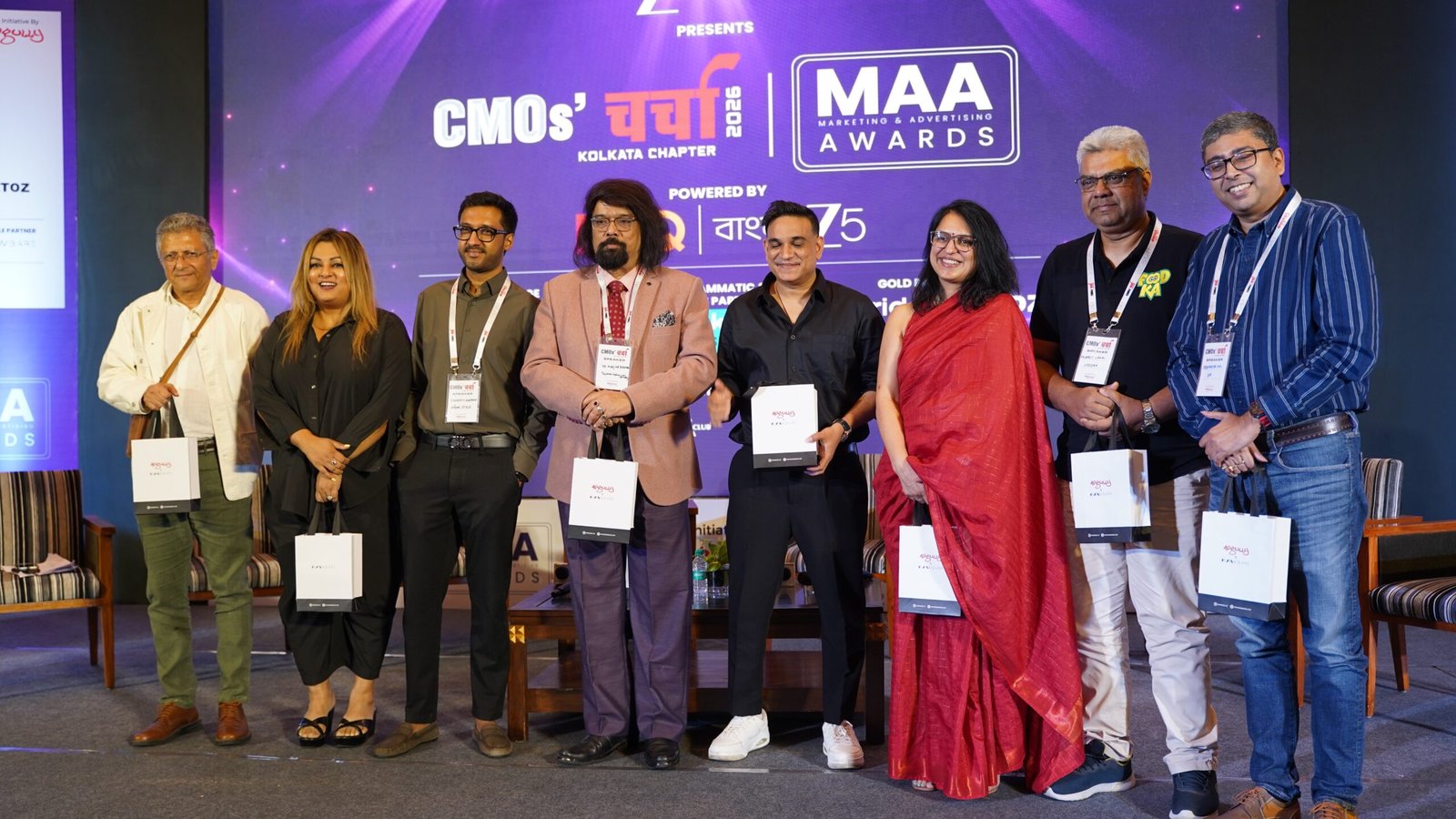
That shift formed the basis of the panel discussion, titled ‘Creator Economy 2.0: From Influencers to Business Builders’, at CMOs’ Charcha – Kolkata Chapter 2026. Bringing together marketers, founders, creators, agency leaders and academicians, the session explored how the creator ecosystem is evolving and what both brands and creators need to do to stay relevant in a rapidly maturing market.
Roopali Sharma, President North & East at Havas Media India, described the evolution as a shift from experimentation to relationship building. “Creator 1.0 was all about flirting with the concept,” she said, adding, “Creator 2.0 is all about building connections.”
For Sharma, the biggest opportunity lies in how brands approach creators. While influencer marketing has found a place in almost every media plan, she believes many organisations still use creators with a short-term objective in mind. Campaign briefs often focus on amplifying a message for a limited period, instead of building long-term partnerships, where creators become part of the brand’s larger narrative. As categories such as fashion and beauty have shown, sustained creator relationships often deliver stronger brand equity than one-off collaborations.
The conversation also reflected how trust has become central to the creator economy.Aishwarya Biswas, Founder of Auli Active Ayurveda, shared how she began creating beauty content long before the term “influencer” became popular. What started as a personal blog eventually helped her build a skincare brand with a loyal customer base
“I put myself out there. That drove the sales, and that drove the trust,” she said
Biswas explained that founder-led content played a significant role in building credibility because consumers could see the person behind the products. Today, while she continues to create content herself, her focus has expanded to building a community of creators who genuinely align with the brand’s philosophy around skincare and wellness instead of simply promoting products
The discussion suggested that the expectations from creators have changed just as much as they have for brands. Audiences are no longer impressed by visibility alone. They expect creators to be authentic, selective about the brands they work with and willing to stand by their recommendations
RJ Praveen, who spent nearly two decades in radio before becoming a full-time content creator, said brands today are looking beyond vanity metrics. “Earlier, people used to look at views and likes,” he said. “Now they come to us for organic engagement.”
He recalled working on a campaign that generated nearly ₹9 crore in sales within three days. When the client wanted to repeat the same promotional offer soon afterwards, his team advised against it because they believed it could dilute the product’s premium positioning.
“Creator Economy 2.0 is about taking responsibility,” he said, adding that creators must think beyond immediate commercial gains and protect the long-term interests of the brands they represent.
From an agency perspective, the conversation has also shifted from audience size to audience quality.Debarshi Chakravorti, Vice President, Business Planning at Interactive Avenues, observed that creators are no longer just accumulating followers. They are building communities.
“Creators are not just creating followers. They’re creating communities built on trust,” he said.
According to Chakravorti, audiences today actively participate through comments, conversations and recommendations, making community behaviour a far more meaningful indicator than follower count alone. For agencies and marketers, understanding those communities has become increasingly important when evaluating the business impact of creator partnerships.
The panel also examined where artificial intelligence fits into this changing ecosystem. While AI is already influencing content creation,Prof. Dr Sujoy Kumar Biswas, Director and CEO of Techno India University, argued that technology should be viewed as an enabler rather than a substitute for human creativity.
“AI is not going to replace anyone. AI is going to replace those who cannot learn how to use it,” he said.
He stressed that creators who have a strong understanding of their subject and know how to apply AI effectively will continue to remain relevant as the technology evolves.
While much of the discussion centred on creators, brands and technology, another important point emerged around the growing importance of regional ecosystems. Panellists noted that regional creators are often able to build deeper engagement because they understand local culture, language and communities in ways that national influencers cannot. As brands continue to invest in creator-led marketing, regional voices are expected to play an increasingly important role in shaping campaigns and consumer conversations.
The discussion made it evident that the creator economy has entered a different phase from where it began. Followers and reach remain important, but they are no longer enough on their own. Trust, credibility, community and business outcomes are becoming the measures that matter. For creators, that means building something larger than a social media presence. For brands, it means recognising creators not just as media channels, but as partners capable of influencing long-term growth.
Show More
Focus East31-Jul-2026CMOs’ Charcha – Kolkata Chapter 2026Roopali SharmaProf. Dr Sujoy Kumar BiswasDebarshi ChakravortiRJ PraveenAishwarya BiswasEshika Chopra
Related:
Digital Automation Training Benin: 5 Winning Skills Employers Demand in 2026
<a href="https://yoursite.com/automation-africa/" title="WhatsApp Marketing Automation Africa: 6 Dangerous Mistakes Brands Make in Nigeria”>
WhatsApp Marketing Automation Africa: 6 Dangerous Mistakes Brands Make in Nigeria
Want to learn this practically?
Join Justfine Infotech and build real digital skills in AI, automation, web development, digital marketing, office productivity, e-commerce, freelancing and cybersecurity.
Available Programmes:
6 Weeks Certificate • 3 Months Professional Certificate • 6 Months Diploma • Full Professional Diploma
WhatsApp:
+229 01 57 57 99 15
+229 01 66 68 11 60
Source: www.adgully.com


 English (UK)
  Français