

UAE stops 600,000 cyberattacks daily: Cybersecurity chief reveals 3 biggest threats
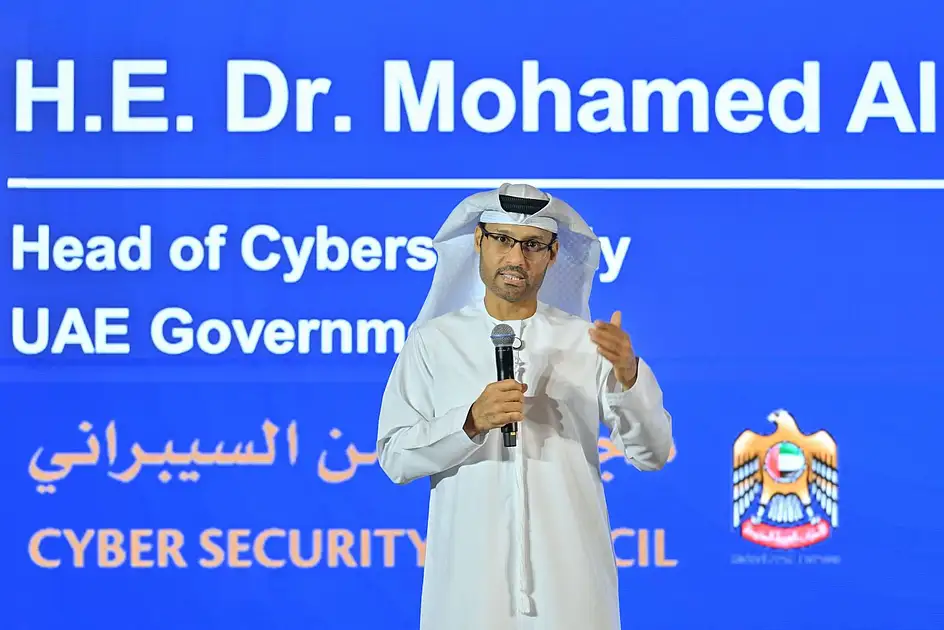
Dr Mohamed Al Kuwaiti urged people to be more cautious online, as AI makes it increasingly difficult to distinguish authentic information from manipulated or fabricated content
- PUBLISHED:Mon 24 Aug 2026, 6:00 AMUPDATED:Mon 24 Aug 2026, 10:59 AM
- By:
- Haneen Dajani
Add as a preferred source on Google
- Share:
A single malicious programme could potentially disrupt an airport, bring parts of an essential service to a standstill or cripple critical digital infrastructure, the UAE’s top cybersecurity official has warned as cyberwarfare emerges as a growing threat
Dr Mohamed Al Kuwaiti, Head of Cybersecurity for the UAE Government, said cyber threats were evolving from conventional cybercrime and cyberterrorism towards attacks aimed at disrupting or destroying the digital infrastructure that keeps essential services running
Stay up to date with the latest news. Follow KT on WhatsApp Channels
“The war in cyber, digital currencies and the virtual world is much bigger than what it was today,” he told Khaleej Times, describing cybersecurity as an increasingly important front in modern conflicts
He said the UAE was currently facing an average of around 600,000 cyberattacks a day, with the number reaching about 800,000 a day at the peak of the war. “It’s still a lot; why? Because there’s a war. And as long as you have a war, there are a lot of things that you try to enter and extract data and information from.”
Al Kuwaiti said the threats facing the UAE could broadly be divided into three areas: cybercrime, cyberterrorism and cyberwarfare. Cybercrime includes attacks involving theft, fraud, espionage and the spread of rumours and other malicious activity, while cyberterrorism involves the use of technology and online platforms to spread extremist ideas
Al Kuwaiti said the second major threat, which he described as cyberterrorism, involves using social media, online games and other digital platforms to spread false ideas, undermine social cohesion and encourage radicalisation
“Cyberterrorism is the use of technology today, social media networks, electronic games and other means available to all parts of society to spread the false idea and strike at the loyalty of the state.” He said the threat had not disappeared, despite changes in the way extremist groups operate online. “It’s still there. It’s intended to destroy, hit and influence any of the ideas of the youth.”
Al Kuwaiti said the threat had also evolved towards what he described as the “lone wolf” model, in which an individual can be radicalised and act alone rather than as part of a larger group
“There will be one person, and his mind will be brainwashed. He will tell you he is the one who will make this change, even if it starts with one person.” He said the idea was to convince an individual that they could become the person who makes the change, rather than relying on a large group to carry out an attack
The cybersecurity chief also warned about the influence of violent content on children, particularly through online games. “All children’s games are killing games,” he said. “So how do you tell these children that these are games? This is a virtual world, and this is a real world.”
He said the challenge was to ensure young people understood the difference between the virtual world and real-world behaviour while remaining grounded in the values and responsibilities of society
Al Kuwaiti said this was whycybersecurity awarenesscould not be left to government agencies or specialists alone. “Society is the first line of defence,” he said, stressing the importance of building awareness among children, parents and communities
But cyberwarfare represents a more direct threat to the functioning of a country, as attackers increasingly seek to target the systems behind critical infrastructure
“What we have seen in recent times is an attempt to strike, wipe out and destroy the digital infrastructure.”
He pointed to sectors including electricity, water, a digital systems
“We’ve seen viruses trying to enter and destroy this sector and trying to take away the main movement in it.”
The potential consequences can be significant even if the malicious programme itself appears small
“Imagine an airport and a plane, and a little bit of virus entered and stopped this whole plane and affected the whole sector.”
Al Kuwaiti described the possibility of a cyberattack affecting aircraft as one of the most serious threats facing the UAE today
He said the evolution of these threats meant the country had to remain prepared even as technology continued to change
“Technology will always change with us,” he said, pointing to the progression from digital transformation and e-government to artificial intelligence, quantum technology, autonomous systems, robots and drones
While those technologies bring economic and social benefits, he said the human element remained the most important line of defence
“What does not change here is the individual. The process of the individual being aware, the process of the individual having this culture.”
He urged people to be more cautious about information they encounter online, particularly as artificial intelligence makes it increasingly difficult to distinguish authentic material from manipulated or fabricated content
“Today, with modern technology, seeing is no longer believing.”
People should verify information before clicking links, opening applications or acting on messages, he said, particularly when money or personal information is involved
“You should always have this caution.”
Al Kuwaiti also stressed the importance of parents staying close to their children as young people spend more time online and are exposed to games, social media and other digital platforms
“If you don’t talk to your child, someone else might talk to him, mislead him or deceive him.”
He said the UAE’s approach was, therefore, not limited to cybersecurity specialists or government agencies but involved society as a whole
“We call it the whole nation approach, which is that everyone does this to be an example and a model to be followed in this society.”
That philosophy is also behind initiatives such as the Cyber Run, which he described as a social activity designed to take cybersecurity awareness beyond government offices and into communities
The initiative brings together people of different ages while using sport as a way to discuss cybersecurity, online crime and the need for greater awareness among children, families and communities
For Al Kuwaiti, the message is ultimately about ensuring that technological progress is matched by human awareness
His advice to the public is simple: pause, verify and think twice before acting online
“Our message today to this society is to think twice before making a decision,” he concluded
Related:
Digital Automation Training Benin: 5 Winning Skills Employers Demand in 2026
WhatsApp Marketing Automation Africa: 6 Dangerous Mistakes Brands Make in Nigeria
Want to learn this practically?
Join Justfine Infotech and build real digital skills in AI, automation, web development, digital marketing, office productivity, e-commerce, freelancing and cybersecurity.
Available Programmes:
6 Weeks Certificate • 3 Months Professional Certificate • 6 Months Diploma • Full Professional Diploma
WhatsApp:
+229 01 57 57 99 15
+229 01 66 68 11 60
Source: www.khaleejtimes.com


 English (UK)
  Français