

From views to value: YouTube’s metric shift challenges creator economics
YouTube is changing what a “view” means and the move could force advertisers, creators and agencies to rethink one of the most widely used metrics in the creator economy
Starting August 24, 2026, YouTube will standardise its public audience measurement across video formats, counting a playback as a view from the very first frame. The move builds on the change introduced for YouTube Shorts last year and is intended to create a common measurement baseline across long-form, Shorts and live content
YouTube updates public view count policy across all video formats
On paper, it sounds like a straightforward measurement upgrade. In practice, however, it raises a more complicated question for the advertising industry: does being counted as a view mean someone actually paid attention?
A view is not attention
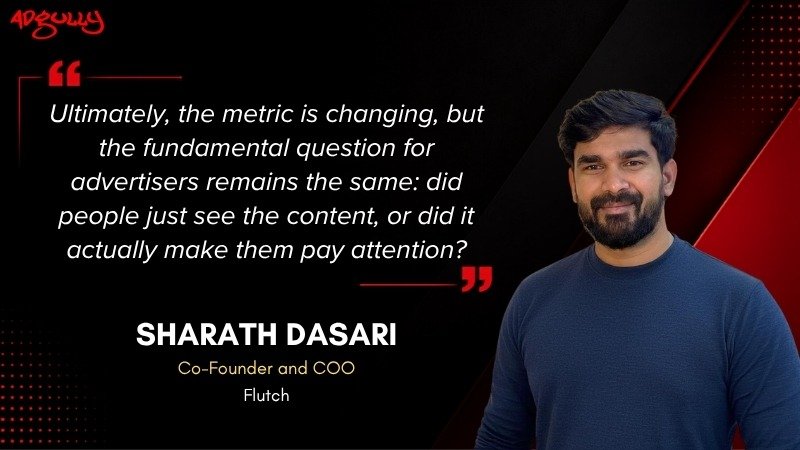
ForSharath Dasari, Co-Founder and COO, Flutch, the new metric certainly makes YouTube views easier to interpret across formats, but advertisers should be careful about assigning too much value to the number
“On the surface, this makes YouTube views easier to understand because advertisers now have one consistent definition across formats. But I don’t think brands should suddenly start valuing a view the same way they value attention. A first frame tells us that the content was exposed, not necessarily that it was consumed.”
That distinction could have a direct impact on how brands evaluate creator campaigns. Instead of relying heavily on public view counts, advertisers are likely to put greater emphasis on engaged views, watch time, retention, completion rates and audience quality
“We are likely to see more weight given to engaged views, watch time, retention, completion rates and the quality of the audience when evaluating creator campaigns,” Dasari says. “Public views can remain an important top of funnel metric, but they should not become the sole basis for creator valuation.”
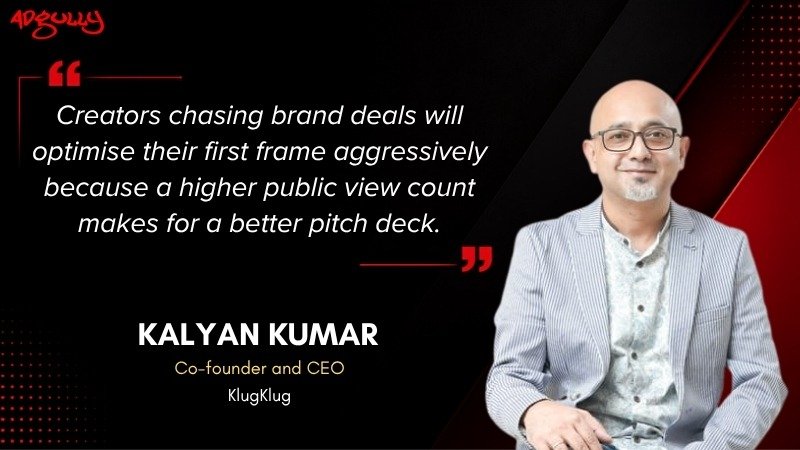
Kalyan Kumar, Co-founder and CEO, KlugKlugopines,“YouTube has basically confirmed what the data was already showing, a view is not a view, and public view count is now officially a reach number while engaged views tell you whether anyone actually cared, and these are two completely different things that brands have been treating as one for far too long.”
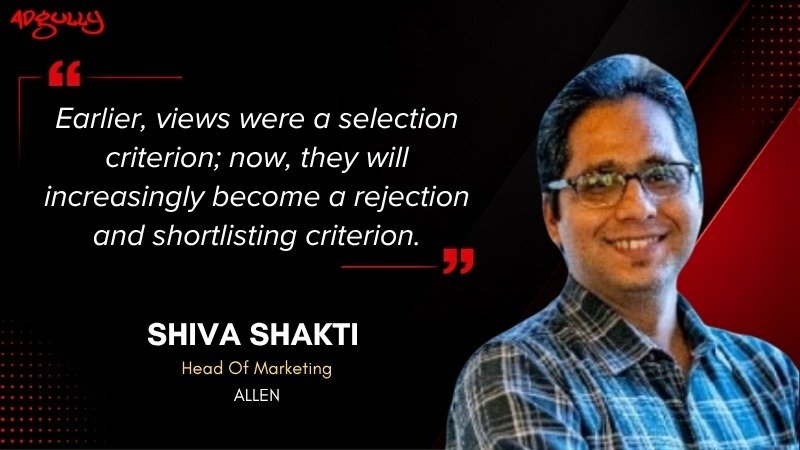
Shiv Shakti, Head Of Marketing, ALLENsaid, “From a brand’s perspective, raw views will become more of a scale and shortlisting metric rather than a direct measure of content performance. Earlier, a high view count itself could be a strong selection criterion for creators/channels.”
He further says with views now registering from the first frame, advertisers will need to look beyond public views and build benchmarks around engaged views, watch time, retention, completion rate, audience quality and conversions
For advertisers, then, the headline number may become easier to compare, but the underlying question remains much harder to answer: what did the viewer actually do after the first frame?
The first frame gets more valuable
The change could inevitably influence creative strategy. If a view is registered from the first frame, creators may have even greater incentive to make those opening moments compelling
Dasari believes that will matter, but it cannot replace storytelling
“From a creator perspective, stronger first frame hooks are definitely going to matter because earning that initial exposure becomes easier to measure.”
But he adds an important caveat: “But the creators who build sustainable value are still the ones who can hold attention after the first few seconds.”
His conclusion is that creators should not have to choose between a powerful hook and sustained engagement
“So, I don’t see this as a choice between hooks and retention. The best creators will optimise for both: a strong first frame to stop the scroll, and strong storytelling to make people stay.”
Vishal Prabhu, Creative Director – Strategy, White Rivers Media, similarly believes the change will not fundamentally alter how sophisticated advertisers evaluate creators
“I don’t think this fundamentally changes how serious advertisers in India evaluate creator partnerships because most brands and agencies already look beyond public view counts.”
Campaign decisions, he says, are already influenced by “audience retention, watch time, engagement quality, audience demographics and, increasingly, business outcomes.”
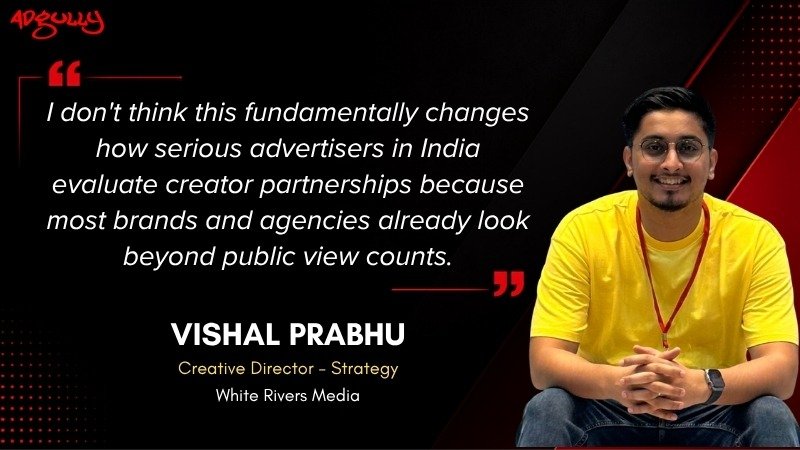
“What this update does change is what the public view count represents. Going forward, it becomes a stronger indicator of exposure than of attention.”
Prabhu sees that as a potentially positive development because it could push the industry further away from vanity metrics
“In many ways, that’s a positive shift. It nudges the industry away from celebrating vanity metrics and towards evaluating the quality of attention. Ultimately, advertisers don’t invest in views. They invest in influence, and influence has always been measured much deeper than a public number.”
Creators already know the value of the hook
The debate around first-frame hooks is not entirely new. Short-form content has already trained creators to compete aggressively for attention in the opening seconds
Prabhu does not expect creators to suddenly reinvent their strategies simply because of YouTube’s metric change
“Strong openings have already become part of the language of digital content, especially with the rise of short-form video. I don’t think creators will suddenly start chasing hooks because they’ve been doing that for some time.”
What remains critical is what happens next
“The opening earns attention, but the rest of the content determines whether people stay, remember the message and take action. That’s what brands ultimately care about.”
He believes the new system could actually make the distinction between reach and engagement clearer
“Public views will indicate how many people the content reached, while retention and engaged views will increasingly define creator quality during brand conversations. The creators who consistently deliver both will continue to command the strongest commercial value.”
Kumar comments, “Retention is what actually builds an audience. Hooks get people to stop scrolling for two seconds, that’s not influence, that’s interruption. Brands should understand this and brief creators accordingly otherwise they will keep chasing a number that means very little now.”
Three metrics, three different questions
ForAbhilash Singh, Chief Revenue Officer, Socioclout, the industry needs to become smarter about interpreting views rather than simply celebrating larger numbers
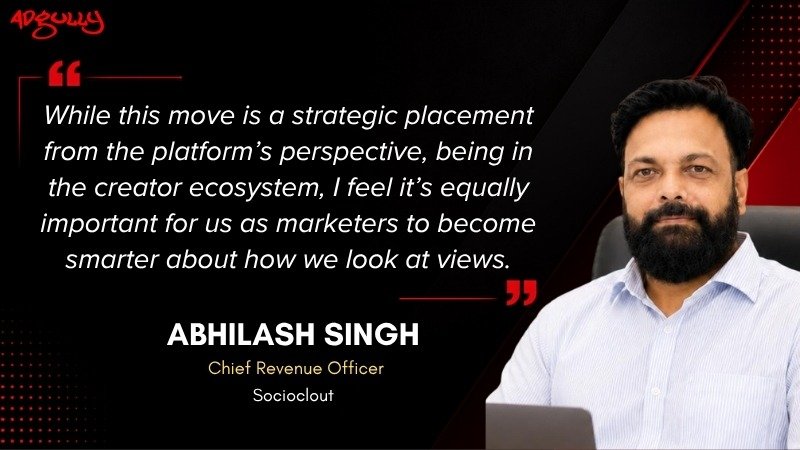
“While this move is a strategic placement from the platform’s perspective, being in the creator ecosystem, I feel it’s equally important for us as marketers to become smarter about how we look at views.”
Counting a view from the first frame can be useful if the objective is to understand exposure. But, he stresses, exposure and attention are fundamentally different
“If we want to understand how many people were exposed to a piece of content, counting a view from the first frame can help. But exposure and attention are two very different things.”
And while creators may put even more emphasis on their opening seconds, Singh says a hook has limits
“Yes, creators will probably put even more focus on the first few seconds. But in reality, a good hook can make someone stop, it cannot guarantee that they will pay attention.”
The metrics that follow therefore become critical
“The real question is Did the viewer stay? Did they engage? Did they eventually take an action?”
Singh reduces the equation to three simple measures: “Views tell you how many people you reached. Retention tells you how many actually cared. Conversions tell you whether it worked.”
For advertisers, he believes all three need to be considered together rather than allowing the biggest view count to determine campaign value. “Because one can only truly understand the impact of a campaign when you step back and look at the larger picture,” he says
For Shakti, the content strategy will still work in two stages: First frame/thumbnail/title → Earn the view Content quality → Earn the attention Retention & engagement → Prove the value. “The metric change may not fundamentally change how creators design the first frame, but it could increase the temptation to use clickbait to maximize initial views. In the long run, advertisers and platforms will still rely on engaged views, watch time, retention, and overall audience quality to determine whether those initial views actually translated into meaningful consumption,” he says.
From eyeballs to resonance
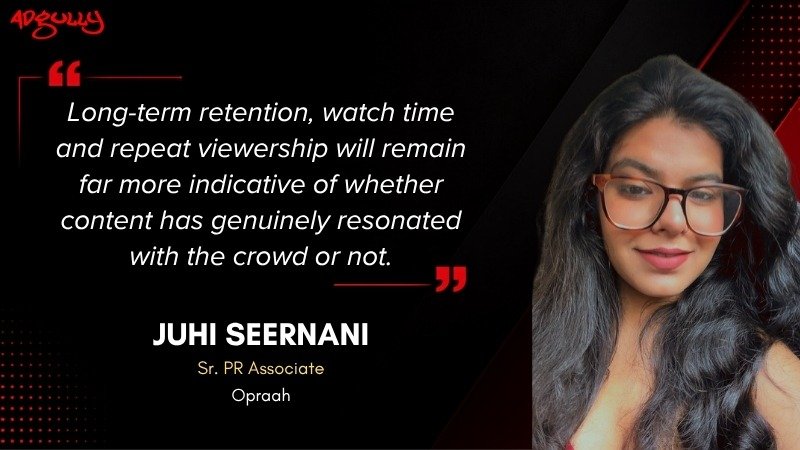
Juhi Seernani, Senior PR Associate, Opraah, believes the change will push advertisers to draw a sharper line between reach and resonance
“Advertisers will increasingly have to decouple reach from resonance when evaluating creator campaigns.”
She acknowledges the value of a standardised view metric, particularly because it creates a consistent baseline across long-form, YouTube Shorts and live content. But an initial view should not automatically be interpreted as engagement or influence
“I expect brands to continue using public views as a TOFU indicator while placing greater emphasis on retention, average view duration, engaged views, interactions and conversions when assessing the actual efficacy of a campaign.”
That could ultimately make creator valuation more sophisticated
“Rather than a simplistic ‘n number of views equal n value’ approach, advertisers will need to examine the quality of those views and the depth of attention they generate.”
For Seernani, the commercial value of a creator lies beyond the sheer number of eyeballs
“In the creator economy, the commercial value isn’t merely the quantum of eyeballs, but the credibility and influence a creator has within those eyeballs.”
The hook may win the view. The story has to win the audience
Seernani expects greater emphasis on the first frame because creators naturally respond to the metrics that platforms make most visible
“There will inevitably be greater emphasis on the first frame and opening seconds for a ‘Hook’ because creators are highly responsive to the metrics that are made most visible.”
But she does not expect sophisticated creators to sacrifice retention simply to engineer an initial view
“The first frame can earn you the impression; the subsequent frames have to earn the audience’s attention.”
Long-term retention, watch time and repeat viewership, she says, will remain better indicators of whether content has actually resonated
“If anything, this change reinforces the distinction between visibility and meaningful engagement. Creators will become more intentional about hooks, but the ones building sustainable audiences will continue to optimise them for narrative depth and sustained attention.”
That distinction will also matter to brands evaluating creators
“For brands, that distinction will be equally important when evaluating whether a creator can just merely generate exposure or actually influence the consumers behaviour.”
Lastly, Shakti sums it up by saying, “The first view may become easier to earn, but meaningful attention will remain difficult to earn and that is where the real value will continue to lie.”
A bigger number, but a more nuanced measurement game
YouTube’s move may make its public view count cleaner, more consistent and easier to compare across formats. But it could also expose the limitations of treating a single number as a proxy for audience attention
For creators, the first frame could become even more strategically important. For advertisers, however, the real work begins after that first frame
The industry may increasingly operate with a hierarchy of metrics: views for exposure, retention for attention, engagement for interest and conversions for impact
That could ultimately be a healthier direction for the creator economy. Instead of asking simply “How many views did it get?”, brands may increasingly ask “How valuable were those views?”
As Dasari puts it, the fundamental question remains unchanged: “Did people just see the content, or did it actually make them pay attention?”
In the new YouTube measurement era, getting counted may happen in the first frame. Earning attention will still take everything that comes after it
Show More
exclusives20-Aug-2026Rohin RameshVishal PrabhuAbhilash SinghJuhi SeernaniSharath Dasari
Related:
Digital Automation Training Benin: 5 Winning Skills Employers Demand in 2026
WhatsApp Marketing Automation Africa: 6 Dangerous Mistakes Brands Make in Nigeria
Want to learn this practically?
Join Justfine Infotech and build real digital skills in AI, automation, web development, digital marketing, office productivity, e-commerce, freelancing and cybersecurity.
Available Programmes:
6 Weeks Certificate • 3 Months Professional Certificate • 6 Months Diploma • Full Professional Diploma
WhatsApp:
+229 01 57 57 99 15
+229 01 66 68 11 60
Source: www.adgully.com


 English (UK)
  Français