

EDITION→
Global
•
USA
•
UK
•
AUNZ
•
CANADA
•
IRELAND
•
FRANCE
•
GERMANY
•
ASIA
•
EUROPE
•
LATAM
•
MEA
Edition : InternationalLanguage : English
HOME
NEWS
CREATIVE LIBRARY
IMMORTAL AWARDS
MEMBER COMPANIES
PEOPLE
JOBS
How LBB WorksPlans & PricingEditorial Toolkit

news
NEWS
CREATIVE LIBRARY
IMMORTAL AWARDS
MEMBER COMPANIES
PEOPLE
JOBS
Login or Register
Brand Insight in association withLBB Newletter
Brand Insight
“No Account Theatre”: Why WeRoad’s CMO Swapped Agency Presentations for a WhatsApp Group
19/05/2026
lbbonline.com
0
LIKE
ADD TO COLLECTION
19/05/2026
Share
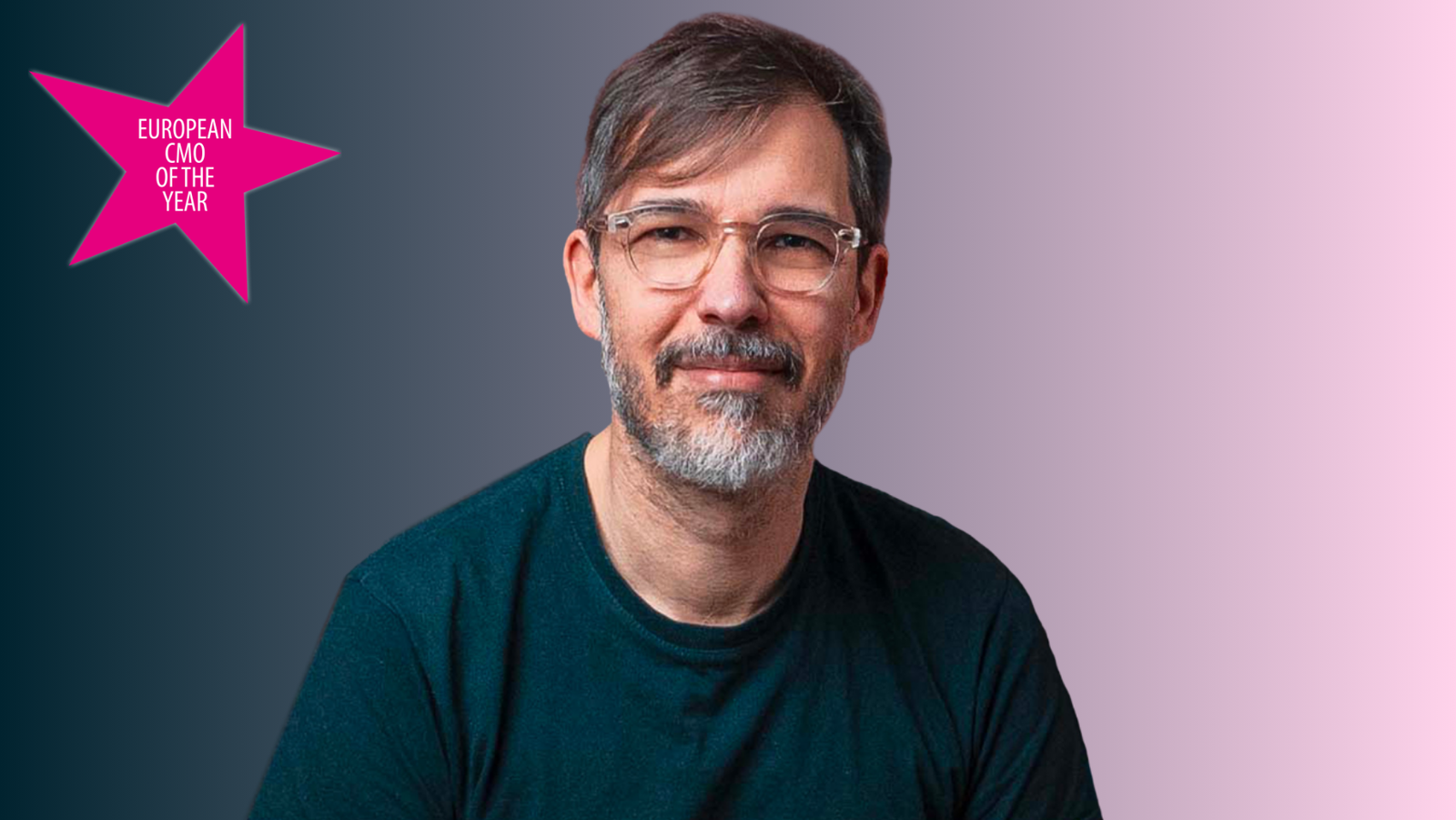
Fabio Bin, chief marketing officer at WeRoad, on the power of in-house marketing, hacking AI, and treating brand relevance as a discipline, as part of our series getting to know the marketing leaders nominated for the European CMO of the Year Award
As the inaugural European CMO of the Year Award approaches, LBB is speaking with the marketing leaders setting the benchmark for the region. Continuing our new Q&A series is Fabio Bin, chief marketing officer at WeRoad
In a landscape obsessed with short-term metrics and performance dashboards, it’s easy to mistake efficiency for effectiveness. For Fabio, long-term success lies in defying the “sea of sameness,” cutting through the slow, traditional agency model in favour of deeply embedded partnerships, and viewing everything a company does—from customer service to employee posts—as marketing. Here, he discusses why he’d rather hack AI than use a chatbot, and the courage required to reinvent a category.
LBB> What principles do you put most faith in when it comes to directing your brand’s marketing?
Fabio> I have a very personal view of marketing. I believe that more than 20 years of obsession with performance marketing, measurability, dashboards, and attribution have not killed marketing, but have certainly flattened it into something much more average than it used to be. In many categories, we have mistaken efficiency for effectiveness
Very few people fully recognise that brand is still the key driver of medium- to long-term success
So for me, the principles that matter most are these: earning attention rather than buying it by default, staying relevant in culture, sometimes in a slightly situational or unconventional way, speaking the language of the target audience rather than the language of the company, and maintaining salience throughout people’s everyday lives, not just when they are ready to buy
The real challenge is not only to be remembered at the moment of conversion. It is to keep the brand alive, recognisable, and resonant in the daily life of your audience
LBB> What are the biggest demands on your time and attention as a CMO in 2026?
Fabio> I don’t like mentioning AI because it has become the most predictable answer in marketing, but it would be dishonest not to. AI is clearly one of the biggest themes of the moment, and the real challenge is understanding how to integrate it in a way that feels strategically organic to your way of doing marketing, rather than treating it as a bolt-on solution or a gimmick
A few years ago, one of the principles I introduced to my team was “no chatbot, only human conversation.” I obviously had to evolve that position. The question now is not whether AI should be part of the marketing process, but how
For me, there are at least three areas:
- Using AI to scale the production of creative assets without losing brand distinctiveness.
- Using it as a tool for brainstorming, ideation, and creative exploration.
- Hacking it, playing with it, and sometimes even making AI itself part of the campaign output, including by mocking it a little.
I think the real opportunity is not just operational efficiency. It is finding ways to make AI native to the brand’s creative language rather than generic
LBB> What do you need most from creative partners such as agencies so that you can achieve your goals?
Fabio> I have long believed that the communications system is fundamentally broken. That is one of the reasons why I have always believed so strongly in bringing as much of the marketing process in-house as possible: strategy, creativity, media planning, buying, production, all of it
Too often, when you work with an agency, you get trapped in a slow and slightly absurd cycle: internal stakeholder, then account manager, then creatives, then proposal, then endless rounds of rework. The same often happens with media planning and buying. You are shown numbers, outputs, and PowerPoint slides, but you are never really inside the thing
If I am buying a billboard, I want to know exactly where it is. I do not want to be told it is part of some network plan that I cannot really see or control
And because the traditional process is so slow, it becomes almost impossible to exploit real-time opportunities, piggyback on cultural moments, or do truly reactive marketing
So when I do work with agencies, I only really believe in one model: independent partners that operate almost like an extension of the internal team. They need to be deeply embedded in the business, and all the unnecessary layers need to disappear. No account theatre, no presentation rituals, no excessive mediation
The best example we have had was with a creative agency where we simply opened a direct WhatsApp group between our team and their creatives. Everyone worked as one team. That is the closest I have seen to an agency model that actually works
LBB> When you have ambitious marketing ideas, how do you work to convince other parts of the company that they’re worthwhile?
Fabio> I am actually very lucky on this front. I am part of the founding team, and my business partners have always been very aligned with the idea that marketing should be bold, distinctive, and sometimes even a little edgy. Experimentation, guerrilla thinking, and taking unconventional bets are very much part of our DNA. So paradoxically, I often find myself having to push my own team to be even more daring and less conservative, even though they are already much bolder than the average marketing team.
More broadly, though, I think the key is making sure ambitious ideas are not presented as stunts for the sake of it. They need to connect back to a very clear strategic logic: why this idea fits the brand, why it matters now, why it will resonate with the audience, and why being memorable sometimes matters more than being perfectly tidy. If people understand the strategic coherence behind the boldness, the conversation becomes much easier.
LBB> Most job descriptions for a CMO look the same, but the reality is very different. What is the one personal ‘superpower’ or trait you rely on most to survive, which never appears on your CV?
Fabio> I completely agree. The role varies enormously depending on the industry, the business model, the maturity of the company, and even the culture of the founders. Some companies need a highly technical marketer, almost growth- or performance-first. In others, marketing is very close to sales. In others again, it is much closer to communication and brand building
In my case, I would say I am one-third marketing, one-third content, and one-third digital product, all mixed together. But everything is driven by a strong creative instinct and a slightly reckless bias toward action
If I had to define my superpower, though, it is probably my tendency to look at marketing as something much bigger than the marketing function itself.One of our internal mantras is “everything is marketing,” and I genuinely believe that. Promotions and discounts are marketing. Customer service is marketing. The partners you choose are marketing. The product itself, of course, is marketing. Employees’ posts are marketing. Investor communication is marketing. The way you answer a customer email is marketing.
I think many companies still make the mistake of treating marketing as a department. I see it more as a layer that sits across the whole organisation
So my superpower is probably the ability to connect dots that sit outside the traditional boundaries of marketing, including many things that are not directly or immediately measurable, and then help the organisation see those dots as part of the same picture
LBB> If you were to leave your role tomorrow, what is the one initiative or cultural shift you have built that you hope would survive without you?
Fabio> Probably three things:
- The belief that brand personality is not decoration. It is one of the main drivers of success.
- The idea that staying relevant and resonating with your audience continuously, not occasionally, is essential. Relevance is not a campaign. It is a discipline.
- The belief that not everything that creates value can be immediately reduced to a spreadsheet or tied to a clean short-term ROI. Some of the most powerful effects in marketing compound over time, even when they are harder to measure in the moment.
If those three ideas survive, I would feel I left something meaningful behind
LBB> What sort of marketing makes you most jealous and/or admiring of other CMOs?
Fabio> The brands I admire most are the ones that refuse to play by the book. The ones that invent entirely different ways of communicating and, by doing so, become culturally relevant rather than just commercially visible. I am especially drawn to brands that manage to reinvent a category simply by changing the angle, doing the thing that everyone in the category was too cautious, too conventional, or too afraid to do.
The early BrewDog is a great example, Ryanair in its own way too, Oatly. And above all, Liquid Death. What I admire in all of them is not just creativity. It is courage combined with clarity. They do not just make noise. They make the category look outdated by comparison
CreditsAdd my Credit
Brand Insight in association withLBB Newletter
More News from European CMO of the Year
Revolut’s Antoine Le Nel on Bringing a “Completely Fresh Philosophy” to the Banking Sector01/06/2026
MINI’s Global CMO on Why Brands Need Participation, Not Just Reach29/05/2026
‘Alignment Isn’t Won by Enthusiasm, It’s Won by Clarity’: Philips’ Vincent Sieben on Balancing Strategy and Energy28/05/2026
ALL THEIR NEWS
Work from European CMO of the Year
ALL THEIR WORK
SUBSCRIBE TO LBB’S newsletterEnter your email
FOLLOW US
Events
DPA + SLA (+ US Add.)
MyLBB Score
About Us
Contact
Editorial Toolkit
Help & FAQ
Privacy Policy
Main Terms & Conditions
Newsletters
Create your own LBB icons
How it works
Plans & Pricing
LBB’s Global Sponsor

Language:English
© 2005-2023 LBB Ltd·Privacy and Cookie Policy·Terms and Conditions
v2.25.1
Related:
<a href="https://yoursite.com/automation-training-benin/” title=”Digital Automation Training Benin: 5 Winning Skills Employers Demand in 2026″>
Digital Automation Training Benin: 5 Winning Skills Employers Demand in 2026
WhatsApp Marketing Automation Africa: 6 Dangerous Mistakes Brands Make in Nigeria
Want to learn this practically?
Join Justfine Infotech and build real digital skills in AI, automation, web development, digital marketing, office productivity, e-commerce, freelancing and cybersecurity.
Available Programmes:
6 Weeks Certificate • 3 Months Professional Certificate • 6 Months Diploma • Full Professional Diploma
WhatsApp:
+229 01 57 57 99 15
+229 01 66 68 11 60
Source: lbbonline.com