

What freelance life taught me about my ADHD, burnout and what I need to make great work
Graphic designer Andrew Bell shares his personal journey from full-time to freelance and back again, and how he’s gradually come to understand the working conditions he needs after being diagnosed with inattentive ADHD
Words
—
Date
28 September 2026
Tags
Share
While I was at college and university, I was in my element. Graphic design was the first subject that made me feel genuinely capable. It kept me focused, interested, and stimulated a part of my brain that nothing else could. I was focused and full of enthusiasm, completely absorbed in the projects and ideas I was working on at any given time. I could spend hours studying GF Smith paper samples, the work of Stefan Sagmeister, typography from Hoefler & Frere-Jones, and endlessly scrolling through the Dieline. The possibilities graphic design presented to me felt limitless.
Looking back, I realise I was able to focus and fixate so intently because the supporting structures were already in place, quietly all around me: I was living at home, so I didn’t have the pressure of rent or feeding myself. All I needed to concentrate on was design, learning and experimenting. There were routines, deadlines, projects and a regular pace that I didn’t have to think about – they were simply part of the environment I inhabited, and I think that enabled me to become fully immersed in the creative work without having to think too much about anything else.
“Faced with few parameters to work within, I felt like I was drifting about in space, frozen and unable to begin.”
Andrew Bell
Thinking back on those first jobs, I realise how restless I felt. A lack of direction, structure, and routine, along with a series of internships with little guidance and their seemingly endless self-directed briefs, drove me to insanity. Being given a blank sheet of paper and asked to come up with something original made me do mental backflips as I tried to figure out where to begin
Faced with few parameters to work within, I felt like I was drifting about in space, frozen and unable to begin. This would become a theme in my early agency days. I would start a new job hoping for a different result, only to become disillusioned when it turned out almost exactly like the previous. I never stayed anywhere for more than two years. I was frustrated, distracted and consistently unable to achieve that coveted flow state.
The odd point was that, on paper, my career seemed to be going well: I was employed at respectable agencies and gaining experience, but my confidence wasn’t growing (quite the opposite). I didn’t feel I was progressing. My energy, passion, and creativity were being slowly diminished. I thought the problem was with me: perhaps I wasn’t good enough. Maybe all I needed to do was work harder
In reality, I wasn’t asking myself the right questions: what do I need to produce my best work? What isn’t working for me? I crave structure and organisation, yet I wasn’t taking the time to create structure around my own career, or to consider what I needed from it to succeed. After a series of similar experiences, I still hadn’t discovered what my mind was missing. I’d subconsciously backed myself into a corner and felt like there was no alternative but to go freelance. So I left my last full-time job, hoping that I could work out what was missing.
“I crave structure and organisation, yet I wasn’t taking the time to create structure around my own career, or to consider what I needed from it to succeed.”
Andrew Bell
As I left my last job, I remember feeling a nauseating combination of fear and excitement, as if I’d stood up too quickly and gotten lightheaded. For the first time in a long time, I started making choices based on what I really needed rather than what I had been told was expected of me, and that sense of autonomy was very freeing
Suddenly, I had options: where to work, who to contact, and which opportunities to take on. I could get in touch with people I respected and ask them if they would like to work with me, and as more and more people said yes, my confidence returned. Although it must have looked chaotic from the outside, freelancing regularly felt very structured. A project may entail travelling to a new studio, receiving a brief, working for a fixed period, being paid an agreed daily rate, and then leaving.
The asks were usually clearer: it made sense for the agency or client to have all the pieces ready, so I could hit the ground running. I enjoyed the combination of structure and variety because I could work with different people, in different places, on different tasks, yet still have a defined role to play. The separation meant fewer opportunities to get involved in internal politics, and I could therefore concentrate solely on the work. It was really satisfying, and I would get a great dopamine hit with every invoice I sent off, each one tangible proof of my success.
Soon after, I got opportunities to work with agencies and individuals I had really admired, and the confidence and momentum I gained from that was substantial. This worked for a long time; from 2019 until 2025, I was never really quiet. There was always something that needed doing: a brief, an email to send, an overdue invoice to chase – the list went on
“The undiagnosed ADHD was still present in the background, influencing and directing the way I made decisions.”
Andrew Bell
Yet the undiagnosed ADHD was still present in the background, influencing and directing the way I made decisions. I’m a people-pleaser who fears letting people down, and I formed a habit of saying yes to too much. I rarely took more than ten days’ holiday because I was always afraid that if I said no, people might not contact me again or that I would miss out on an opportunity
I filled my calendar, at least in part, because being busy gave me a sense of what was coming next and provided a structure of sorts. If I kept my days packed, it meant I had no time to plan ahead or ask myself important questions, such as where I want to be in five or ten years. The issue was that work eventually took over my whole life, and the distinction between my personal and working life became blurred.
By 2025, I found myself craving something different; the excitement and novelty were beginning to fade, and I started to desire stability, collaboration and mentorship. I wanted to work more closely with others and finally started to consider what shape this next phase of my career might take
I’d describe those years of freelancing as an experiment in figuring out how I worked best. I didn’t realise I was doing it at the time, but I was trying different environments, people, workflows, and ways of working, gradually figuring out what I liked, what I disliked, what gave me energy, and what drained it
During this time, I told myself that I could never go back to an agency full-time because I wasn’t cut out for what I thought full-time work was. What I didn’t realise was that I was slowly developing a much better understanding of the conditions I actually needed to work in
“I could finally identify the chronic procrastination loop of delaying tasks until there was just enough time left to pressure me into action.”
Andrew Bell
By early 2026, I had to face my fears and do the work to better understand my busy brain. This led to me being assessed and diagnosed with ADHD, which initially was a surprise to me (but not so much for the people around me). All of the signs were there, I just wasn’t looking for them. For years, things I regarded as personal failures began to make much more sense
I could finally identify the chronic procrastination loop of delaying tasks until there was just enough time left to pressure me into action. If I could look at a task and gauge that it would take me half a day, I would wait until I had exactly half a day before starting it. This arrangement worked until another task got thrown into the mix. If that happened, everything would descend into chaos. I would regularly work late to meet deadlines, playing a constant game of catch-up. This cycle would repeat itself over and over again throughout my adult life. It was totally exhausting.
For years, I convinced myself I was lazy because I struggled to get started. I once mentioned this kind of negative self-talk to a friend, and they asked me, “Would you say those things to one of your friends?” Of course I wouldn’t. Although it was a very simple question, it had a huge effect on the way I saw myself. The diagnosis didn’t instantly fix all the problems, but it did provide me with a framework for understanding some of the patterns I had been trapped in and allowed me to be nicer to myself. Now that I was able to recognise these patterns, I proceeded to experiment with different ways to interrupt them.
I’ve since incorporated a lot more external structure into my daily routine. I make heavy use of Apple Reminders and split my jobs into smaller, actionable tasks that feel achievable. Every time I tick a task off my list, my brain is rewarded with the sweet little dopamine hit it craves
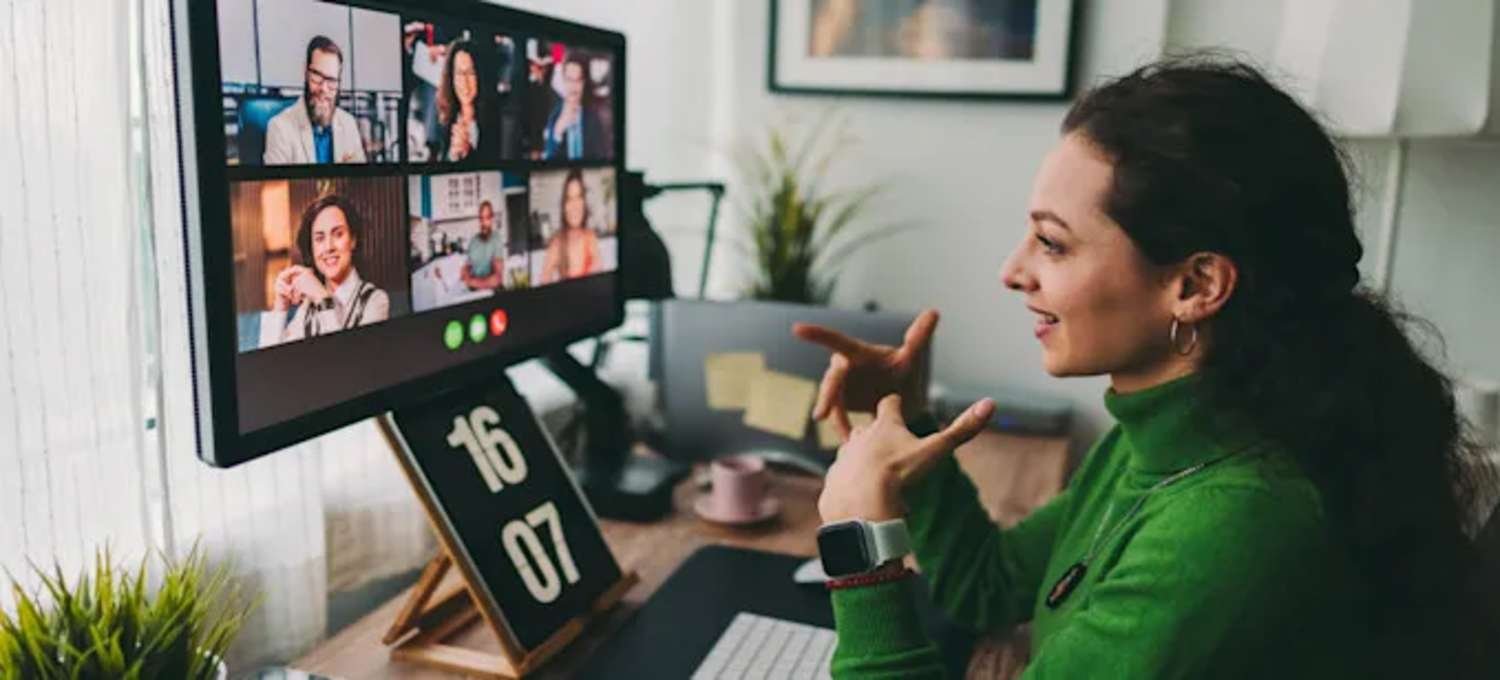
When I need a clear beginning and end, I use visual timers. I have fixed routines that are the same every day. Every morning, I chat with my colleagues at 9:15 for 30 minutes to kick off the day. This never changes, and serves as a form of structure that signals to my brain that the workday is starting. It’s always there and doesn’t take up any headspace to set up or plan
“The diagnosis didn’t instantly fix all the problems, but it did provide me with a framework for understanding some of the patterns I had been trapped in.”
Andrew Bell
My working environment is massively important to me. I work more effectively in a quiet and private place, away from a lot of other stimulation. I need routine, but I also need novelty, variety and interest to stay engaged. It’s a fine balance
I have also learned to include firebreaks: activities such as lifting weights, exploring country parks, observing animals, woodworking, reading, and dancing. These all help to break the feeling that work is just one continuous stretch of time and help separate my life from my work. I’m far more aware of my energy levels, my boundaries, and when I am nearing the point where I need to stop rather than grind through.
Armed with a greater understanding of my brain and the findings from my freelance experiment, I began to consider that perhaps I didn’t dislike working full-time at all. Maybe the problem was just that I was working the wrong way
That’s when Ilka came into my orbit. I had known Lisa and Laura, the two founders, since we were at art school, and I had already been working with Ilka as a freelancer for several years, so when the chance arose to join them full-time, I wasn’t facing an unfamiliar environment, and by then I had a better idea of what kind of working environment I needed. Trust rather than surveillance; autonomy, the ability to make decisions, trust to use my own judgement, to be listened to, and flexibility that’s present in practice, not just stated on paper. I also need explicit communication and transparency – not having to guess what people mean or what is going on frees up a lot of headspace. Most importantly, I need to care about the work I’m doing and feel that the people around me are on the same page about what we’re collectively trying to achieve.
“I began to consider that perhaps I didn’t dislike working full-time at all. Maybe the problem was just that I was working the wrong way.”
Andrew Bell
The approach that works for me won’t necessarily work for others, and that’s the point. I don’t believe that workplaces have to be designed specifically with neurodivergent people in mind. Still, they must be open to the possibility that people work in different ways. What might be considered a fun work environment by one person could cause great anxiety for another. For someone who needs a quieter place or a different way of working, it doesn’t necessarily mean they are disengaged, rude, or not in line with the culture. It may simply be that they’re trying to find the conditions that enable them to do their best work.
I used to have an idea of what I believed a normal career path to look like and had just assumed I could succeed by taking that route. It wasn’t until I stopped and took the time to reflect that I actually gained a better understanding of myself and where I wanted to go. That said, the way I work nowadays could well change in five years
For now, I’m learning to pay better attention to my own needs, experiment, reflect, and make adjustments as I go. I’ve accepted that I don’t have to have all the solutions right this minute, and that’s totally fine. I am forever a work in progress
Share Article
Further Info
About the Author
Andrew Bell
—
Andrew Bell is a senior graphic designer at Ilka, a responsible branding studio based between Glasgow and Edinburgh. His work spans branding, editorial, packaging and typography, with a strong emphasis on strategy and research-led design. Before joining Ilka, Andrew worked freelance from 2019 to 2025, collaborating with UK branding agencies and a range of clients, including Skyscanner, The Big Issue, Edinburgh Sculpture Workshop and The Scottish Contemporary Art Network.
View more from
POV
‘Foodie’ culture is exclusionary – these creative cookbooks are offering an alternative
5 days ago
- POV
- Work
- …
Good isn’t good enough: beware the design middle ground
7 September 2026
- POV
- Work
- …
No shortcuts: why AI threatens creative instinct
24 August 2026
- POV
- Work
- …
POV: No, reading is not dead – it’s far more complicated than that
10 August 2026
- POV
- Work
- …
View more from
Mental Health
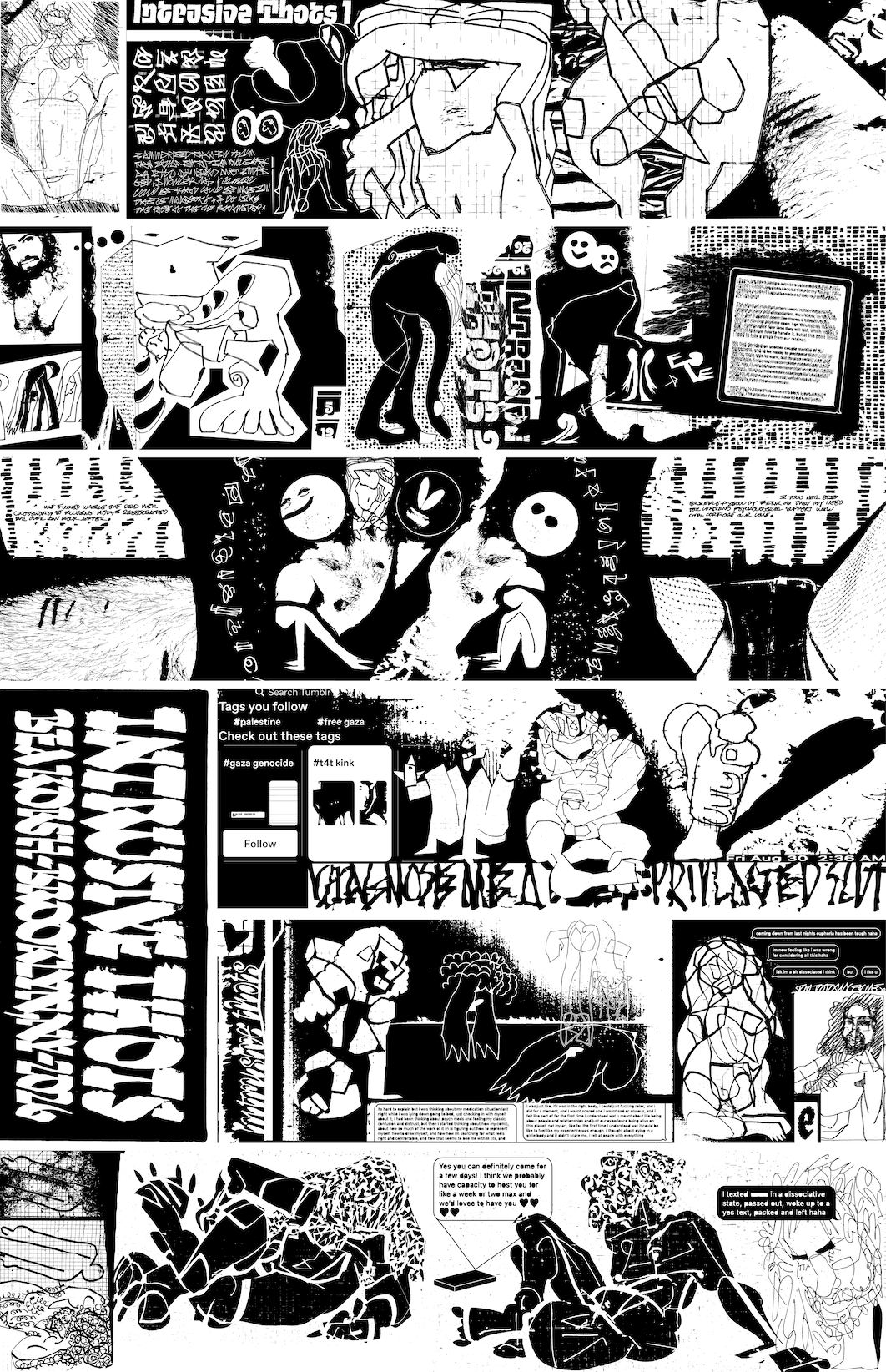
Bea Korsch’s Intrusive Thots is an explosive zine about depression, treatment and recovery
4 days ago
- Work
- Art
- …
Simji Park turns everyday moments into dreamlike vignettes
20 August 2026
- Work
- Animation
- …
Body, mind and printed matter: Angela Lian on how she exercises creative muscles as well as her body’s
15 July 2026
- Nicer Tuesdays
- Work
- …
Eric Aydin-Barberini is throwing out the photographic rule book to make images that truly reflect his perspective as an artist
1 July 2026
- Work
- Photography
- …
Related:
Digital Automation Training Benin: 5 Winning Skills Employers Demand in 2026
<a href="https://yoursite.com/automation-africa/" title="WhatsApp Marketing Automation Africa: 6 Dangerous Mistakes Brands Make in Nigeria”>
WhatsApp Marketing Automation Africa: 6 Dangerous Mistakes Brands Make in Nigeria
Want to learn this practically?
Join Justfine Infotech and build real digital skills in AI, automation, web development, digital marketing, office productivity, e-commerce, freelancing and cybersecurity.
Available Programmes:
6 Weeks Certificate • 3 Months Professional Certificate • 6 Months Diploma • Full Professional Diploma
WhatsApp:
+229 01 57 57 99 15
+229 01 66 68 11 60
Source: www.itsnicethat.com

 English (UK)
  Français