

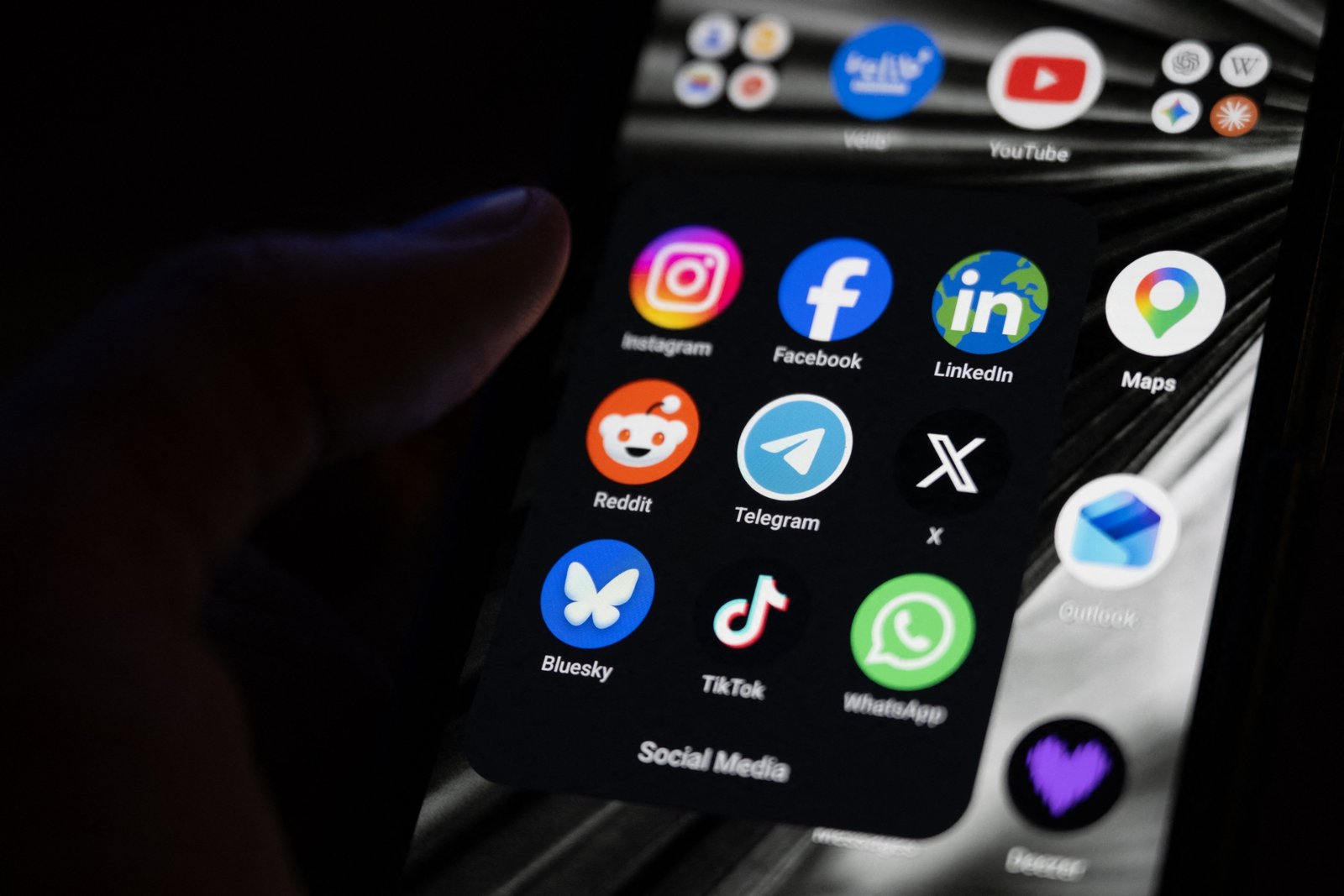
This photograph shows a set up smart-phone screen displaying the logo of main social media platforms including Instagram, Facebook, LinkedIn, Reddit, Telegram, X, Bluesky, Tiktok and Whatsapp in Saint-Mande, east of Paris, on April 29, 2026. Photo by Martin LELIEVRE / AFP via Getty Images
Meta’s AI agent for WhatsApp, Instagram, and Messenger is free to deploy right now — and that changes in 15 days. On August 1, 2026, per-token charges kick in for every conversation the Meta Business Agent handles, at a rate of $2.00 per million tokens, which Meta translates to roughly 4 to 5 cents per message. For any business that has been testing the agent since the platform went live on July 1, the meter is about to start. For any business that hasn’t started yet, the cheapest month to experiment is nearly over.
Meta Business Agent Arrived Globally on June 3
Meta Business Agent is not a chatbot in the traditional sense. It is an AI system capable of autonomous, multi-step action: it answers questions, recommends products from a business catalog, books appointments, qualifies incoming sales leads, and closes transactions — all within a WhatsApp, Instagram, or Messenger conversation, without a human typing a single reply. Over a million businesses were already using an earlier version in pilot markets including India, Mexico, and Brazil when Meta announced the global expansion at its Conversations 2026 conference in London on June 3, 2026.
That global footprint matters. Meta reports more than a billion active conversation threads between businesses and customers across WhatsApp, Messenger, and Instagram every day. The June 3 announcement expanded the agent to businesses of all sizes worldwide and added Instagram — a platform previously served only by WhatsApp and Messenger — completing an omnichannel deployment across Meta’s entire messaging surface.
The agent learns from a business’s own materials: its chat history, website, product catalog, and Facebook page. It responds in the customer’s language and in the business’s established tone. For business owners, it also functions as an operations tool, delivering a morning briefing that summarizes overnight conversations and flags key trends. That feature is currently limited to a test group on WhatsApp Business, Instagram Pro, Messenger, and Meta Business Suite.
What the Token Billing Model Means in Practice
The phrase “token-based pricing” sounds technical. For businesses evaluating whether to deploy the agent, it has a practical consequence that is straightforward: you pay more when conversations are longer and more complex, and less when they are short and simple
A token is a chunk of text that a language model processes — roughly one word or a fraction of a word. When a customer asks the agent a question, the agent reads the customer’s message, pulls relevant information from the business’s knowledge base and any connected systems, reasons about the request, and writes a reply. All of that reading and writing is measured in tokens. Meta’s rate is $2.00 per million tokens. A typical interaction consumes 20,000 to 25,000 tokens, making each message cost approximately 4 to 5 cents, according to Meta’s official pricing documentation.
Critically, Meta bundles both the AI processing and the message delivery into a single token-based charge. Businesses that currently pay separately for a third-party AI model and for WhatsApp message delivery would pay two bills under a self-built approach. Meta’s agent replaces both with one blended rate. Whether that simplification is worth the tradeoff depends on what a business needs from its agent — and on how much control it wants over the system’s behavior.
The free period that began July 1 runs through July 31. Meta has confirmed that billing begins August 1, with monthly invoices issued at the end of each billing period. For businesses that have already connected the agent to their catalogs and systems, that transition happens automatically. For businesses that have not yet tested the agent, the remaining days without a bill represent the lowest-cost opportunity to learn their own token consumption patterns before committing to a budget.
Three Pricing Waves Businesses Must Know
The August 1 billing date is the first of three pricing changes Meta is rolling out on the WhatsApp Business Platform in the second half of 2026
August 1, 2026: Meta Business Agent messages are billed per token at $2.00 per million. This applies to all AI-handled conversations across WhatsApp, Instagram, and Messenger
October 1, 2026: Meta resumes charging for service messages — the free-form replies that businesses or their human agents send inside the 24-hour customer service window. These have been free since November 2024. On the same date, utility templates sent inside that window also resume per-message charges. The practical effect: from October 1, there is no free way to respond to a customer inside an open conversation, regardless of whether the reply comes from the AI agent, a human, or a template. Every response carries a cost.
For businesses that run large human customer service teams handling high volumes of free-form messages, the October change represents a meaningful budget increase. The transition window between August 1 and October 1 — when AI replies are billable but human replies inside the service window are still free — is a useful period to measure how much conversation volume can be shifted onto the agent before the cost of human replies also appears.
What Businesses Actually Control — and What They Don’t
The Meta Business Agent Platform, which opened to partners on July 1, provides the infrastructure layer for larger deployments: API access for integrations, enterprise-grade controls and guardrails, and connections to hundreds of third-party systems including Shopify, Zendesk, and Shopee. It is the difference between switching on Meta’s agent as-is and building a customized deployment tuned to a specific brand’s knowledge, voice, and workflows.
But businesses using Meta’s first-party agent do not control the underlying AI model. Meta has not publicly disclosed which model powers the Business Agent — industry observers note it is likely a proprietary, fine-tuned variant, not standard publicly available weights. That opacity matters for businesses evaluating reliability, auditability, and what happens when the model is updated. A business that needs to know exactly what its agent is doing and why — for compliance, regulated industries, or quality assurance — may find that constraint significant.
The agent also operates exclusively within Meta’s platforms. It does not extend to email, phone support, website live chat, or SMS. For businesses that run omnichannel customer service, the Meta Business Agent covers the messaging surfaces but requires a separate solution for every other channel. Competing platforms handle this differently: enterprise AI agent pricing varies widely — Intercom Fin charges approximately 99 cents per resolved conversation across chat, email, voice, SMS, and social; Zendesk AI starts at around $55 per agent per month across all channels; Salesforce Agentforce charges roughly $2 per conversation with deep CRM integration.
Meta’s structural advantage — one billion daily business conversations already flowing through its platforms — is real and is not easily replicated by any competitor. The agent’s weakness is that it only serves those surfaces
How This Fits Meta’s Larger Revenue Pivot
The Business Agent is one piece of a broader effort by Meta to generate meaningful revenue outside its advertising business. Advertising accounted for approximately 98 percent of Meta’s $56.3 billion in first-quarter 2026 revenue. The company has raised its 2026 capital expenditure guidance to between $125 billion and $145 billion, funding the AI infrastructure this agent and others run on
In late May 2026, Meta introduced Meta One, a consumer AI subscription with two tiers: Meta One Plus at $7.99 per month and Meta One Premium at $19.99 per month. Premium unlocks higher usage quotas for image and video generation and the “Thinking” deep-reasoning mode in the Meta AI app. Meta also introduced per-app subscriptions: Instagram Plus and Facebook Plus at $3.99 per month, WhatsApp Plus at $2.99 per month. As of early July 2026, Meta One Premium is also required for more than three hours of monthly access to “Conversation Focus,” a feature on Meta’s AI smart glasses.
Instagram head Adam Mosseri confirmed in a July 12 Instagram Stories Q&A that the platform is actively building a paid tier for expanded AI access. Analysts at BNP Paribas project the full Meta subscription business could add roughly $13.5 billion in additional revenue by 2028. Wolfe Research projects AI subscription revenue could reach $16 billion by 2030. Arete analyst Rocco Strauss upgraded Meta to Buy in June 2026 specifically citing the subscription trajectory.
Those projections depend on a conversion rate that remains unproven. YouTube Premium has converted approximately 4.5 percent of its user base to paid subscriptions; Snapchat+ has converted roughly 5 percent. Meta’s apps have a combined base of over three billion monthly users. Even a 2 percent conversion at $3.99 per month generates more than $1.4 billion in annual recurring revenue before any AI-specific premium pricing.
Read more:Meta Is Putting Instagram AI Behind a Paywall, and the Cost Math Explains Why
Where the Skepticism Lives
Not everyone is persuaded the Business Agent will deliver quickly on Meta’s investment thesis. In a July 3 town hall, Mark Zuckerberg told employees that Meta’s AI agents have not yet produced the returns he expected and that he anticipates more significant benefits in the following three to six months. Gartner has projected that more than 40 percent of enterprise agentic AI projects across the industry will be abandoned by the end of 2027, citing unclear business value and rising infrastructure costs.
The quality of any specific deployment depends heavily on what a business feeds the agent. An agent with a thin, outdated knowledge base answers incorrectly — and it does so confidently, which erodes customer trust faster than a straightforward “I don’t know.” Meta’s own guidance notes that good knowledge, live system connections, and well-set behavioral guardrails determine the quality of a deployment. These are not turnkey; they require design work, and for larger deployments they require partners with implementation expertise.
Meta has formalized three partner tracks — Solution Partners, Tech Partners, and a new Services Partner track for agencies and systems integrators — to support enterprise deployments that go beyond self-service setup. The businesses that measure cost per conversation and revenue per conversation from the start, and that test during the free window before August 1, will have data. The businesses that don’t will be guessing at their numbers once the bill arrives.
How Does Meta Business Agent Compare to WhatsApp Chatbots?
Earlier WhatsApp business automation relied on structured templates, decision trees, and scripted flows. A customer navigated a menu; the automation followed a predefined path. Meta Business Agent operates differently: it understands open-ended natural language requests, reasons about what the customer needs, retrieves live information from connected systems, and takes action — booking, recommending, or completing a transaction — without requiring the customer to select from predetermined options. The shift from template-driven to agent-first messaging is the underlying architectural change that justifies the token-based pricing model.
Frequently Asked Questions
How much will Meta Business Agent cost after August 1, 2026?
Meta charges $2.00 per million tokens, which covers both the AI processing and the message delivery in a single blended charge. A typical customer interaction consumes 20,000 to 25,000 tokens, so the effective cost per message runs approximately 4 to 5 cents. A business handling 5,000 agent-managed conversations in a month would pay roughly $200 to $250. Cost scales with conversation complexity: a simple factual exchange uses fewer tokens than a multi-turn interaction involving catalog retrieval and a completed sale.
Can businesses still use a third-party AI agent instead of Meta’s?
Yes. Meta’s platform is designed to support a mix of responders: the Meta Business Agent, a third-party AI agent connected through the Business Agent Platform APIs, and human agents, with seamless handoffs between them. Businesses that need control over their agent’s behavior, portability across channels beyond Meta’s platforms, or independence from Meta’s model roadmap can run their own agent and use Meta’s infrastructure only for the messaging layer. That choice preserves more control but requires more build and maintenance work.
What happens if Meta’s AI agent makes an error in a customer transaction?
This is an open legal question without a resolved answer in most jurisdictions. When an AI agent autonomously completes a commercial transaction — booking an appointment, placing an order, confirming a price — questions of contract formation, liability for errors, and consumer recourse are not yet clearly addressed by any major consumer protection framework. Meta’s terms place responsibility on the business for how the agent behaves and what commitments it makes. Businesses deploying the agent for transaction completion should review their own terms of service, confirm what escalation triggers they have set for human oversight, and consult legal counsel on how their jurisdiction’s consumer protection rules apply to AI-completed sales.
What changes on October 1, 2026?
A second pricing wave takes effect on October 1 that affects every WhatsApp business account, whether or not it uses Meta Business Agent. Service messages — free-form replies from businesses or human agents inside the 24-hour customer service window — resume per-message charges after being free since November 2024. Utility templates sent inside that same window also return to per-message billing. The combined effect is that any response to a customer inside an open conversation will carry a cost from October 1 onward, regardless of whether it is AI-generated, human-typed, or a pre-approved template.
ⓒ 2026 TECHTIMES.com All rights reserved. Do not reproduce without permission
Tags:MetaWhatsAppAI AgentsGartnerSalesForce
Related:
Digital Automation Training Benin: 5 Winning Skills Employers Demand in 2026
WhatsApp Marketing Automation Africa: 6 Dangerous Mistakes Brands Make in Nigeria
Want to learn this practically?
Join Justfine Infotech and build real digital skills in AI, automation, web development, digital marketing, office productivity, e-commerce, freelancing and cybersecurity.
Available Programmes:
6 Weeks Certificate • 3 Months Professional Certificate • 6 Months Diploma • Full Professional Diploma
WhatsApp:
+229 01 57 57 99 15
+229 01 66 68 11 60
Source: www.techtimes.com
 English (UK)
  Français