

St. Thérèse’s “little way” has now been proven by science. If you’re not familiar with her spirituality, she said in her autobiography, “Miss no single opportunity of making some small sacrifice, here by a smiling look, there by a kindly word; always doing the smallest right and doing it all for love.” St. Thérèse of Lisieux, the Doctor of the Church known as the Little Flower, taught this “Little Way” of love in her autobiography, Story of a Soul.
Turns out these little moments aren’t just helping others; they help you as well. What she lived intuitively and out of virtue, science is now confirming: God designed us for relationship, and even the smallest acts done with love can be instruments of his grace
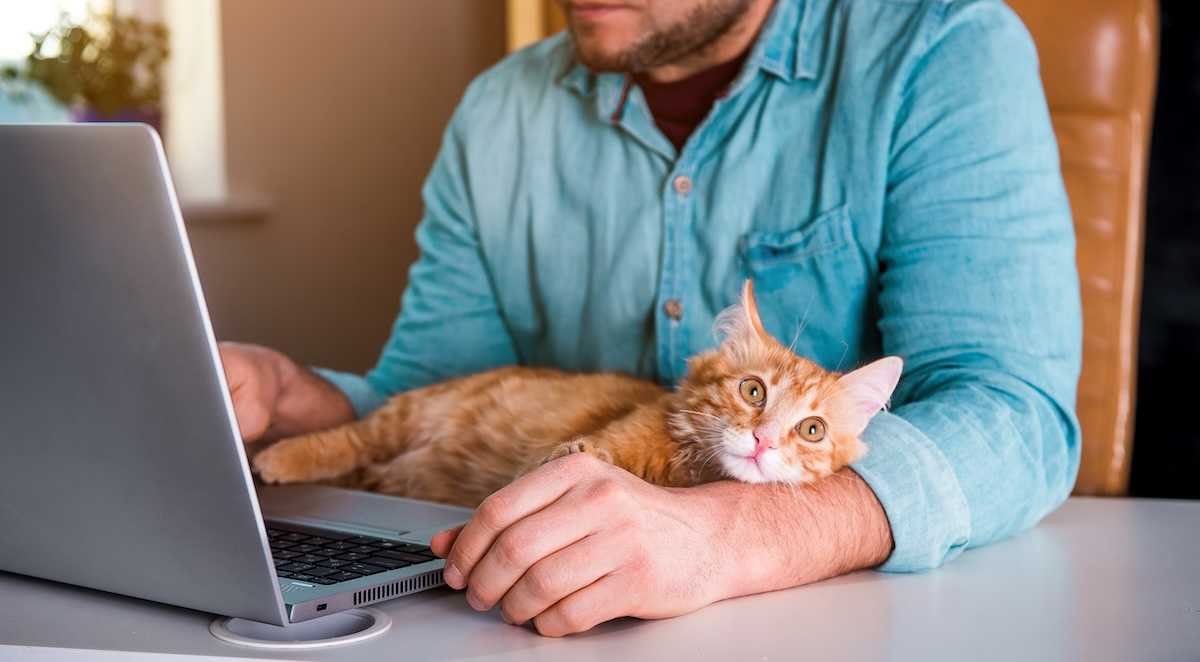
With the onset of COVID-19, remote work became much more welcomed in the professional world, but a study recently revealed that the resulting absence of daily interactions has left people lonely, more anxious and depressed.
Economist Natalia Emmanuel at Federal Reserve Bank of New York recently published a new studyabout remote work in the journal Science with her colleagues. Her findings indicated that while people often say they would prefer remote work, once they actually work remotely, they spend more money on mental health care providers, and find themselves more anxious and depressed
The findings indicate that it’s those little moments in our day that matter. Think about it. You often have people in your life you see quite regularly, if only for a moment — at the cash register when getting groceries or during your lunch break when you chat with friends from the office
Emmanuel and her colleagues wanted to know what remote work does to a person, so they looked at data on those who worked remotely versus those who did not.
“They found that workers in remotable jobs had experienced a 58% rise in hours spent alone compared to people in non-remotable jobs. These workers also saw a 72% rise in chances of spending their whole day with no human contact.”
“Not even like a wave to a barista, not somebody also checking for ripeness of the avocados at the grocery store,” says Emmanuel. “Just no human contact at all.”
In fact, they often socialized even less. “We even see a decrease in spending time with friends after the work day relative to people in non-remotable occupations.”
Lisa Hendey, founder of CatholicMom.com and bestselling author of multiple books for adults and children, recently gave a personal twist to these findings by mentioning on social media how much she would miss her visits to the post office due to a move
“Today was a little right of passage: I closed the post office box I’ve had for the last 10 years … our recent move calls for different logistics. For some reason, a big wave of emotions hit me as I was thanking the staff who have taken such good care of me. Working independently can be a bit isolating, but having that team help me always made me feel terrific.”
We do not realize the impact “strangers” have on our mental states, and what a gift a smile can be, or how a “little way” can impact our lives. For instance, I was in a philosophy club years ago and the discussion for the night was “What is a friend?” After referencing the wise old sages like Plato, Aristotle, Cicero, and St. Thomas Aquinas, we wondered if a friend could be someone you simply happen to see frequently, like at the grocery, post office, or perhaps a frequently-visited restaurant.
One of the club members addressed the group saying to the rest of us, “Yes, I go to the same family-owned restaurant weekly, and they are wonderful people; however, I believe a friend is someone who would go to your funeral.” We all agreed that seemed quite wise. Just a few weeks later, that very club member found out he had cancer and he died within six weeks. Guess who was at his funeral? Yep. The restaurant owners. I never cried so much over the beautiful friendship of “strangers.”
And now we have the science to back up what St. Thérèse and many others always knew: The “little way” of a smile, a wave, or a brief conversation could make the difference in a person’s mental state, and certainly, could be the beginning of a wonderful friendship
In a world that can feel increasingly isolated, St. Thérèse’s little way offers both spiritual wisdom and, as this study shows, real mental and emotional fruit. Both experts of the soul and experts of mental health are encouraging you to find ways to put contact with people into your work-from-home life. This week, try to live it more intentionally — a smile, a kind word, a moment of presence — trusting that God works through these “little” acts in ways we may never fully see.
Related:
Digital Automation Training Benin: 5 Winning Skills Employers Demand in 2026
<a href="https://yoursite.com/automation-africa/" title="WhatsApp Marketing Automation Africa: 6 Dangerous Mistakes Brands Make in Nigeria”>
WhatsApp Marketing Automation Africa: 6 Dangerous Mistakes Brands Make in Nigeria
Want to learn this practically?
Join Justfine Infotech and build real digital skills in AI, automation, web development, digital marketing, office productivity, e-commerce, freelancing and cybersecurity.
Available Programmes:
6 Weeks Certificate • 3 Months Professional Certificate • 6 Months Diploma • Full Professional Diploma
WhatsApp:
+229 01 57 57 99 15
+229 01 66 68 11 60
Source: aleteia.org


 English (UK)
  Français