


Becoming the first member of his family to go to college was a dream come true for Huziafa Bin Yahiya Ibees. The eldest son of a baker, Ibees grew up in a small town on the outskirts of Hyderabad, a booming technology hub in southern India. After graduating from college, Ibees quickly landed an electrical engineering job, but the pay was low, and he barely made enough to pay his monthly bills
Then a friend told him about an opportunity to be trained to work in one of the many datacenters being built in and around Hyderabad. Eager for career advancement, he enrolled and after completing the program in April, began working as a paid intern at a new Microsoft datacenter
Ibees, 26, says he’s thrilled by the chance to learn not only the “latest technology” but “the technology of the future.”
Ibees is a graduate of Microsoft’s Datacenter Academy (DCA), which prepares students for entry-level careers in technology and digital infrastructure through hands-on training in real-world learning environments
Since its launch in 2018, the program has expanded around the world through over 30 partners, including local colleges, technical institutes and nonprofits. Students are currently being trained to become datacenter technicians in at least 14 countries and 26 communities, including most recently, Hyderabad, India
To date, more than 12,522 students have enrolled in Microsoft datacenter academies around the world. While a percentage go on to full-time jobs at Microsoft, many others go on to technical roles outside Microsoft in datacenter and other digital infrastructure jobs


Ibees, 26, says he’s thrilled by the chance to learn not only the “latest technology” but “the technology of the future.”
Huziafa bin Yahiya Ibees, the eldest son of a baker, says he is proud to be working on the “technology of the future” as a datacenter technician intern, in Chennai, India. Photo by Selvaprakash Lakshmanan for Microsoft
“When a new industry is coming, if you don’t train the talent in the city to make themselves available for the industry, then the opportunity is lost for them,” says Rekha Srinivasan, chief executive of United Way of Hyderabad, a Datacenter Academy partner
United Way of Hyderabad helps recruit students, connects them with local employers and provides soft skills training, such as mock interviews. “Decoding the opportunity, communicating it in simple language and creating pathways to new opportunities for people is the role nonprofits play,” says Srinivasan
The Hyderabad DCA brings together academia, government, industry and nonprofits to help build a skilled local workforce. Partners include the International Institute of Information Technology Hyderabad (IIITH), the Young India Skills University (YISU), the local regional government of Telangana and Don Bosco Tech Society (DB Tech), a large Indian nonprofit skills-training organization
In addition to Hyderabad, Microsoft also operates datacenters in Mumbai and Pune, in the western state of Maharashtra, and Chennai in the state of Tamil Nadu, on India’s southeast coast
The investments help spur economic growth, says Srinivasan of United Way of Hyderabad, noting “datacenters bring allied industries around them. It’s a lot of opportunity if you can actually take advantage of the situation.”

“Decoding the opportunity, communicating it in simple language and creating pathways to new opportunities for people is the role nonprofits play.”
Photo by Selvaprakash Lakshmanan for Microsoft
A springboard to technology jobs
The first Datacenter Academy opened its doors in 2018 at Southside Virginia Community College (SVCC), in South Hill, Virginia. Before the academy began training students, datacenter operators struggled to find skilled technicians, says Wendy Ezell, a program coordinator and instructor at the SVCC datacenter academy from her office overlooking racks of servers and computers, part of the working datacenter lab at SVCC used to train students.
Before the datacenter academy, “people were coming out of Richmond and Raleigh to fill the needs” for local jobs, says Ezell, but now, students who want to can “stay in a rural area and make a good living,”
The program is a springboard to careers in the technology sector and provides options for people looking to change careers, says Ezell. She describes one student who entered the academy after leaving her job in human reer technician and now is a hiring manager who also helps teach academy classes at SVCC
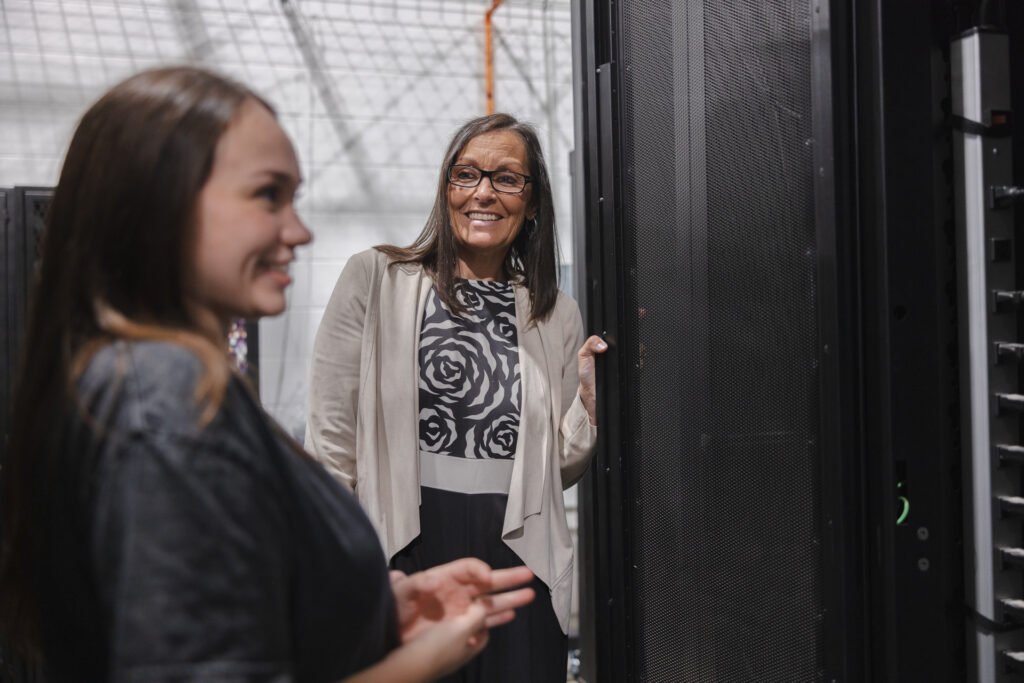
Hannah Reed, a 25-year-old mother of two, enrolled in the datacenter academy in Virginia in January of this year and is scheduled to graduate in May 2027. She was always interested in technology but when her children were young, she worked for a popular West Coast restaurant chain and entered their management training program
When her husband’s career sent the family to Virginia, Reed saw a chance to restart the technology education she quit during the COVID pandemic. “I thought that working in a datacenter would let me work with my hands—something I’ve always loved doing,” Reed says. She also wanted to set a good example for her children. “I have daughters, and I wanted them to look up to me,” she says. “I wanted to show them that education was important, and that was a big reason why I wanted to go back to school.”
Besides learning new technology skills, Reed appreciates the program’s emphasis on networking, mentorship and resume-building. “I feel a lot more confident in my skills and in learning what I need to know,” she says, noting “the program has also given me confidence in how to navigate the workplace.”
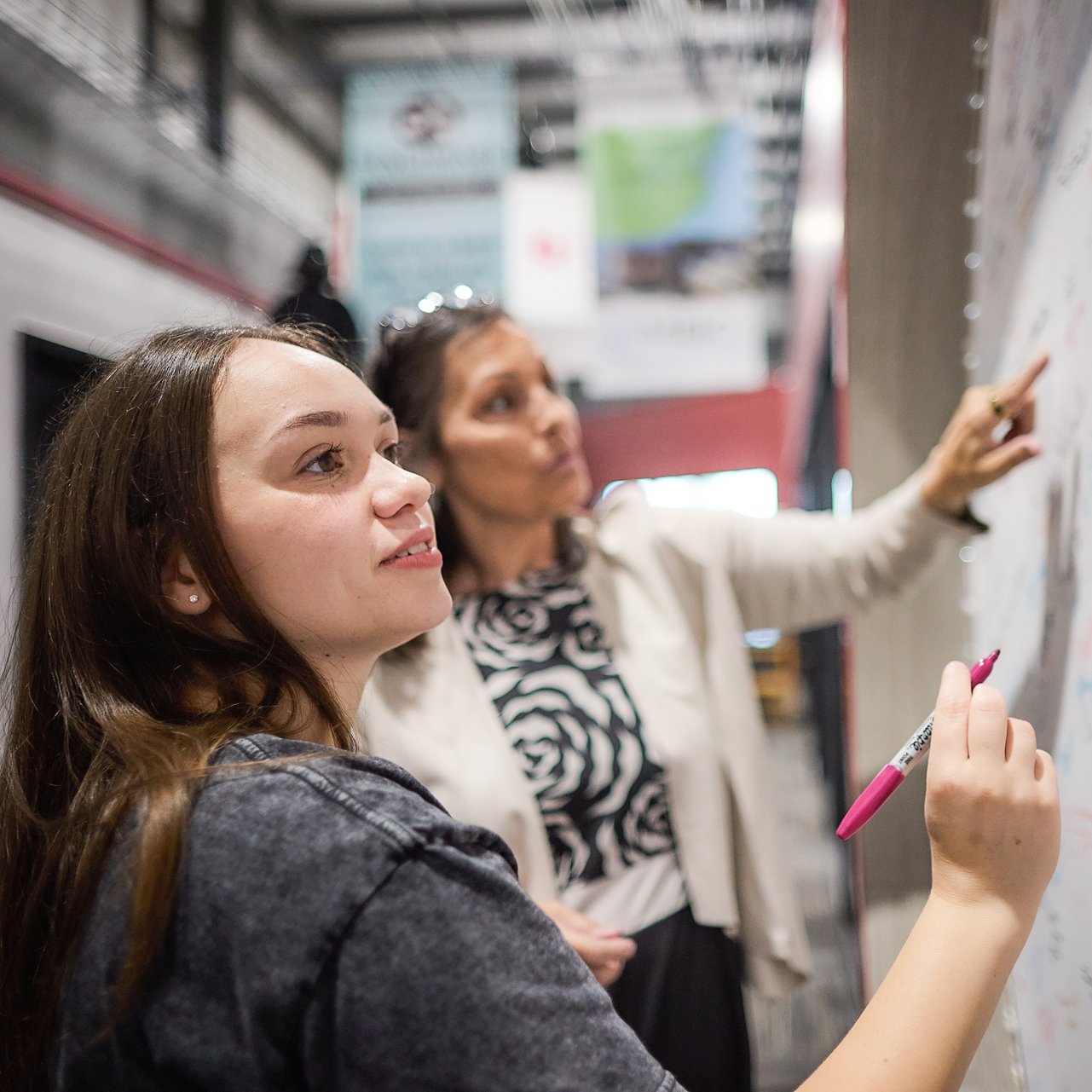
“I have daughters, and I wanted them to look up to me. I wanted to show them that education was important, and that was a big reason why I wanted to go back to school.”
Demand for digital infrastructure drives job growth

The academy has expanded globally as demand for digital infrastructure has grown. Australia’s first datacenter academy opened in Sydney in February 2025 in collaboration with the government’s public provider of vocational education and training, known as the New South Wales Technical and Further Education, or TAFE
In March 2026, Microsoft expanded the program to Victoria, opening a new datacenter academy in Melbourne at Victoria University’s Footscray Nicholson campus. John Burgess, senior manager for digital skills at Victoria University in Melbourne, Victoria, says he believes datacenter investment can help grow the local economy
Datacenter technician jobs are “great jobs because they’re secure, they’re well paid and they offer significant career prospects,” says Burgess. “A society needs a broad range of occupations to function normally, and all occupations are good occupations.”
Since the recent launch of the program, 107 students have completed the Melbourne program so far. “But 107 is just going to scratch the surface of the 10,000 vacancies that are in the pipeline” says Burgess, as demand for cloud and AI services in Victoria accelerates
While men have traditionally accounted for most datacenter technician roles, more and more women are also signing up
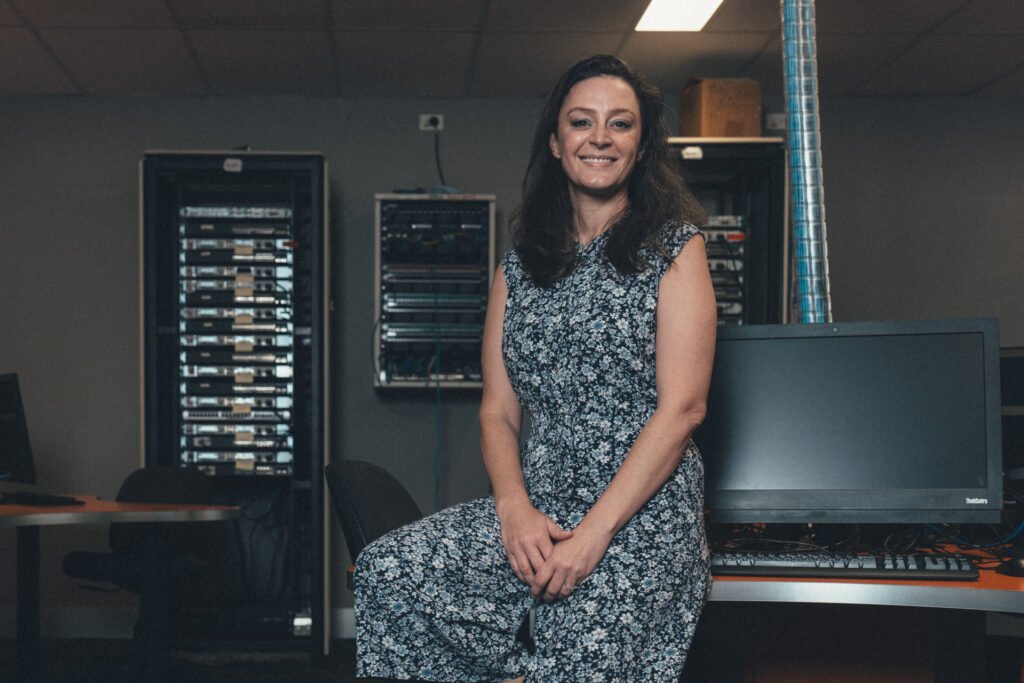
Moénika Hübsch is a current student of the Melbourne program. She grew up gaming, building computers and networks, and attended a technical high school. “I don’t look the part,” she says with a laugh. “But I am a bit of a nerd.” Still, growing up, the message she received from family and close friends was that technology was not a realistic career. “I never thought it was doable for a woman,” she adds.
So after high school she pursued a variety of other career paths – portrait photography, video production, hospitality – before reluctantly retiring for medical reasons
After rebuilding her health, she decided to finally explore her interest in technology, enrolling in entry-level tech courses at Victoria University with an eye on cybersecurity. That’s when she noticed an ad for Microsoft’s Datacenter Academy on the university website, with critical environment technician classes offered on campus. The opportunity to do something hands-on appealed to her. Today, at 41, she is 4 weeks into a 16-week course that will teach her to work as a critical environment technician, the person responsible for managing the power, cooling and mechanical systems that keep a datacenter running.
The program has reignited her interest in technology and boosted her outlook
“About two years ago, I was in a wheelchair and relearning to walk with strength and stability without the use a walking stick, so this is so big for me,” says Hübsch. Later this fall, she will apply for a datacenter internship. “I’m going to put my hat in the ring,” she says with enthusiasm. “I’m just so excited about tomorrow.”
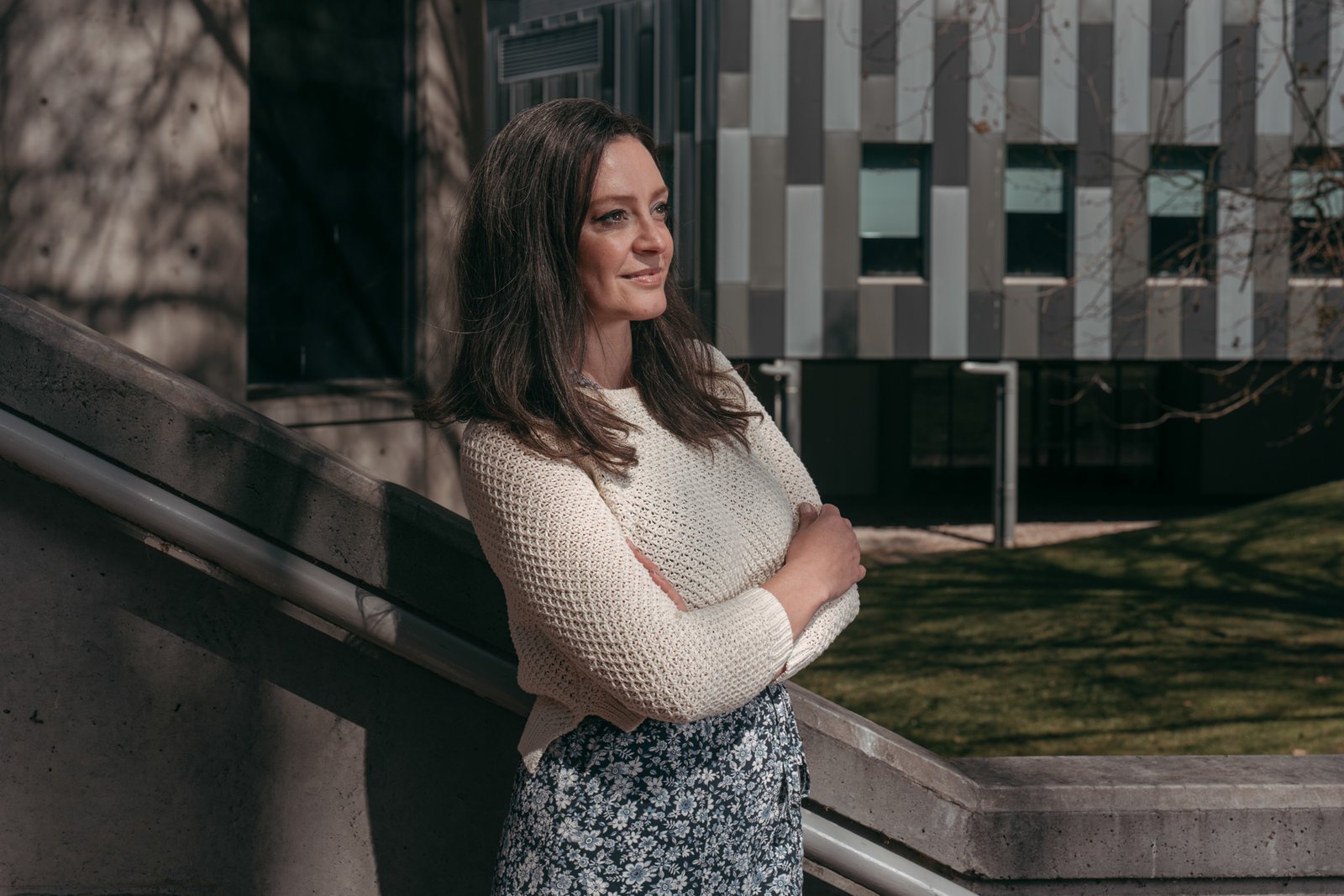
“I’m going to put my hat in the ring. I’m just so excited about tomorrow.”
Photo by Asanka Brendon Ratnayake for Microsoft
Hands-on training for datacenter careers
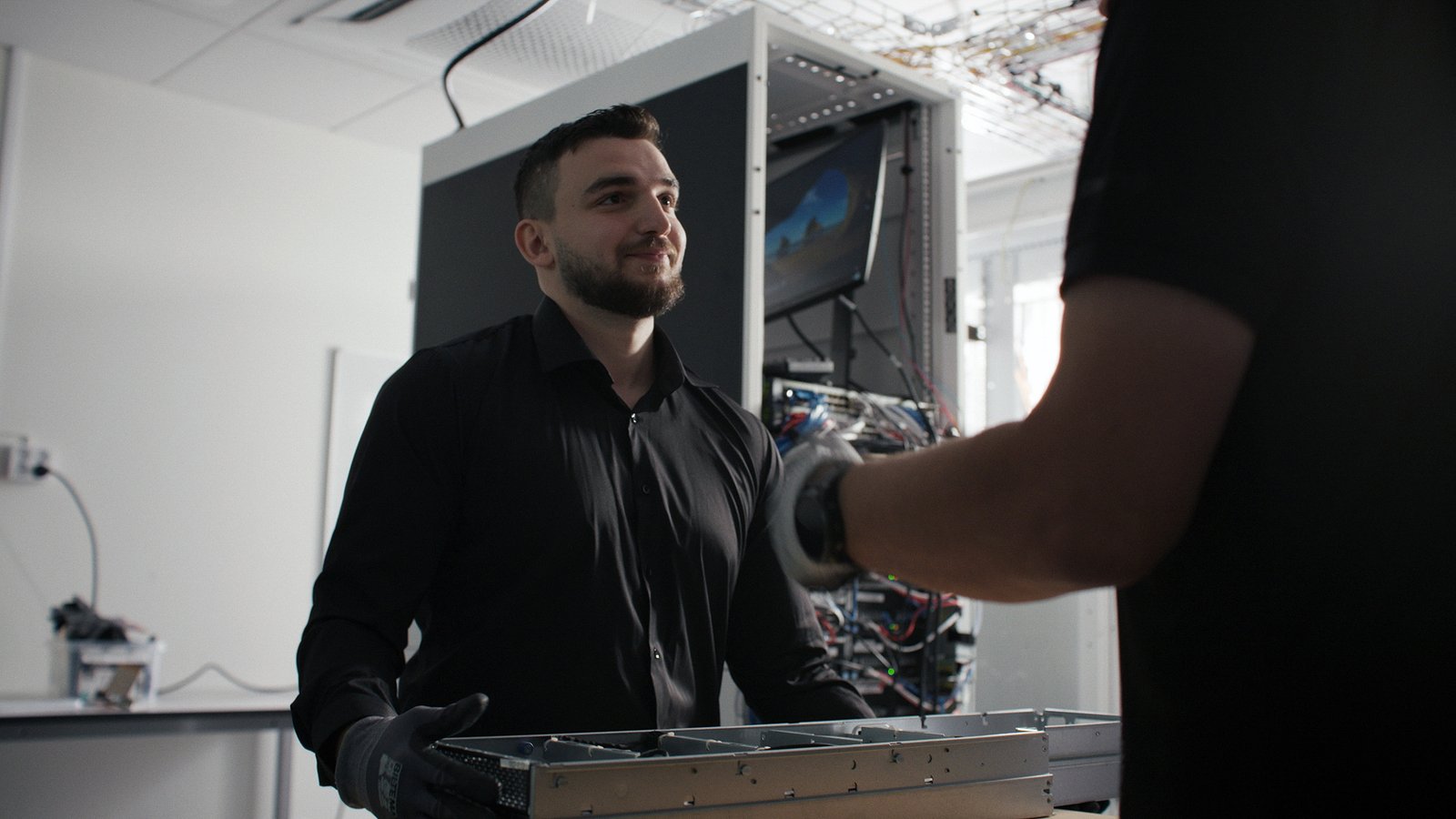
Combining practical lab experience with technical instruction, students build skills in datacenter operations, networking, cloud services, cybersecurity and systems management. Dedicated datacenter simulation labs, with racks donated by Microsoft, give students exposure to real-world digital infrastructure environments
Program offerings vary by country. In Sweden, students have a choice of two training tracks – a nine-month course and a more concentrated three-month program – so they can select the training program that best fits their needs
For Mohamad Sara, the training was transformative. In 2015, when Sara was just 14, he and his family fled civil war in Syria, travelling by foot, bus and boat and sleeping in forests along the way. After a month on the road, the family arrived in Stockholm, Sweden. When he was done with school, Sara got a job driving a taxi. He learned about the Datacenter Academy through a chance encounterwith one of his passengers.
“I didn’t want to drive a taxi for the rest of my life,” says Sara, 25
Each datacenter academy is operated by local partners who administer classes, certifications and financial aid. Local partners may also receive funding from state and federal governments

“One thing I’ve realized is how much of today’s society—and everything we do—is integrated and works because of datacenters,” says Sara. “A lot rests on the shoulders of datacenters today, and nothing would really be processed or work continuously without them.”
Mohamad Sara and his family fled civil war before arriving in Sweden. Today, after studying at the Microsoft Datacenter Academy, he is working as a datacenter intern. Photo by Steen Agency for Microsoft
To facilitate access to training and local job opportunities, Microsoft provides scholarships, financial aid and mentorships with Microsoft colleagues
The economic impact of datacenter investment has a ripple effect, says Sam Cole, an instructor and program manager at the academy in Sandviken, Sweden. He says datacenters have boosted the local economy by creating new jobs and helping stem population loss. “We used to depend on steel and paper industries that were declining. Now, because of this new industry, the population is growing again,” says Cole. “It’s about changing people’s economic situations because the datacenters are here.”
Today, Microsoft’s Swedish datacenters employ approximately 370 full-time employees. An additional 175 people work on-site through suppliers and partners. In addition, more than 3,000 people are engaged in ongoing expansion projects around the country, including in-country and outside experts
Sara says he is grateful for the lessons he has learned inside and outside the classroom. “One thing I’ve realized is how much of today’s society – and everything we do – is integrated and works because of datacenters,” says Sara. “A lot rests on the shoulders of datacenters today, and nothing would really be processed or work continuously without them.”
Read more
Sally Beatty writes about AI and innovation at Microsoft, focusing on the company’s most cutting-edge breakthroughs and how emerging technologies are improving the lives of ordinary people. Previously, Sally was a feature reporter for the Wall Street Journal in New York, where she broke news about media and marketing. A California native, Sally lived in Hong Kong in the early 1990s, where she wrote for the Journal about the societal impact of economic and political reforms and consumer spending trends. You can contact Sally at .
How nature-inspired design is taking root around datacenters

6 projects that helped Microsoft meet its renewable energy goal

From farms to oceans: How Microsoft is working to scale carbon dioxide removal
En rapport:
<a href="https://yoursite.com/automation-training-benin/” title=”Formation en automatisation numérique au Bénin : 5 compétences gagnantes que les employeurs recherchent en 2026″>
Formation en automatisation numérique au Bénin : 5 compétences clés recherchées par les employeurs en 2026
Vous souhaitez apprendre cela de manière pratique ?
Rejoindre Justfine Infotech et développer de véritables compétences numériques en IA, automatisation, développement web, marketing digital, bureautique, e-commerce, travail indépendant et cybersécurité.
Programmes disponibles :
Certificat de 6 semaines • Certificat professionnel de 3 mois • Diplôme de 6 mois • Diplôme professionnel complet
WhatsApp :
+229 01 57 57 99 15
+229 01 66 68 11 60
Source: news.microsoft.com


 English (UK)
  Français