


Introduction
L'automatisation des flux de travail devient un élément de plus en plus crucial de la transformation numérique. Alors que les organisations cherchent à optimiser leurs opérations et à conserver un avantage concurrentiel, les agents d'intelligence artificielle (IA) se sont imposés comme des outils puissants pour rationaliser les processus, réduire les interventions manuelles et améliorer les capacités de prise de décision.
Our comprehensive guide explores the seven essential types of AI agents that are revolutionizing workflow automation in 2026, with insights grounded in the latest research and real-world applications
Understanding AI Agents
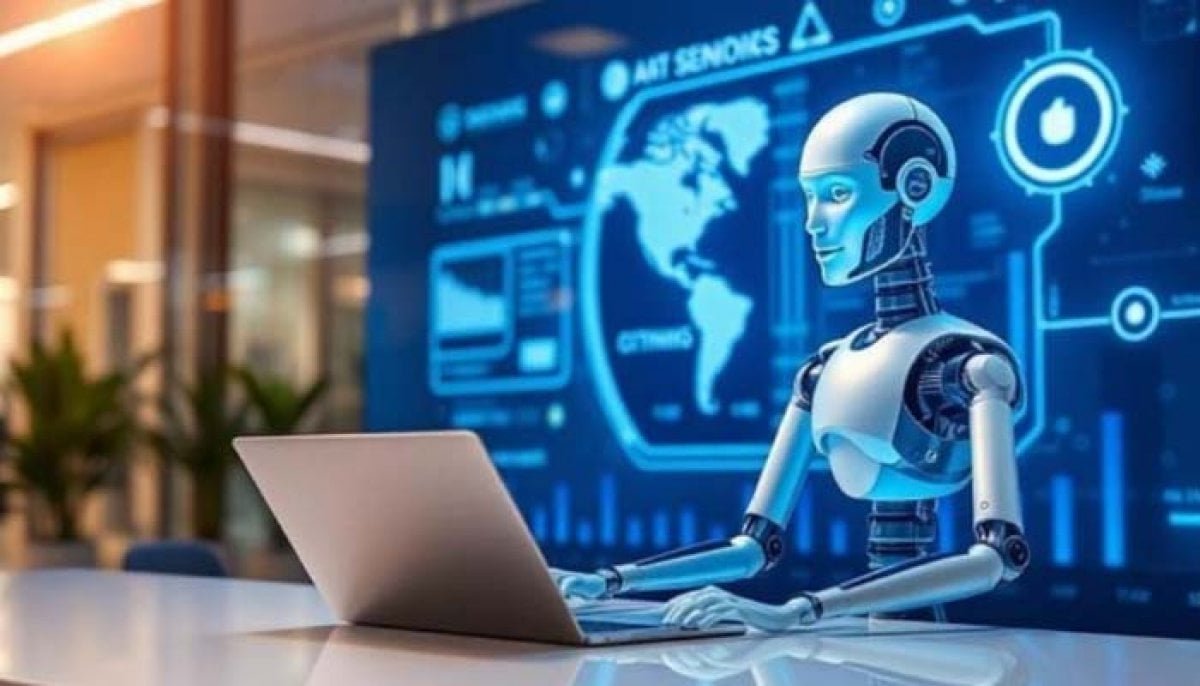
AI agents are software entities designed to perform specific tasks by simulating human cognitive functions. What sets modern AI agents apart is their implementation of Retrieval Augmented Generation (RAG) architecture, a framework that significantly enhances their performance and reliability. According to research from IBM, RAG enables AI systems to overcome the limitations of traditional large language models (LLMs) by connecting them with external knowledge sources.
RAG-enhanced AI agents offer several distinct advantages:
● Knowledge Recency: They access up-to-date information beyond their training data
● Factual Grounding: Responses are anchored in verifiable
● Domain Specificity: They can be tailored to industry-specific knowledge bases
● Greater Transparency:
● Reduced Hallucinations: External knowledge retrieval minimizes fabricated information
For businesses implementing workflow automation, RAG-enhanced AI agents provide greater accuracy and reliability critical factors when automating mission-critical processes. As Microsoft’s research has shown, organizations implementing RAG-based systems report 37% higher satisfaction with AI outputs compared to traditional models
AI Agents vs. Chatbots: Understanding the Critical Distinction
Enterprise leaders frequently use “AI agent” and “chatbot” interchangeably, but the distinction between these technologies has significant implications for automation strategy, investment allocation, and operational outcomes. Organizations that conflate the two risk either over-investing in simple conversational interfaces where rule-based automation would suffice, or under-investing in agentic capabilities where autonomous, multi-step execution would deliver transformative results.
How They Differ
Chatbotsare conversational interfaces designed to process user input and return a response. Traditional chatbots follow scripted decision trees. More advanced chatbots powered by large language models can generate contextually relevant answers from training data. In both cases, the interaction model is fundamentally reactive: a user asks, the system responds, and the conversation ends or continues in a linear exchange.AI agents operate on a fundamentally different paradigm. Rather than responding to individual prompts, agents receive goals, decompose them into multi-step plans, execute actions across integrated enterprise systems, evaluate outcomes, and adapt their approach based on results. An agent does not wait for the next instruction; it determines what needs to happen next and acts accordingly within defined guardrails.The practical difference <a href="https://justfineinfotech.com/marmeto-becomes-indias-first-shopify-platinum-partner/” title=”Marmeto becomes India's first Shopify Platinum partner”>becomes clear in a manufacturing quality control scenario. A chatbot can answer a production manager’s question about defect rates for a specific batch. An AI agent monitoring the same production line can autonomously detect an emerging quality deviation, correlate it with upstream material variations, adjust process parameters within approved tolerances, notify the quality engineering team, and document the intervention for regulatory compliance, all before the production manager is aware an issue exists.
En rapport:
Formation en automatisation numérique au Bénin : 5 compétences clés recherchées par les employeurs en 2026
Vous souhaitez apprendre cela de manière pratique ?
Rejoindre Justfine Infotech et développer de véritables compétences numériques en IA, automatisation, développement web, marketing digital, bureautique, e-commerce, travail indépendant et cybersécurité.
Programmes disponibles :
Certificat de 6 semaines • Certificat professionnel de 3 mois • Diplôme de 6 mois • Diplôme professionnel complet
WhatsApp :
+229 01 57 57 99 15
+229 01 66 68 11 60
Source: www.reply.com
 English (UK)
  Français