
Claude AI is a family of artificial intelligence models that can act as a chatbot and an AI assistant, much like OpenAI’s ChatGPT and Google’s Gemini.
Named after Claude E. Shannon, sometimes referred to as the “father of information theory,” Claude was designed to assist with writing, coding, customer support and information retrieval
Claude was developed by Anthropic, a San Francisco-based company founded in 2021 by former OpenAI employees focusing on AI safety and research. Dario Amodei, the co-founder and CEO of Anthropic, had served as vice president of research at OpenAI. His sister Daniela Amodei serves as Anthropic’s president
Anthropic has drawn significant investment from prominent tech players. Amazon had invested $8 billion by 2024 and added another $5 billion in 2026, with plans for up to $20 billion more. AWS remains Anthropic’s primary cloud and training partner. Google has also invested in Anthropic, while Microsoft and Nvidia have since committed billions more
And what a difference a year can make. Anthropic says its annualized revenue has surpassed $30 billion, up from about $9 billion at the end of 2025. The company is reportedly eyeing an initial public offering by the end of 2026
Its latest generation of models includes Claude Sonnet 5, Opus 5 and Fable 5
So what can Claude do now? Here’s everything you need to know, including the models, plans, pricing and latest updates
As an AI assistant, it can answer questions, generate written content like stories and poems, translate languages, write code and even help you change a tire. It is available on desktop
Claude uses large language models trained on a massive dataset of text and code to understand and generate human-like language.
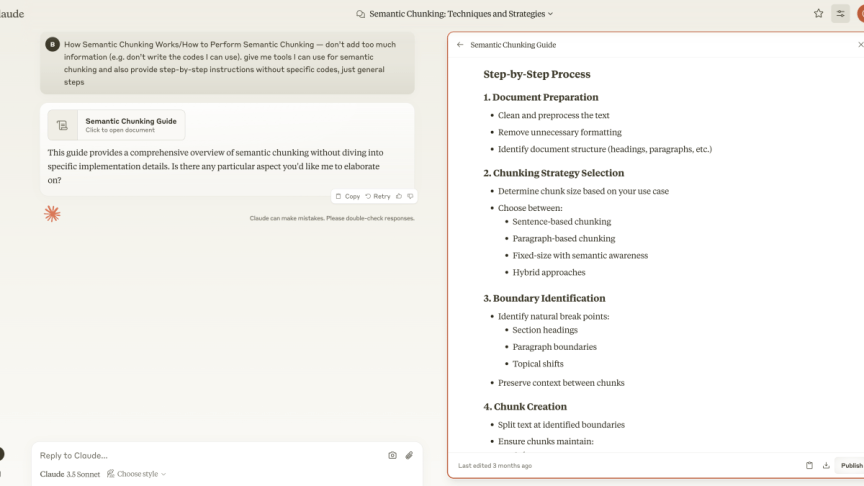
Screenshot by Barbara Pazur/CNET
You can also upload files, including documents, spreadsheets, PDFs and images, which it can summarize, analyze or use as context for a conversation
Unlike ChatGPT, Gemini andGrok, Claude still doesn’t have a native image or video generator. It can analyze images and help create visual layouts, designs and interactive content, but it can’t generate standalone images or videos from a prompt.
Each Claude model has a specific knowledge cut-off date. For example, Opus 5 and Sonnet 5 include training data up to May 2026 and January 2026, respectively. Anthropic continually updates Claude’s data to enhance its capabilities
For a while, Claude lagged behind rival chatbots because it couldn’t access real-time information from the web. Web search has been available across free and paid plans since March 2025
Knowledge cutoffs still matter because web search supplements core training data rather than replacing it.
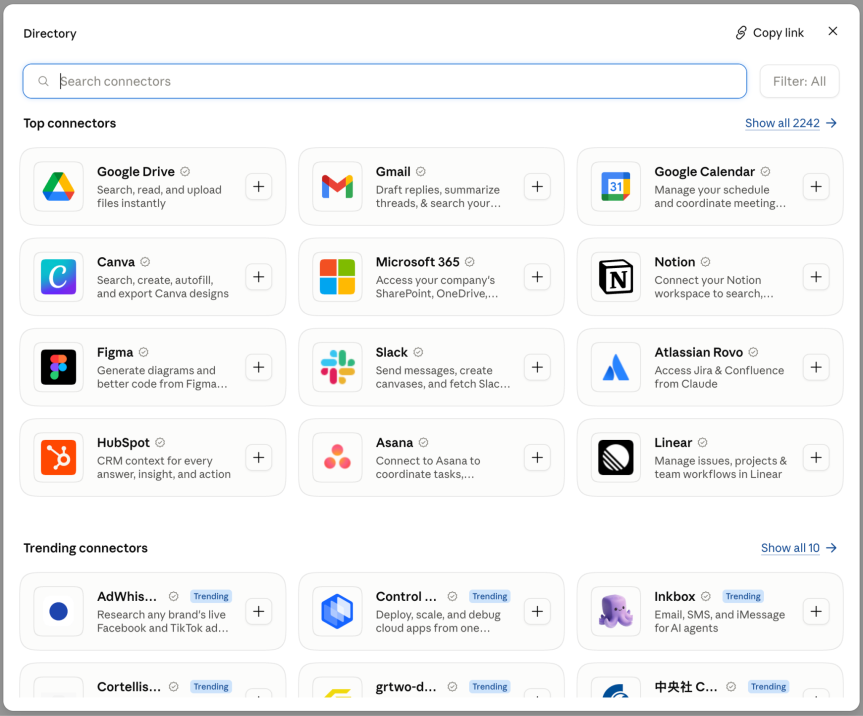
Claude has changed considerably since this article was first published. It can now work outside of the chat window, with a directory of more than 200 Connectors that link it to apps and services like Instacart, Uber, Spotify and Google Workspace. Claude can connect to Microsoft 365 and work directly inside apps like Word, Excel, PowerPoint and Outlook.
Screenshot by Barbara Pazur/CNET
Where Claude stands out is its consistency. It can handle everything from casual questions to complex work while delivering reliably detailed responses, which is one reason we named it CNET’s best chatbot of 2026
Our editors found Claude Code impressively fast at generating code, although, like its rivals, it doesn’t always manage to fix the errors it creates
You’ll see more features when you open Claude. Projects let you keep related chats and source material in one place, while Artifacts give you a separate workspace for things Claude creates, like documents, code, diagrams and interactive content. Similarly to ChatGPT’s and Grok’s Skills, Claude’s Skills let you save instructions for tasks you do often so you don’t have to explain them each time.
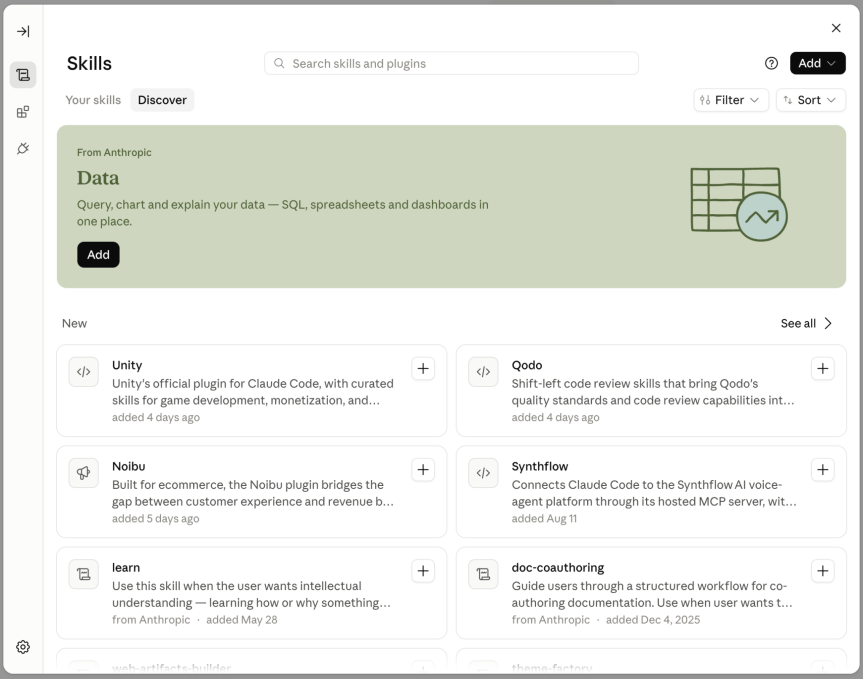
Screenshot by Barbara Pazur/CNET
Claude has dipped its toes further into agentic AI with Cowork. It’s available on selected paid plans and can handle longer, multi-step jobs without you guiding it through every step. Cowork first looks for a direct connection to the app it needs. If there isn’t one, it can now use its built-in browser to open sites and fill out forms without taking over your own browser.
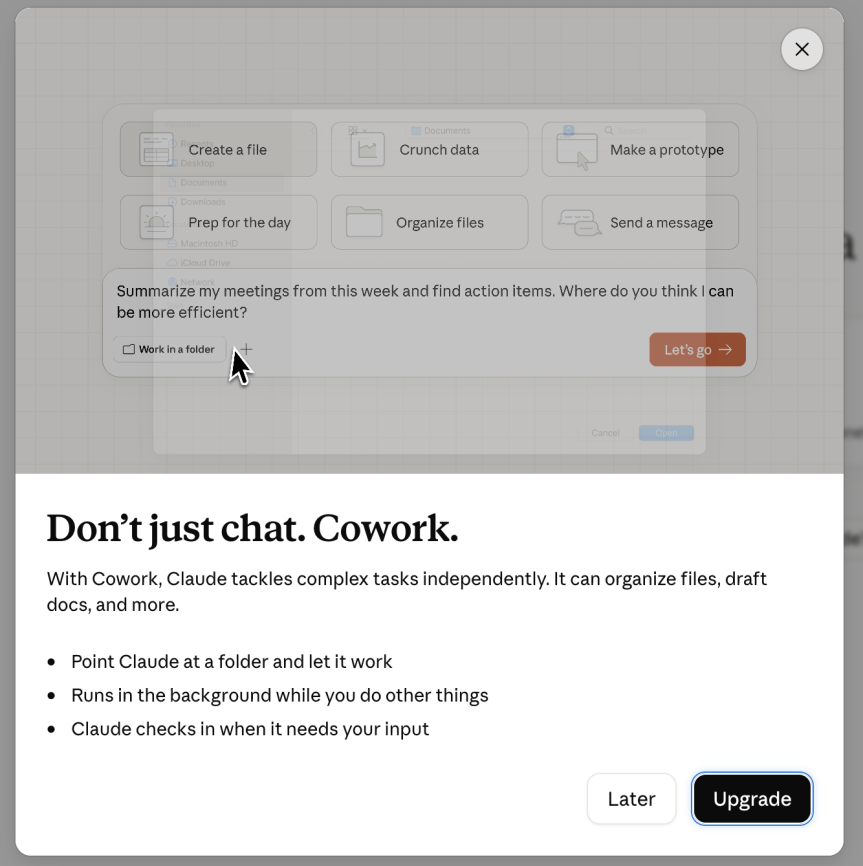
Screenshot by Barbara Pazur/CNET
Claude brings a similar agentic approach to Slack with Claude Tag. The tool can join your Slack workspace as its own user, and you decide which channels, tools, data and codebases it can access
The initial version of Claude was released in March 2023. Over the years, Anthropic expanded Claude into Haiku, Sonnet, Opus, and two of its most advanced models, Mythos and Fable. Each serves different needs, and availability depends on more than your subscription tier
Claude Sonnet 5 is currently the default model on the free plan and is designed for everyday tasks. You can also choose some older models, though access and usage limits vary. Haiku is the only other available free model that gives you quick answers for simple, repetitive tasks
Paid subscribers get access to more powerful models like Opus 5 and Fable 5. Opus 5 handles advanced tasks like mathematics, coding and logical reasoning. Fable 5, which Anthropic calls its first generally available “Mythos-class” model, is built for especially difficult tasks that can take a long time to complete. It can also use its own notes to keep track of what it’s doing.
But Fable 5 had an unusual start. Anthropic temporarily suspended access shortly after launch because of US government export restrictions affecting Fable 5 and Mythos 5. It restored global access in July after those restrictions were lifted
Mythos 5 is Anthropic’s most capable model for cybersecurity and biology research. It isn’t generally available and is limited to a small group of vetted organizations through Anthropic’s trusted access programs
Anthropic’s distinguishing feature compared to other generative AI developers is its focus on “ethical” alignment and safe interactions.
The “constitutional AI” framework aligns Claude’s behavior with human values. This approach uses a predefined set of principles, or “constitution,” to guide how the AI responds and reduce harmful or biased outputs while keeping its answers useful. The constitution includes guidelines from documents like the UN’s Universal Declaration of Human Rights
Afraz Jaffri, a senior director analyst at Gartner, told CNET the transparency around Anthropic’s approach “does provide a certain degree of confidence in usage of the model in environments where responses need to reach a high threshold of safety, such as in educational settings.”
However, Jaffri cautioned that Claude users shouldn’t rely solely on Anthropic’s built-in safeguards, and recommended using external guardrail tools to monitor prompts and responses as an added layer of protection. “As shown by their own research, even with ethical alignment, their Opus 4 model exhibited uncharacteristic behavior by blackmailing an engineer who had threatened to turn the model off,” Jaffri said.
Anthropic says newer Claude models no longer blackmail in its original evaluation after changes to its safety training
Jaffri added that limited transparency around Claude’s training process means extra safety checks are still necessary.
“Every possible scenario cannot be fully covered in testing,” he told CNET, noting that systems like Computer Use and Claude Code need additional guardrails in place to offset unexpected behavior
Anthropic is also taking steps to make AI-generated content easier to identify. The company plans to add watermarks to text from future Claude models, not to yuck anyone’s yam, but to comply with the EU AI Act. The watermark won’t change how Claude writes or shows up in the text — as some watermarks already do in AI-generated videos and images — but it could help indicate whether Claude was likely involved in creating it. With AI slop and deepfakes already flooding the internet, more people want to know when the content was made with AI.
Despite Anthropic’s efforts around safety and transparency, Claude hasn’t avoided trouble
Anthropic has been sued over allegations it misled Claude Max subscribers about usage limits, while another mishap briefly exposed parts of Claude Code’s ith authors whose pirated books had been downloaded and stored for AI training
Anthropic offers several Claude plans, including a free option to try it without commitment.
Claude Pro costs $20 per month and offers higher usage limits, access to paid-only models, and features like Claude Code and Cowork. The Max plan starts at $100 per month, with a $200 tier for much heavier use
Anthropic also offers Team and Enterprise plans for businesses. What you get varies by plan, especially for Claude’s most advanced models, Cowork and usage limits
Additionally, Anthropic provides access to its AI models through an API, with pricing based on usage
Related:
Digital Automation Training Benin: 5 Winning Skills Employers Demand in 2026
<a href="https://yoursite.com/automation-africa/" title="WhatsApp Marketing Automation Africa: 6 Dangerous Mistakes Brands Make in Nigeria”>
WhatsApp Marketing Automation Africa: 6 Dangerous Mistakes Brands Make in Nigeria
Want to learn this practically?
Join Justfine Infotech and build real digital skills in AI, automation, web development, digital marketing, office productivity, e-commerce, freelancing and cybersecurity.
Available Programmes:
6 Weeks Certificate • 3 Months Professional Certificate • 6 Months Diploma • Full Professional Diploma
WhatsApp:
+229 01 57 57 99 15
+229 01 66 68 11 60
Source: www.cnet.com