
JUSTIN TALLIS/AFP via Getty Images
ChatGPT returned to WhatsApp across the European Economic Area on Sunday — not because Meta changed its mind, but because the European Commission forced it to, deploying one of the rarest enforcement instruments in EU competition law to prevent a dominant messaging platform from locking rival AI assistants out of a gateway to roughly half a billion users
The restoration, active as of July 13 for users in all 27 EU member states plus Iceland, Liechtenstein, and Norway, follows a June 9 interim measures order that gave Meta five working days to restore free access to the WhatsApp Business API under the same terms that applied before October 2025 — or face fines of up to 10 percent of its annual global turnover. OpenAI, which operates ChatGPT on the platform through that API, re-enabled the service within the compliance window. Meta has appealed the order, calling it an overreach, but the appeal does not suspend compliance.
For European users, the practical change is immediate: ChatGPT is reachable at the verified WhatsApp contact 1-800-CHATGPT (+1-800-242-8478), with no account required. Text queries, image uploads, voice messages, and image generation all work across a wide range of languages, with the bot identifying itself as running on GPT-5.5. For the broader AI industry, the implications reach further than one chatbot regaining one distribution channel.
How Meta Used Its API to Build a Moat Around Its Own AI
The dispute traces back to October 2025, when Meta updated its WhatsApp Business Terms to prohibit any company whose primary service is a general-purpose AI assistant from using the WhatsApp Business API — the infrastructure layer that allows third-party systems to connect to WhatsApp’s messaging network
The restriction applied immediately to new entrants and took effect January 15, 2026, for existing providers. ChatGPT, Microsoft Copilot, and Perplexity all went dark on WhatsApp. The only general-purpose AI assistant exempted from the ban was Meta AI — Meta’s own product
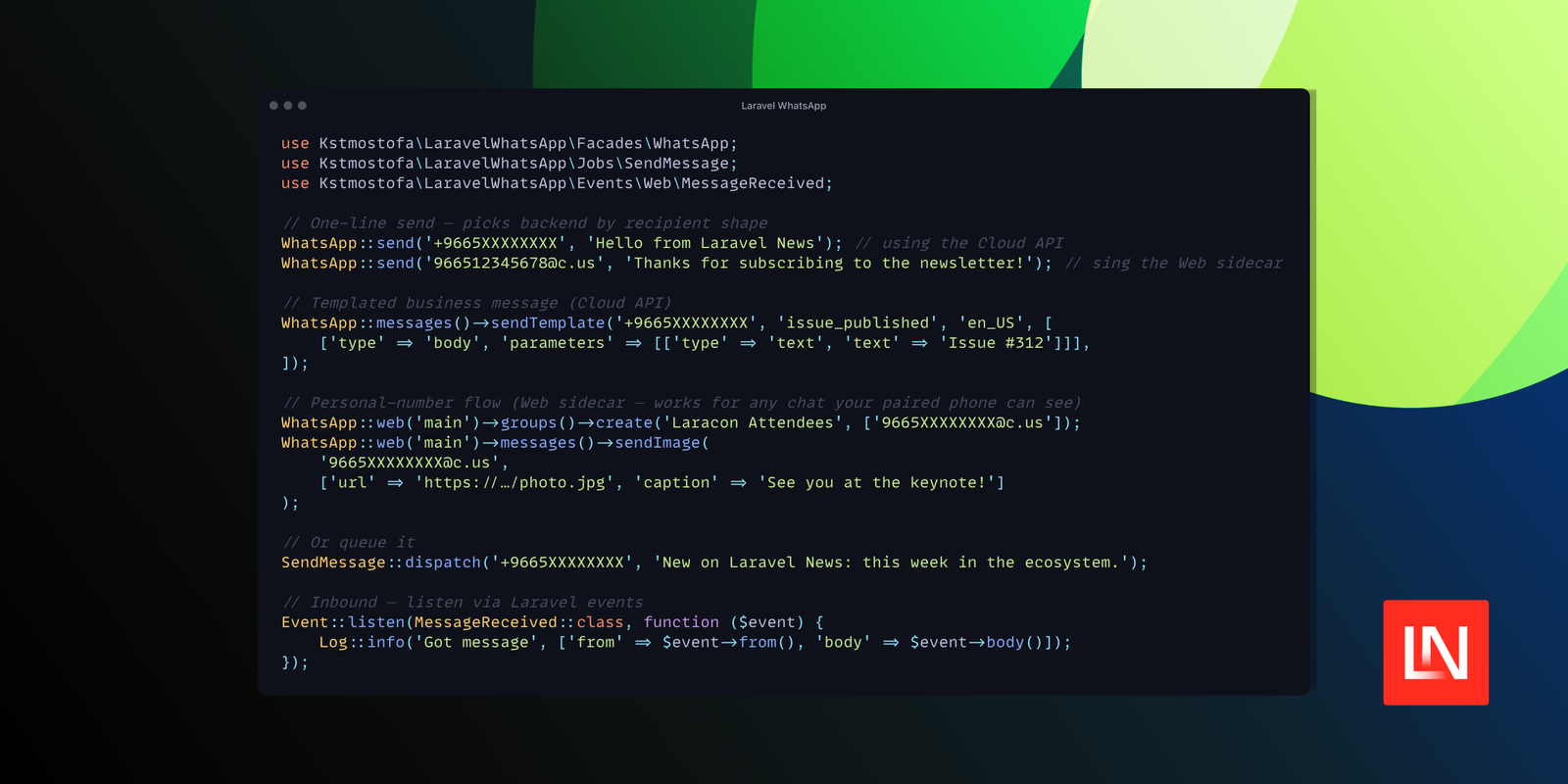
Understanding why this matters requires understanding what the WhatsApp Business API actually is. It is not an app. It is REST-based infrastructure: third-party systems send outbound messages via a POST call to Meta’s hosted Cloud API endpoint; inbound messages from users arrive as JSON payloads over webhooks. For customer service bots that send template-driven notifications about orders or appointments, this architecture works smoothly and carries modest costs. For a general-purpose AI chatbot handling open-ended conversational queries at scale, the conversation volume and interaction patterns are categorically different.
Meta’s stated justification for the ban reflected this distinction: AI chatbots put a strain on systems that were never designed to support them. A WhatsApp spokesperson said when the investigation opened: “The AI space is highly competitive and people have access to the services of their choice in any number of ways, including app stores, search engines, email services, partnership integrations, and operating systems.”
Regulators saw the situation differently — and the details of Meta’s own subsequent behavior made their case
Why Brussels Treated Meta’s Fee Proposal as a Ban by Another Name
When the European Commission opened a formal antitrust investigation on December 4, 2025, it was examining whether Meta had abused its dominant position in EEA consumer communications markets — a dominance the Commission determined Meta had held since at least January 2023. The legal instrument was Article 102 of the Treaty on the Functioning of the European Union, which prohibits dominant companies from engaging in conduct that forecloses competition in adjacent markets.
In February 2026, the Commission issued a Statement of Objections warning Meta that the policy “appears at first sight to be in breach of EU competition rules.”
Meta responded in March 2026 with a revised policy that would let rival AI assistants back onto the platform — for a per-message fee ranging from roughly €0.049 to €0.13 depending on the user’s country
The Commission analyzed the pricing and concluded it constituted a de facto ban. The reason is arithmetic. A general-purpose AI assistant on WhatsApp could easily generate tens of thousands of messages per day across its user base. At €0.049 per message — the lower end of Meta’s range — a company handling even modest AI chatbot volume on WhatsApp would face per-day costs that no competing AI provider could absorb while offering a free consumer product. The pre-October 2025 terms, by contrast, made service conversations (user-initiated messages) free for the first 1,000 per month per account, with minimal charges beyond that threshold. The delta between those two cost structures is the mechanism by which Meta’s “compromise” preserved the competitive effect of the original ban.
European Competition Commissioner Teresa Ribera made the Commission’s reasoning explicit at a press conference on June 9: “It seems that Meta expects to leverage the vast reach and likely dominance of WhatsApp to benefit its own AI assistant and to foreclose rivals.”
What Makes This Order Historically Significant
The June 9 interim measures order is only the second decision of its kind under Regulation 1/2003, the EU competition enforcement framework that has governed antitrust investigations since 2004. The only prior deployment under that regulation was against Broadcom in October 2019, when the Commission ordered the chipmaker to stop applying exclusionary clauses in contracts with set-top box manufacturers while a full investigation proceeded.
Before the Broadcom case, the Commission had not used interim measures since 2001 — when it ordered IMS Health to license a pharmaceutical data-collection methodology to competitors. That decision was eventually withdrawn after courts suspended it, and the episode’s difficulty contributed to a near-two-decade reluctance to deploy the tool. Broadcom marked the revival; Meta marks only its second confirmed use in more than twenty years under the modern framework.
The Commission can invoke interim measures only when it finds a prima facie competition law violation and determines that the risk of serious and irreparable harm to competition cannot wait for a final decision. The standard is deliberately demanding. The Commission’s willingness to clear it in the Meta case reflects a deliberate shift in enforcement tempo driven by the recognition that AI distribution markets can reach competitive lock-in — with dominant AI assistants established and alternatives locked out — long before a formal antitrust proceeding concludes.
Ribera said June 9: “In rapidly evolving markets, competition can be lost long before a final decision is adopted.”
That reasoning applies beyond WhatsApp. The Google Shopping line of EU antitrust cases established that self-preferencing by a dominant platform — favoring the dominant firm’s own adjacent product over rivals — constitutes a distinct Article 102 violation. Crucially, it does not require proving that the platform’s infrastructure is “indispensable” under the stricter Bronner doctrine. The Commission needed only to show that Meta favored Meta AI and foreclosed rivals through the WhatsApp API — a substantially lower evidentiary bar. The WhatsApp interim order is the first application of that lower bar to AI distribution infrastructure specifically, and it creates a template: any dominant messaging or operating system platform that uses API access controls to favor its own AI assistant over rivals is now operating in territory the Commission has shown it will enter quickly and forcefully.
Read more:EU AI Act Enforcement Is Here: Chatbot Rules Live, High-Risk AI Delay Now Binding Law
What ChatGPT on WhatsApp Can Actually Do
The restored integration routes through the WhatsApp Cloud API. Users message the verified 1-800-CHATGPT contact, which functions as a standard WhatsApp Business Account operated by OpenAI. Outbound responses from OpenAI’s systems arrive over the same webhook architecture used by any WhatsApp business chatbot; the GPT-5.5 inference runs on OpenAI’s servers, not Meta’s
Without linking a ChatGPT account, users get text prompts, image analysis, voice message transcription, and image generation — the bot appears to route image generation requests through OpenAI’s gpt-image-2 system. Usage limits apply, and OpenAI has not published the specific thresholds. The company could route some unlinked requests through less capable models without disclosure; users have no reliable way to verify which model is responding.
Linking a WhatsApp identity to a ChatGPT account adds persistent session memory and raises usage limits. It also means OpenAI receives the user’s WhatsApp phone number and can associate it with the linked ChatGPT account’s data. Images and voice messages sent through the WhatsApp bot are processed on OpenAI’s servers, not Meta’s — a data flow distinction that matters particularly for enterprise users.
Some users have reported WhatsApp account suspensions after receiving messages from the ChatGPT contact. The cause remains unconfirmed; neither Meta nor OpenAI has commented publicly. The most plausible explanation circulating is that WhatsApp’s spam detection systems flagged the verified contact during initial rollout — a technical friction consistent with the deployment moving faster than spam-filter calibration.
How Does What ChatGPT Can Do on WhatsApp Compare to the Full App?
On WhatsApp, ChatGPT handles text, images, voice, and image generation, but lacks access to web browsing, file uploads beyond images, and the advanced code-execution or task-agent features available in the full ChatGPT product. Session continuity requires account linking; without it, each conversation starts fresh. Users who want the full GPT-5.5 capability set — including memory across sessions, document analysis, and complex agentic tasks — will still need the ChatGPT app or web interface. The WhatsApp integration is better understood as a low-friction access point for conversational queries inside an app people already use daily, not as a replacement for the full product.
Messaging Strategy for OpenAI — and Why Access Matters
The WhatsApp restoration is part of a deliberate distribution strategy for OpenAI. The company launched ChatGPT on KakaoTalk in South Korea on June 16, ahead of the WhatsApp restoration, and has been integrating tools into Viber in additional international markets. The common thread is distribution without download friction: rather than persuading users to install a separate AI app, OpenAI is embedding ChatGPT inside messaging applications where users already spend significant portions of their day.
WhatsApp’s scale makes it the most consequential of these integrations. The platform reported three billion monthly active users globally as of May 2025, with an estimated 500 million in the EEA alone. That reach is precisely why the Commission characterized WhatsApp not merely as a messaging app but as a distribution gateway — infrastructure whose control, in the hands of a company with its own AI product, presents a structural threat to competition in the nascent AI assistant market before that market has had a chance to develop.
Meta’s argument — that users can reach competing AI assistants through app stores, search engines, and other channels — was not accepted by the Commission as sufficient. The relevant comparison, in Brussels’ framing, is not whether alternatives exist but whether the dominant platform’s control over a primary distribution channel can determine which AI assistants most users encounter first and use by default. In markets where WhatsApp has near-total penetration, that determination has the character of a market-shaping decision.
What the EU AI Act Adds to the Picture
The WhatsApp antitrust action and the EU AI Act operate under entirely separate legal frameworks — one is competition law, the other is AI product regulation — but they are moving in the same regulatory direction at the same moment
On August 2, 2026, nineteen days from now, the AI Act’s enforcement machinery activates for general-purpose AI model providers. The European Commission will gain the authority to fine GPAI providers — including OpenAI — for non-compliance with transparency and copyright obligations. Article 50 of the AI Act, which requires that users be informed when they are interacting with an AI system, becomes fully enforceable across all 27 member states on the same date. Violations carry fines of up to €15 million or three percent of annual global turnover.
The timing is not coincidental in a structural sense, even if the two actions are legally independent. Both reflect a single Brussels-level determination: the EU will shape not only how AI systems behave when deployed, but who controls the infrastructure through which they reach users. The antitrust tool enforces access; the AI Act enforces transparency. Together they define a regulatory posture that treats AI distribution as a matter of public market governance, not merely a bilateral arrangement between platform operators and AI companies.
What Comes Next
The interim measures order remains in effect until the full antitrust investigation concludes. No deadline for the final decision has been set. A finding against Meta could produce structural remedies — binding obligations about API access, pricing, or the terms under which Meta AI is integrated into WhatsApp — that extend beyond the current access restoration. Meta has appealed the interim order, but the appeal does not suspend the compliance obligation.
Outside the EEA, Meta has not been compelled to restore ChatGPT or other rival AI assistants to WhatsApp. The platform remains gated in most of the world. Whether regulators in Brazil — where the country’s competition authority, CADE, ordered a similar suspension of Meta’s AI restrictions before proceedings moved to court-supervised conciliation — or in other markets will achieve comparable results remains unresolved.
For European users, the immediate takeaway is straightforward: the access is restored, the contact number is live, and the underlying regulatory order is durable for the duration of the investigation
Frequently Asked Questions
How do I access ChatGPT on WhatsApp in Europe?
Add +1-800-242-8478 as a contact in WhatsApp — it is listed as the verified 1-800-CHATGPT contact — and send any message to begin. No ChatGPT account is required to start. If you want persistent conversation history and higher usage limits, you can link your WhatsApp identity to an existing ChatGPT account through a prompt that appears in the chat. Access is rolling out gradually based on the country code associated with your WhatsApp phone number, so if it is not yet available, try again after a day or two.
Why was ChatGPT blocked from WhatsApp in the first place?
In October 2025, Meta updated its WhatsApp Business Terms to prohibit general-purpose AI assistants from using the WhatsApp Business API, effective January 15, 2026, for existing providers like OpenAI. The policy left Meta’s own AI assistant as the only general-purpose chatbot on the platform. The European Commission determined this constituted a prima facie abuse of Meta’s dominant position in EEA consumer communications markets — specifically, using control over a distribution gateway to foreclose rival AI assistants while favoring its own product, which EU competition law treats as a distinct form of anticompetitive conduct.
What does the EU antitrust order mean for other AI assistants and platforms?
Microsoft Copilot and Perplexity were also blocked under the same October 2025 policy and are eligible to return under the same interim measures order — though as of the article’s publication, only ChatGPT has announced an active restoration. Beyond the immediate parties, the order establishes a template: any dominant messaging or operating-system platform that uses API access controls to favor its own AI assistant over rivals is now in territory the Commission has shown it is prepared to enter quickly, using emergency enforcement tools rather than waiting years for a full investigation to conclude.
Does the ChatGPT WhatsApp integration raise privacy considerations for users?
Yes, and they are worth understanding before linking accounts. Without account linking, images and voice messages you send to the ChatGPT contact are processed by OpenAI’s servers, not Meta’s — your phone number is what the bot receives, and OpenAI has confirmed usage limits apply to unlinked sessions. If you link your WhatsApp identity to your ChatGPT account, OpenAI gains your WhatsApp phone number and can associate it with your broader ChatGPT history. Enterprise users should be aware that WhatsApp’s terms and OpenAI’s terms govern different aspects of this data flow, and that prompts containing sensitive business information travel through a channel that is not subject to organizational data governance in the way a dedicated enterprise AI deployment would be.
ⓒ 2026 TECHTIMES.com All rights reserved. Do not reproduce without permission
Tags:MetaWhatsAppChatGPTOpenAI
Related:
Digital Automation Training Benin: 5 Winning Skills Employers Demand in 2026
<a href="https://yoursite.com/automation-africa/" title="WhatsApp Marketing Automation Africa: 6 Dangerous Mistakes Brands Make in Nigeria”>
WhatsApp Marketing Automation Africa: 6 Dangerous Mistakes Brands Make in Nigeria
Want to learn this practically?
Join Justfine Infotech and build real digital skills in AI, automation, web development, digital marketing, office productivity, e-commerce, freelancing and cybersecurity.
Available Programmes:
6 Weeks Certificate • 3 Months Professional Certificate • 6 Months Diploma • Full Professional Diploma
WhatsApp:
+229 01 57 57 99 15
+229 01 66 68 11 60
Source: www.techtimes.com