

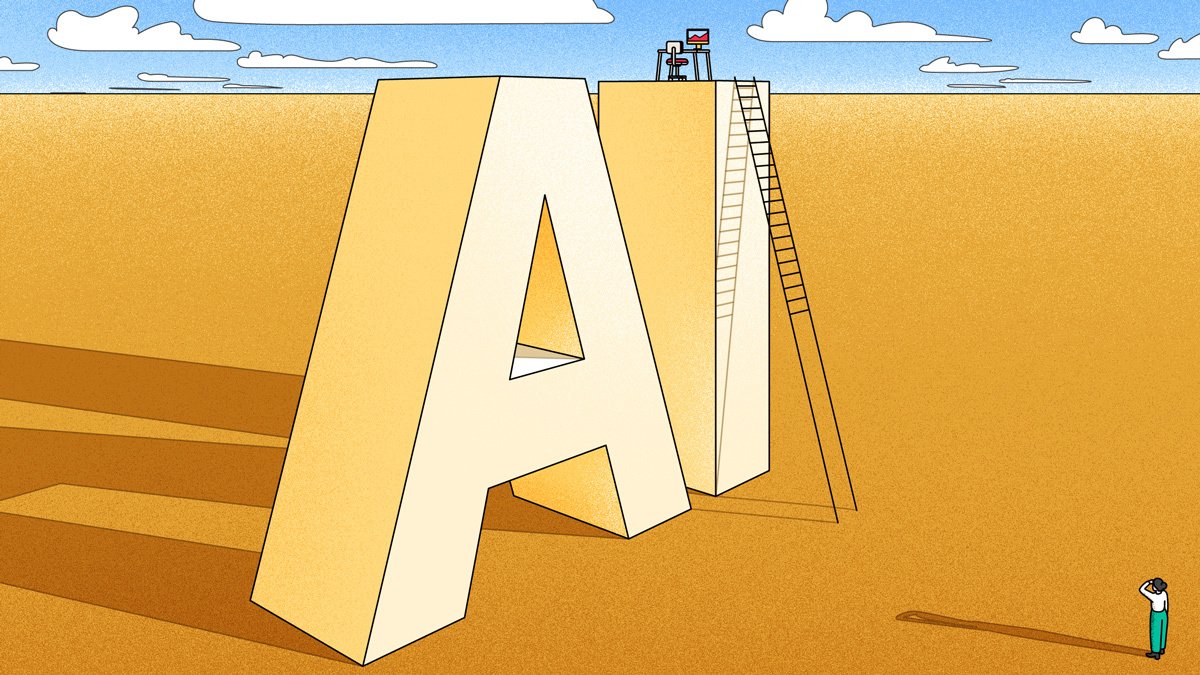
As corporate leaders adopted generative AI, many reduced hiring or cut headcount in the belief that routine work could be automated. Two years on, businesses are discovering that equation was only partly right. As the “AI rehire” narrative gains traction, organisations across the UK and Europe are discovering that enterprise AI doesn’t eliminate the need for people. Instead, it increases the value of those who can verify, govern and improve it.
The problem isn’t that AI fails to generate work. It’s that verifying its output turns out to be surprisingly expensive. While AI generates text and code at almost no cost, verifying it still requires experienced human judgement
Research from SAP and Oxford Economicscaptures the challenge. UK businesses report average annual AI returns of £2.7 million and expect investment to rise by 40% over the next two years. Yet only 7% have implemented a comprehensive enterprise-wide AI strategy, 60% say employees lack adequate AI training. As AI adoption accelerates, the scarce resource is no longer computation — it’s human judgement.
Klarna offers one of Europe’s clearest examples of that shift. After embracing an AI-first strategy and shrinking its workforce through natural attrition, the fintech leader later acknowledged that the approach had prioritised cost over quality, prompting investment in human customer support. Klarna’s experience exposed an uncomfortable reality: generating answers is cheap, but knowing when those answers are wrong still requires people.
Others are investing directly in AI capability. Lloyds Banking Group plans to recruit more than 1,000 AI specialists while expanding workforce development through its AI Academy, reflecting demand for engineers, data scientists and AI governance specialists. As AI systems take on more work, organisations need specialists who can validate outputs, manage risk and ensure AI is deployed responsibly
I strongly believe that new global hubs for ‘hot skills’ will emerge beyond the traditional financial centres
Standard Chartered reached a similar conclusion. After chief executive Bill Winters sparked debate over AI-driven changes to the workforce, he later reaffirmed the bank’s commitment to reskilling and supporting employees as roles evolve
Tanuj Kapilashrami, chief strategy and talent officer at Standard Chartered, in aLinkedIn blog post, stated: “Technology is disrupting the way we work so quickly that businesses like ours will have a massive responsibility to start focusing not just on employment, but employability.”
“As geo-political disruptions combine with the ability of technology to further democratize both the access to and deployment of skills, I strongly believe that new global hubs for ‘hot skills’ will emerge beyond the traditional financial centres, giving a boost to local financial services ecosystems and fostering greater innovation and development in industry
Rather than replacing expertise, the bank is betting that human expertise will become more — not less — valuable as AI spreads across the business.”
The longer-term challenge is automating away the jobs that produce tomorrow’s experts. Entry-level roles are where future managers, engineers and specialists develop professional judgement. If AI absorbs too much of that work early on, organisations may eventually find themselves with a shortage of experienced professionals needed to verify increasingly autonomous systems
Enterprise AI’s second act is less about replacing workers than redefining the value of human judgement. If the first act focused on automating routine tasks, the second is increasingly about augmenting the people who remain. AI may make producing output almost free, but determining whether that output is accurate, appropriate and trustworthy remains an inherently human task. In the age of enterprise AI, competitive advantage will increasingly come not from generating more work, but from knowing who and what to trust.
As corporate leaders adopted generative AI, many reduced hiring or cut headcount in the belief that routine work could be automated. Two years on, businesses are discovering that equation was only partly right. As the “AI rehire” narrative gains traction, organisations across the UK and Europe are discovering that enterprise AI doesn’t eliminate the need for people. Instead, it increases the value of those who can verify, govern and improve it.
The problem isn’t that AI fails to generate work. It’s that verifying its output turns out to be surprisingly expensive. While AI generates text and code at almost no cost, verifying it still requires experienced human judgement
AiTechnologyAITechnology
En rapport:
Formation en automatisation numérique au Bénin : 5 compétences clés recherchées par les employeurs en 2026
<a href="https://yoursite.com/automation-africa/" title="WhatsApp Marketing Automation Africa: 6 Dangerous Mistakes Brands Brands Make in Nigeria”>
Automatisation du marketing WhatsApp en Afrique : 6 erreurs dangereuses commises par les marques au Nigéria
Vous souhaitez apprendre cela de manière pratique ?
Rejoindre Justfine Infotech et développer de véritables compétences numériques en IA, automatisation, développement web, marketing digital, bureautique, e-commerce, travail indépendant et cybersécurité.
Programmes disponibles :
Certificat de 6 semaines • Certificat professionnel de 3 mois • Diplôme de 6 mois • Diplôme professionnel complet
WhatsApp :
+229 01 57 57 99 15
+229 01 66 68 11 60
Source: www.raconteur.net


 English (UK)
  Français