

Johannesburg, 07 Oct 2026
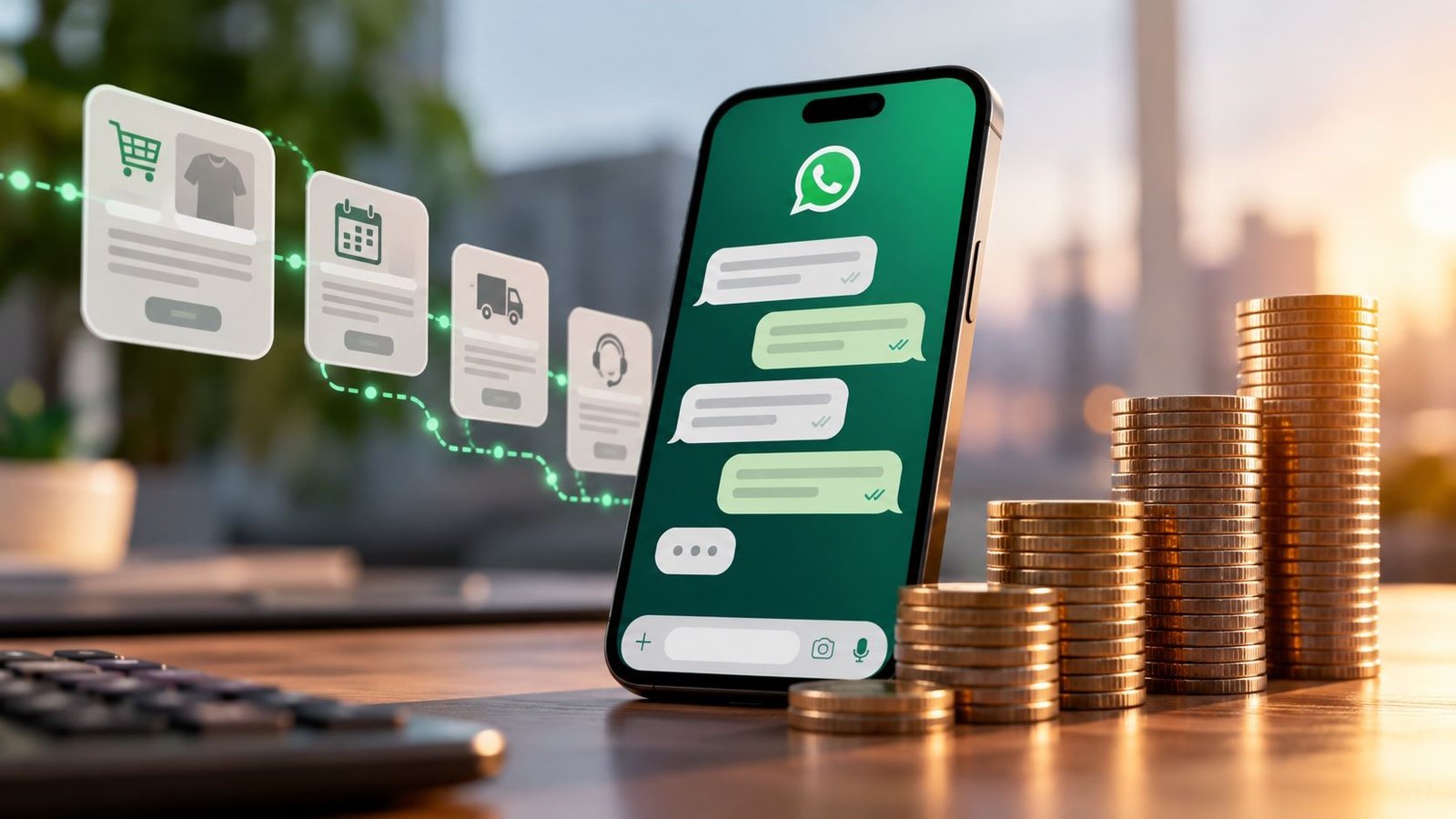
Reduce unnecessary message traffic, keep the customer journey usable and make messaging costs more predictable. (Image: Cellfind)
For years, businesses have been encouraged to move more customer conversations onto WhatsApp. From 1 October 2026, the economics of some of those conversations changed. A support exchange that once incurred no Meta message charge may have started adding to the bill, one delivered reply at a time
The temptation is to tell agents and automation teams to send less. That could leave customers with half an answer and a reason to contact you again. A better question is: does each message help the customer finish what they came to do?
Under the WhatsApp Business Platform pricing update, Meta now charges for service messages delivered inside the 24-hour customer service window after the first 1 000 delivered service messages per business phone number each month. Utility templates sent within that window have also become chargeable. The window remains; the pricing inside it changed
| Message type | Until 30 September | From 1 October |
|---|---|---|
| Incoming customer message | No Meta charge | No Meta charge |
| Service reply within the 24-hour window | No Meta charge | First 1,000 delivered per phone number each month free; subsequent messages charged |
| Utility template within that window | No Meta charge | Charged per delivered message |
| Utility template outside that window | Charged | Charged |
| Commercialisation or authentication template | Charged | Charged |
For South African recipients, Meta’s utility and authentication list rate has risen from US$0.0076 to US$0.0095 per delivered message, a 25% increase. Service messages beyond the allowance use the applicable service rate, aligned with the market’s utility rate. The South African marketing list rate remains US$0.0379. Check Meta’s rate cards and your provider’s charges when budgeting; the USD figures avoid a rand conversion that may be out of date by publication.
One reply costing less than a US cent is hardly a boardroom crisis. Multiply unnecessary replies across thousands of daily support interactions, though, and poor journey design becomes an operating expense
Before changing a campaign or a support script, look at the traffic you already have. Separate service, utility, authentication and marketing volume. Then trace a few common journeys from the customer’s first question to the completed task
How many outgoing replies does a delivery query take? How often does a customer repeat a policy number after moving from a bot to an agent? Which automated prompts lead people back to “speak to someone”? A message count alone will not answer those questions. The point is to find the exchanges that add effort without adding clarity
Consider an agent who sends four consecutive messages: a greeting, a thank you, an offer to help and, finally, a request for a policy number. One warm, complete response could do the same job: “Hi Sarah, I can help with that. Please send your policy number, and I’ll check it for you.” The saving is small in one chat. The customer also gets to the useful part sooner
Automation does not automatically mean fewer messages. A balance enquiry that forces someone through six menu steps has merely automated the queue. A useful journey anticipates the information needed to resolve the request and asks for it in a sensible order
For a delivery problem, that might mean collecting the tracking reference, showing the latest status and offering the right next action. If the issue needs a person, pass along the information already captured. Asking the customer to start again is frustrating; under the new pricing, it can also create avoidable message volume
There is another way to reduce unnecessary WhatsApp interactions without making the customer journey harder
Cellfind has built a responsive cost-saving web form to help chatbot clients manage the volume and cost implications of Meta’s pricing changes. The form provides an alternative data-capture mechanism within the chatbot journey, allowing businesses to collect information without relying on a long sequence of interactive menu items and text replies
That can make a meaningful difference in a transaction where several pieces of information need to be collected. Instead of asking the customer to work through multiple menu steps, the relevant information can be captured through the form and fed back into the wider journey
For businesses dealing with high interaction volumes, the objective is straightforward:reduce unnecessary message traffic, keep the customer journey usable and make messaging costs more predictable
It is not about making customers click less simply because clicks cost money. Rather, we are working to remove the steps that were never adding much value in the first place
Cellfind’s guide to personalising WhatsApp journeys explores the same principle: the best path depends on what the customer is trying to do, not on how many buttons a bot can display
There is no prize for putting every customer interaction into WhatsApp. A short, urgent alert or one-time password may be better suited to SMS. A complex service query may need a WhatsApp conversation with an agent. Someone using a basic phone or without data may need USSD. A visual comparison between a few relevant products may suit a WhatsApp carousel
The right mix depends on reach, urgency, complexity and the action expected next. Cellfind’s WhatsApp and USSD beneficiary journey shows how two channels can support the same task for customers with different devices and access needs. Moving a message to a cheaper channel is only useful if the customer can actually complete the journey there
An untargeted marketing template has a cost even when it prompts no useful action. Sending an upgrade offer to everyone on a customer list is easy. Sending it to people who are eligible, approaching renewal and permitted to receive it takes more care but gives the message a reason to exist
Relevance comes from context, not from adding someone’s first name to a broadcast. Use the customer’s stage in the journey, known need and appropriate consent to decide who receives an offer; then examine replies and completed actions, rather than celebrating the send volume
Sometimes a customer needs to compare several options. Five separate promotional messages can turn a helpful suggestion into chat clutter. A WhatsApp carousel can present several related choices as cards within one marketing template, each with a visual and a clear next action. The template is the delivered message; cards are not billed as separate messages
That does not make 10 cards a target. Three suitable options can be more helpful than 10 loosely related offers. The point is to give the customer enough information to choose a next step, without sending them on a scavenger hunt through links, messages and menus
A low price per message can hide an expensive journey. A support query that takes seven replies and remains unresolved is poor value. A journey that uses two clear messages and resolves the issue may cost more per individual send on another channel, yet cost less to complete
Track messages per resolved query, cost per completed application or booking, hand-off rate and drop-off by step. For campaigns, look at cost per relevant response or successful upgrade. These measures connect messaging spend to the result customers and businesses actually want
Cellfind helps organisations connect customer journeys across WhatsApp, SMS and USSD, with automation and agent support where each belongs. The October change is a useful prompt to review those journeys: remove empty steps, improve the messages that remain and give customers a clear way forward. When every delivered message has a cost, every message should have a job
Share


En rapport:
Formation en automatisation numérique au Bénin : 5 compétences clés recherchées par les employeurs en 2026
Vous souhaitez apprendre cela de manière pratique ?
Rejoindre Justfine Infotech et développer de véritables compétences numériques en IA, automatisation, développement web, marketing digital, bureautique, e-commerce, travail indépendant et cybersécurité.
Programmes disponibles :
Certificat de 6 semaines • Certificat professionnel de 3 mois • Diplôme de 6 mois • Diplôme professionnel complet
WhatsApp :
+229 01 57 57 99 15
+229 01 66 68 11 60
Source: www.itweb.co.za

 English (UK)
  Français